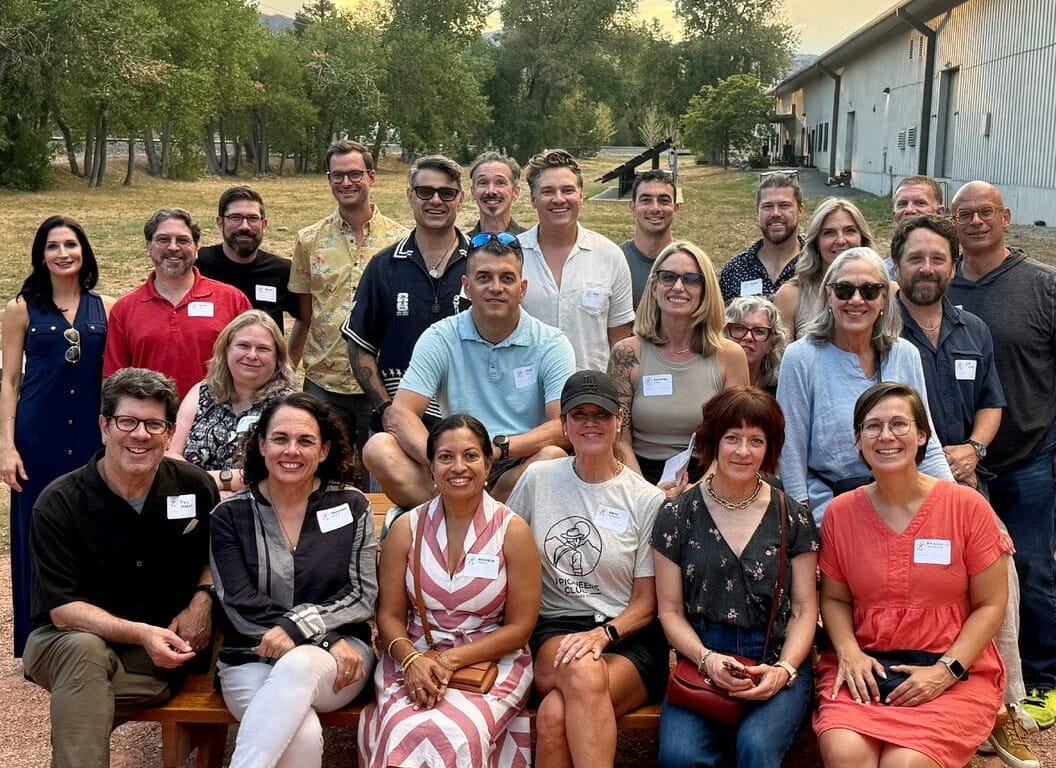
There was no strategic plan and, at first, no intention to start an organization.
Coloradans Summer DuBois-Lenderman and Chuck Aikens met in 2023 while both were teaching AI to a group of natural-products marketers. Before long, they connected online with a couple of other people who were similarly consumed by the rapidly evolving technology, and the four decided to meet at Denver's Improper City for a beer and compare notes.
“We weren’t thinking of it as a club,” DuBois-Lenderman recalled. “We were just going to hang out.”
They met again the following month. And then, by the third or fourth gathering, Aikens remembers preparing for roughly 10 people and watching something closer to 25 walk through the door.
“That’s when we looked around and said, ‘What’s going on here?’” he said.
Two years later, what became the AI Pioneers Club remains relatively small, informal and decidedly unlike the large tech meetups its founders had attended elsewhere. There’s no elaborate organizational structure. DuBois-Lenderman and Aikens still plan many of the monthly gatherings through conversations and texts, inviting people they think will add something to that month’s discussion.
But something more substantial has taken shape around those meetings: a community of people who are not simply interested in AI but are actively building with it, deploying it, managing it, and figuring out where it is taking their companies and careers.
Not AI 101
From the beginning, Aikens said, the format distinguished AI Pioneers from many tech gatherings where an expert speaks from the front of the room and everyone else listens.
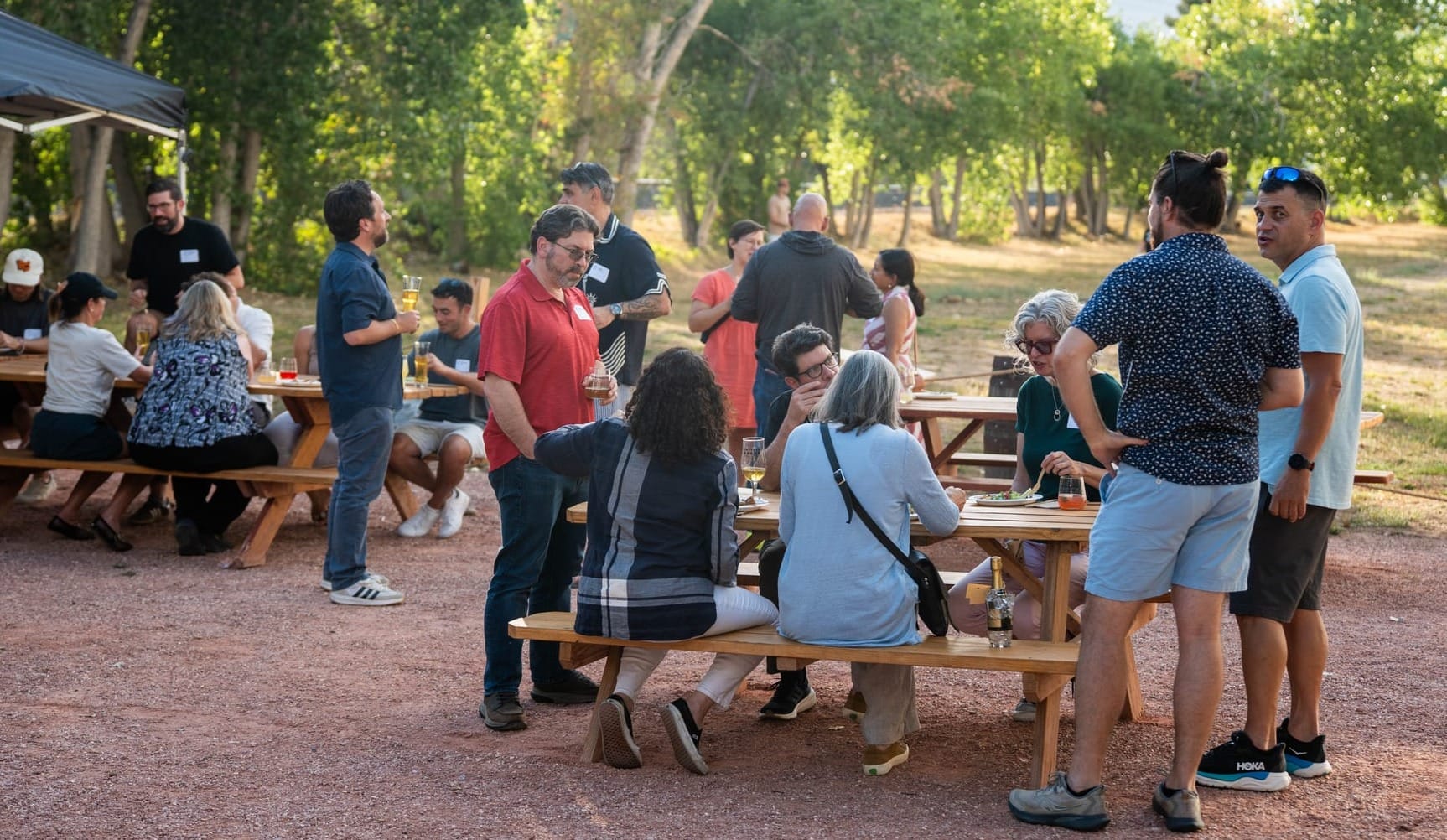
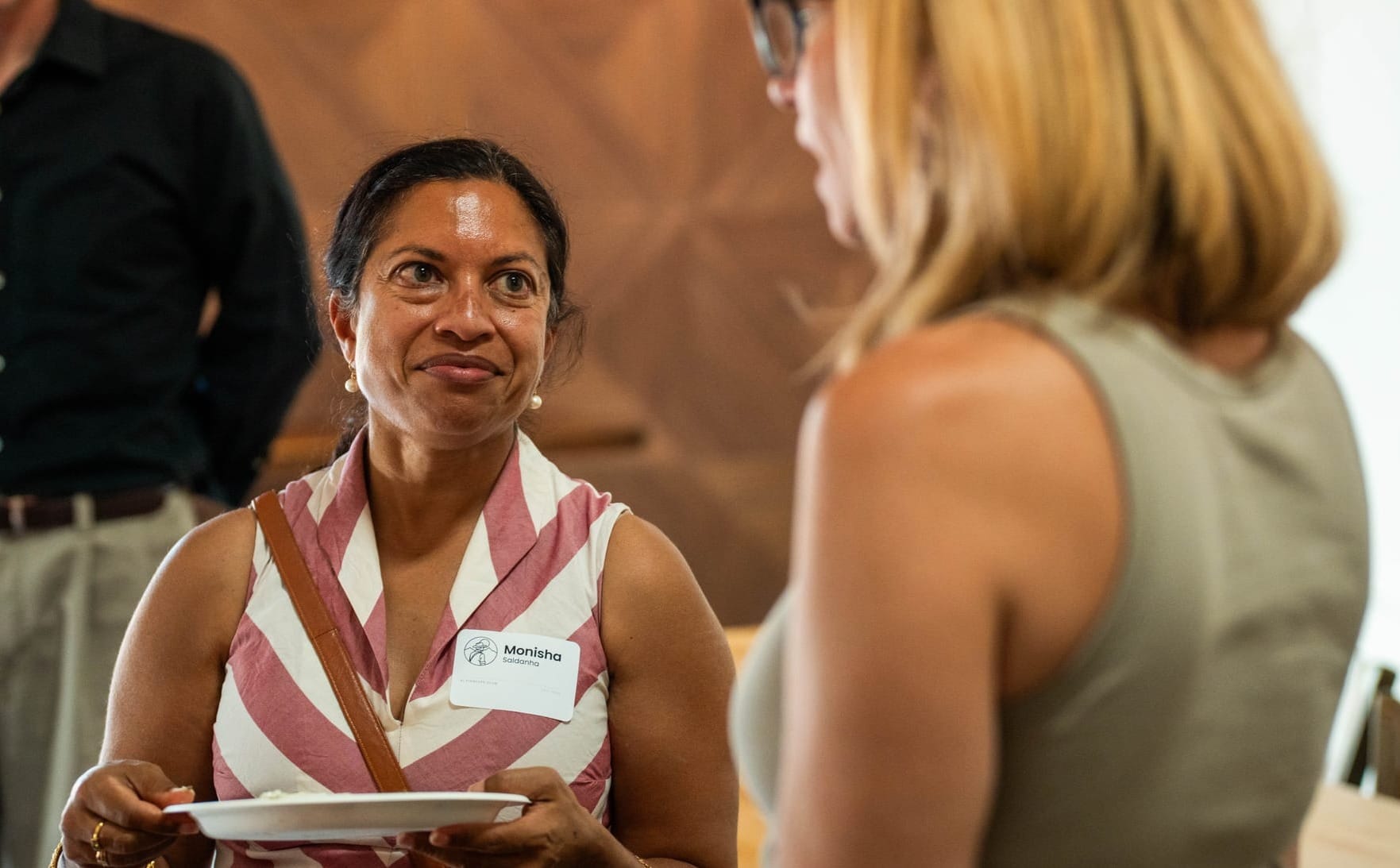
AI Pioneers meetings tend to put participants in a circle. The subject might be AI agents, governance, robotics, a new technical architecture or a problem someone encountered at work. The point is less to present answers than to compare what people are seeing in the field.
“I want to get together with real people and have real conversations,” Aikens said.
That means AI Pioneers isn’t designed primarily for someone looking for an introduction to ChatGPT or a collection of the latest prompting tricks. The line isn’t strictly technical expertise – Aikens and DuBois-Lenderman both stressed that they have welcomed people who are earlier in their AI journeys – but they do expect participants to be doing the work.
“It has nothing to do with your aptitude,” Aikens said. “It might have more to do with your attitude.”
For DuBois-Lenderman, the distinction is between people experimenting from the sidelines and those pushing through the inevitable frustrations that come with trying to make new technology do useful work.
“I can learn from the people who are failing much more than I can from the people who are on the sidelines watching,” she said.
That philosophy has become more important as the group itself has matured. DuBois-Lenderman and Aikens recently spent time talking individually with about 10 of their more regular participants about why they continue to attend. The answer, DuBois-Lenderman said, was remarkably consistent: They wanted a higher level of conversation with other people confronting real problems.
Those problems are increasingly a long way from “How do I use AI?” They include questions about model selection, token costs, governance, security and how to deploy AI inside actual businesses where budgets, customers, employees and reputations are on the line.
“Once you’re on the hook in this whole AI thing, and other people have hired you because they think you know and you’re smart, it’s scary,” DuBois-Lenderman said. “None of us have ever done this before.”
‘These are my kind of people’
Yet, ask DuBois-Lenderman what has surprised her most about the past two years, and she doesn’t point to the technology.
“I think the most surprising thing is that these are my kind of people,” she said. “They’re my friends.”
The relationships have spilled well beyond the monthly meetings. DuBois-Lenderman remembers AI Pioneer Melissa Reeve talking early on about her interest in management and organizational change and the possibility that she might someday write a book. She eventually did: Hyperadaptive: Rewiring the Enterprise to Become AI-Native, published earlier this year. In the book’s acknowledgments, Reeve includes the AI Pioneers among the many people and communities who helped keep her going.
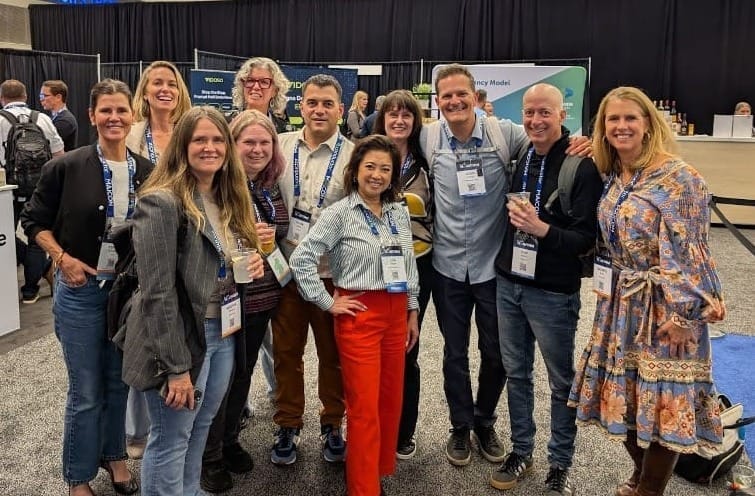
The connections have traveled, too. A group of AI Pioneers went together to the Marketing AI Institute’s MAICON conference in Cleveland last fall, where DuBois-Lenderman said they found themselves continuing their own conversations – comparing what they were hearing at the conference with ideas and problems they had already been discussing back in Denver and Boulder. AI Pioneer Crys Black later chronicled highlights from the conference for Colorado AI News.
“It just really expanded outside of just once-a-month meets,” DuBois-Lenderman said.
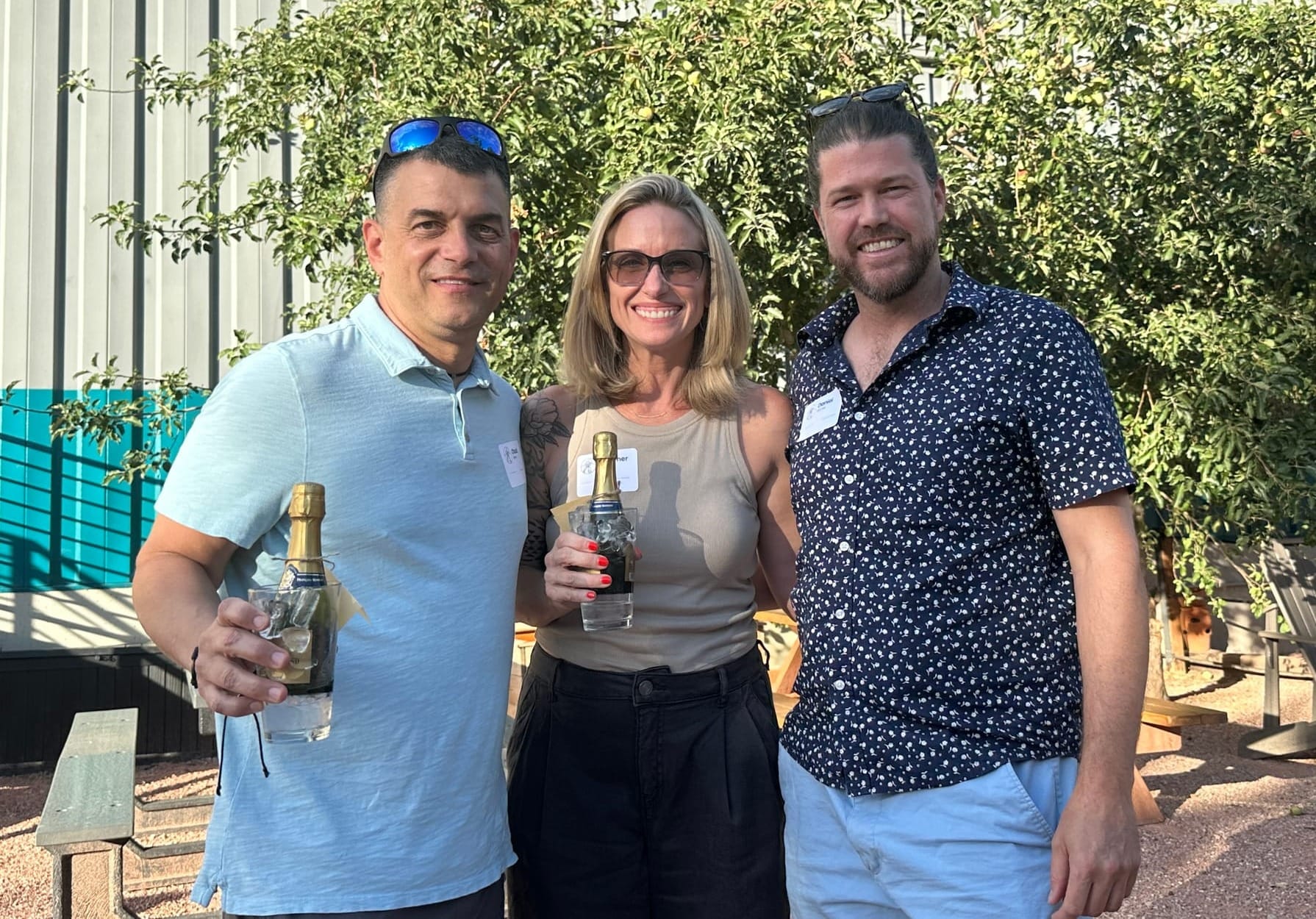
Aikens describes AI Pioneers as an extension of the relationships he and DuBois-Lenderman are already developing throughout Colorado’s AI community. When one of them meets somebody doing interesting work, that person may find themselves invited to the next gathering. Over time, he estimates, perhaps 100 people have attended at least one meeting, even though a typical gathering might draw only 20 or 25.
And something unexpected happened as those relationships deepened: The club became less about what its members did for a living.
“Nobody in this club has any idea what I do, and I don’t know what some of them do,” Aikens said. “It’s not the point.”
That’s markedly different, he said, from the familiar business-networking ritual in which everyone quickly explains their company, customers and latest success.
“We’re here as people, and we’re learning and growing, and we’re on a journey,” Aikens said. “And we’ve decided to do it together.”
Growing – or evolving?
From the outside, AI Pioneers might appear to be preparing for a new growth phase as it marks its second anniversary. DuBois-Lenderman and Aikens push back on that characterization.
“It’s not that we want to grow,” DuBois-Lenderman said. “We want to evolve.”
They aren’t opposed to growth. Aikens said a meeting of 75 or 100 people wouldn’t inherently violate what they are trying to create, nor would a much larger community if it somehow developed organically without sacrificing the relationships at its center.
What they don’t aspire to become is a room filled with hundreds of strangers passively consuming AI content.
The distinction is important because “exclusive” can be an easy label to apply to a group that has largely grown through personal invitations and word of mouth. Aikens said the goal isn’t to put up a gate. It’s to protect the kind of conversation that attracted people in the first place.
People should arrive prepared to contribute something – an experiment, a failure, a problem, an insight or simply the curiosity and willingness to engage seriously with what others are building.
DuBois-Lenderman compared it to a potluck: It works when everybody brings something to the table.
That may be the clearest description of the AI Pioneers model. The club doesn’t need every person in the room to know the same things. In fact, part of its value comes from exactly the opposite. AI has become too broad and is moving too quickly for any one person to follow every model, tool, application and specialty.
One person goes deep over here. Somebody else goes deep over there. Once a month, they compare notes.
Two different views from the AI front lines
The founders themselves now offer a striking example of that division of labor.
DuBois-Lenderman works as head of AI for Kinective, a fintech company with roughly 650 full-time employees, putting her in the middle of an enterprise AI transformation where innovation must coexist with security, governance and the demands of a heavily regulated environment.
Her job, she said, is increasingly less about clever prompts than about people: helping employees apply AI in ways that produce measurable business results, ensuring they use approved tools, managing costs and security, and helping a workforce adapt to expectations that are changing underneath them.
Ultimately, she said, “I think change management is more important at scale than knowing how to prompt."
Aikens is conducting almost the opposite experiment.
After selling his digital marketing agency, Volume Nine, he moved into consulting and gradually rebuilt his work around AI. His new firm is Tymoo, which he describes as "AI Ops for Marketing." Aikens' ambition is striking: He wants to see how close he can come to building a million-dollar, recurring-revenue consultancy without employees, using AI systems to perform work that once would have required a team.
He has experimented with human help along the way, including virtual assistants, but said that experience sometimes made it too easy to solve a problem the old way instead of forcing himself to discover whether AI could solve it differently.
The two situations give the founders radically different constraints. DuBois-Lenderman works inside a large organization where AI adoption has to account for hundreds of employees and enterprise controls. Aikens can move faster, but has to make his systems work across numerous client environments.
It is also one reason they still need the club they inadvertently created. Neither can see enough of the AI landscape alone.
Beyond the next prompt
That sense of racing to keep up runs throughout a conversation with both founders, and it shapes their thinking about where AI goes next.
Aikens expects the current chatbot era to give way increasingly to agents that perform work for people and businesses with less direct human supervision. As that happens, he worries that individuals and organizations will be directing systems whose actual work they understand less and less.
His prescription isn’t mastery of a particular model or programming technique.
“The most valuable skill is actually critical thinking,” Aikens said. “It’s not which button to push. It’s not which prompt to write.”
DuBois-Lenderman comes at the challenge from a slightly different direction. She worries about people who are concerned about AI’s effects – from jobs to data centers to broader societal risks – but respond by keeping the technology at arm’s length.
To her, AI literacy isn’t just a career skill. It is increasingly a prerequisite for participating intelligently in arguments about what the technology should and shouldn’t do.
“The more people that understand how this technology works and are comfortable and fluent with it, the safer we’re going to be,” she said.
Neither founder is unreservedly utopian about where AI is heading. Aikens, in particular, worries about the speed of development and the possibility of increasingly autonomous systems producing unintended consequences at scale. Yet he also describes himself as bullish on AI and the opportunities available to people willing to lean into it.
That combination – enthusiasm mixed with unease, experimentation mixed with the recognition that nobody really knows what comes next – may help explain why AI Pioneers still matters to the people who keep coming back.
It's been two years since four people met for a beer in Denver because they wanted to talk with others who were deeply engaged with AI. By now, the technology is vastly more capable and the questions confronting its practitioners are considerably harder.
The club they accidentally built hasn’t solved those problems, but it has given them a community for figuring them out together.
The next meeting of the AI Pioneers Club is scheduled for 5:30 on September 23 at Code Talent in Denver. The discussion will be focused on data architecture, with an emphasis not on theory, but on what's actually running in production. Anyone interested in joining the AI Pioneers Club is encouraged to introduce themselves.
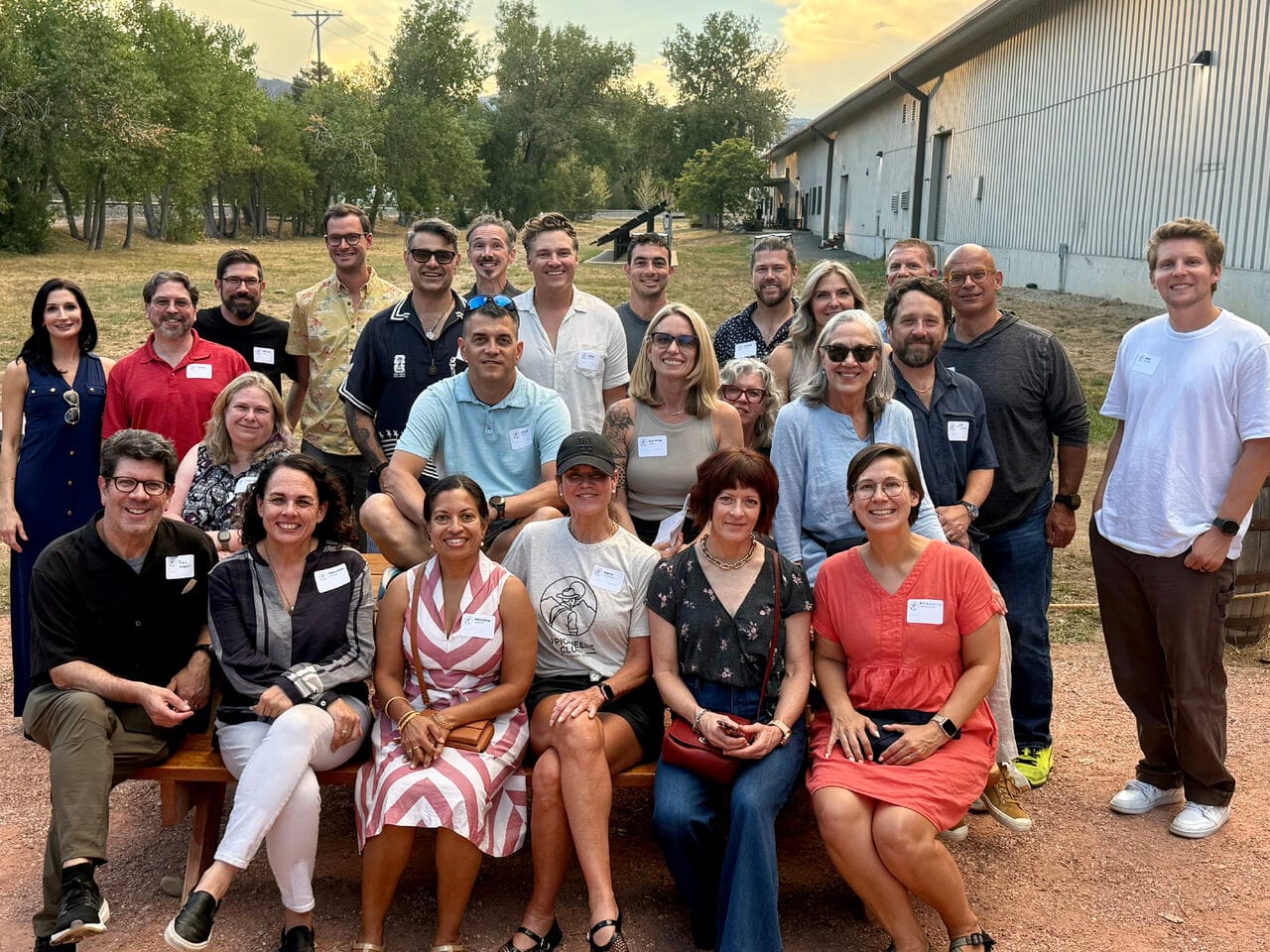
The writer is a member of the AI Pioneers Club.