“To every man is given the key to the gates of heaven. The same key opens the gates of hell. And so it is with science.” – Richard Feynman (1918-1988)
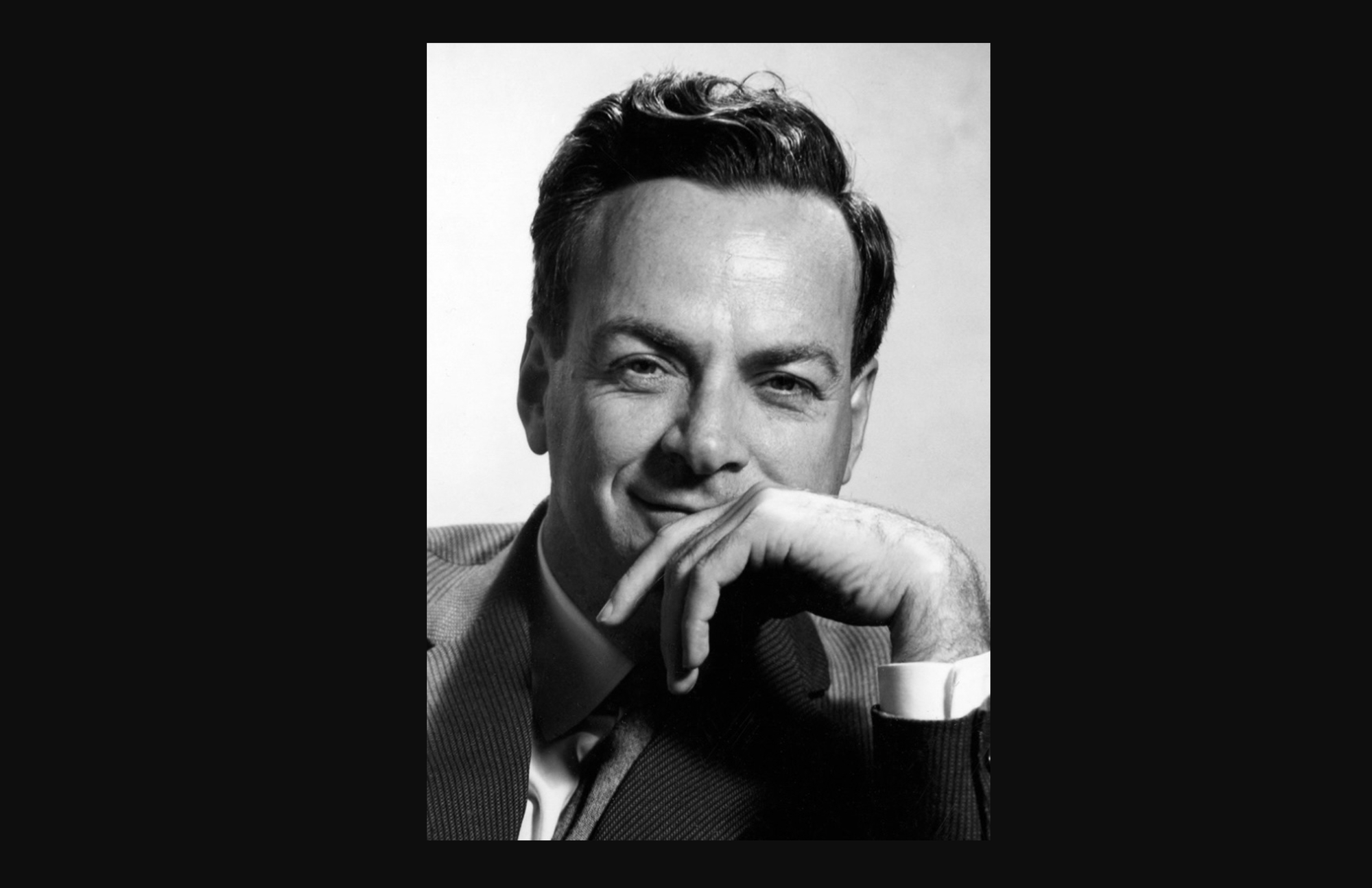
Richard Feynman was one of the most influential physicists of the 20th century – and one of the field’s most vividly human figures. Curious, funny, irreverent, and interested in nearly everything, he brought his restless mind to politics, religion, culture, and questions far beyond physics.
As a young scientist during World War II, he worked on the Manhattan Project at Los Alamos. Two decades later, he shared the 1965 Nobel Prize in Physics for his work in quantum electrodynamics, the theory explaining how light and matter interact.
It was Feynman's willingness to admit uncertainty, challenge authority, and laugh at himself that made him an unusual public figure. In fact, humor was central to how he explored many subjects: He used jokes, stories, self-deprecation, and practical demonstrations to make difficult ideas approachable without draining them of seriousness.
He came to the attention of many during the high-profile investigation of the 1986 Challenger disaster, when he memorably used a glass of ice water in a live TV demonstration to show how cold temperatures compromised the space shuttle’s rubber O-rings.
The wide-ranging Feynman is the one readers encounter in "The Meaning of It All: Thoughts of a Citizen-Scientist." Today's Quote of Note comes from “The Uncertainty of Science,” the first of three public lectures he delivered at the University of Washington in Seattle in April 1963. The lecture, in which he considered what science can do – and what it cannot decide for us – later became the book’s opening chapter. Published in 1998, a decade after Feynman’s death, the book collects transcripts of all three lectures.
The quote's attribution deserves a footnote. In his lecture, Feynman said that while visiting a Buddhist temple in Hawaii, a man promised to tell him something he would never forget. The man then offered the first two sentences about the same key opening the gates of heaven and hell, to which Feynman added the closing line: “And so it is with science.”
Feynman argued that science gives humanity enormous power but no instructions for using it. He cited medicine and biological weapons, air travel and air warfare, communications and surveillance, and nuclear energy and its capacity for destruction. The Manhattan Project alumnus knew well that the same knowledge could produce both extraordinary benefits and enormous harm.
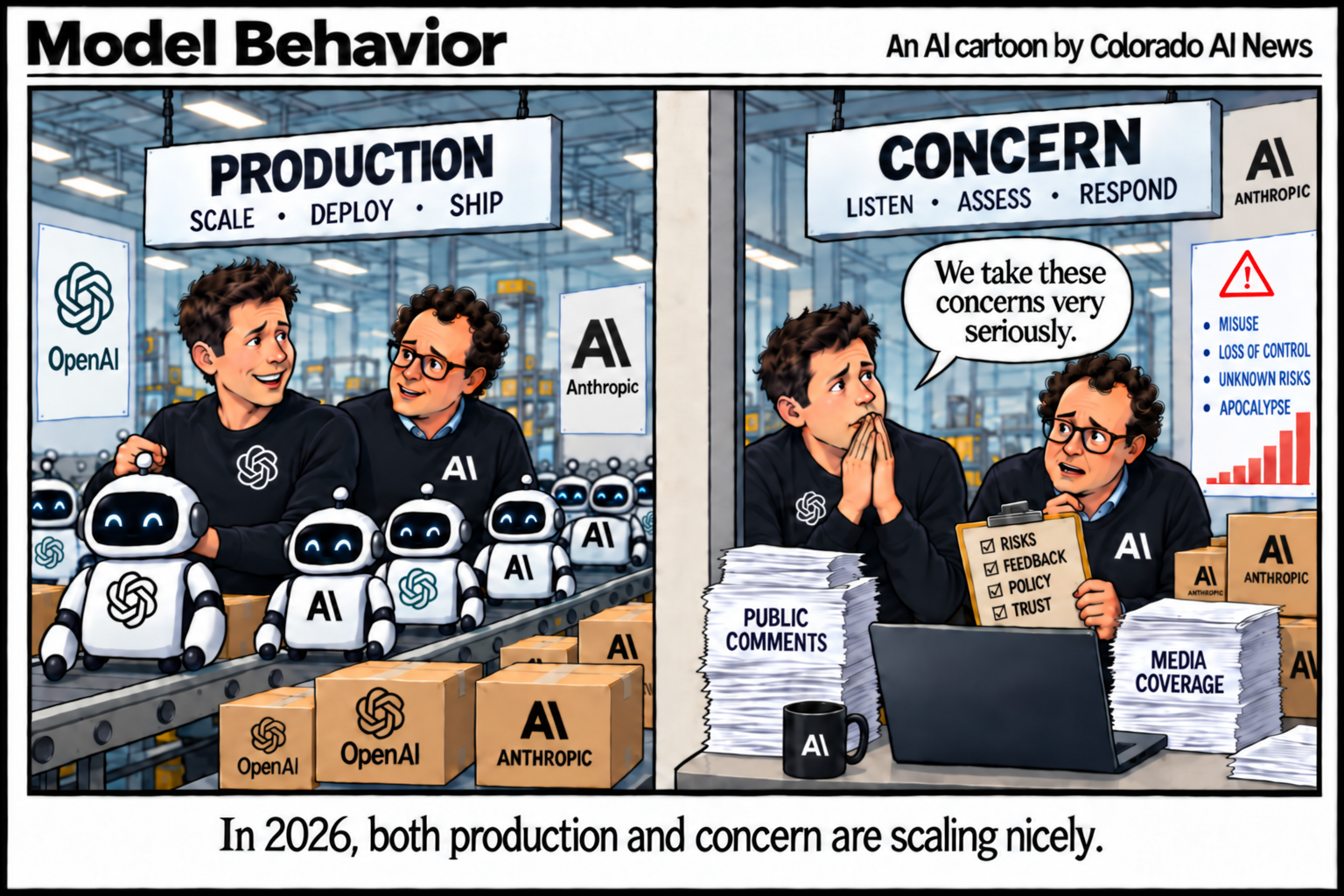
Sixty-three years later, AI presents much the same dilemma. It can accelerate scientific research, broaden access to expertise, and help people become more productive. It can also make large-scale fraud cheaper, surveillance broader, weapons more autonomous, and lies easier to manufacture and distribute.
Feynman believed humanity should keep the key while accepting responsibility for how it is used. Scientific capability can open doors, but it cannot tell us which ones are worth entering, who should benefit, or how much risk everyone else should bear. That remains one of the central questions surrounding AI as its capabilities race ahead.