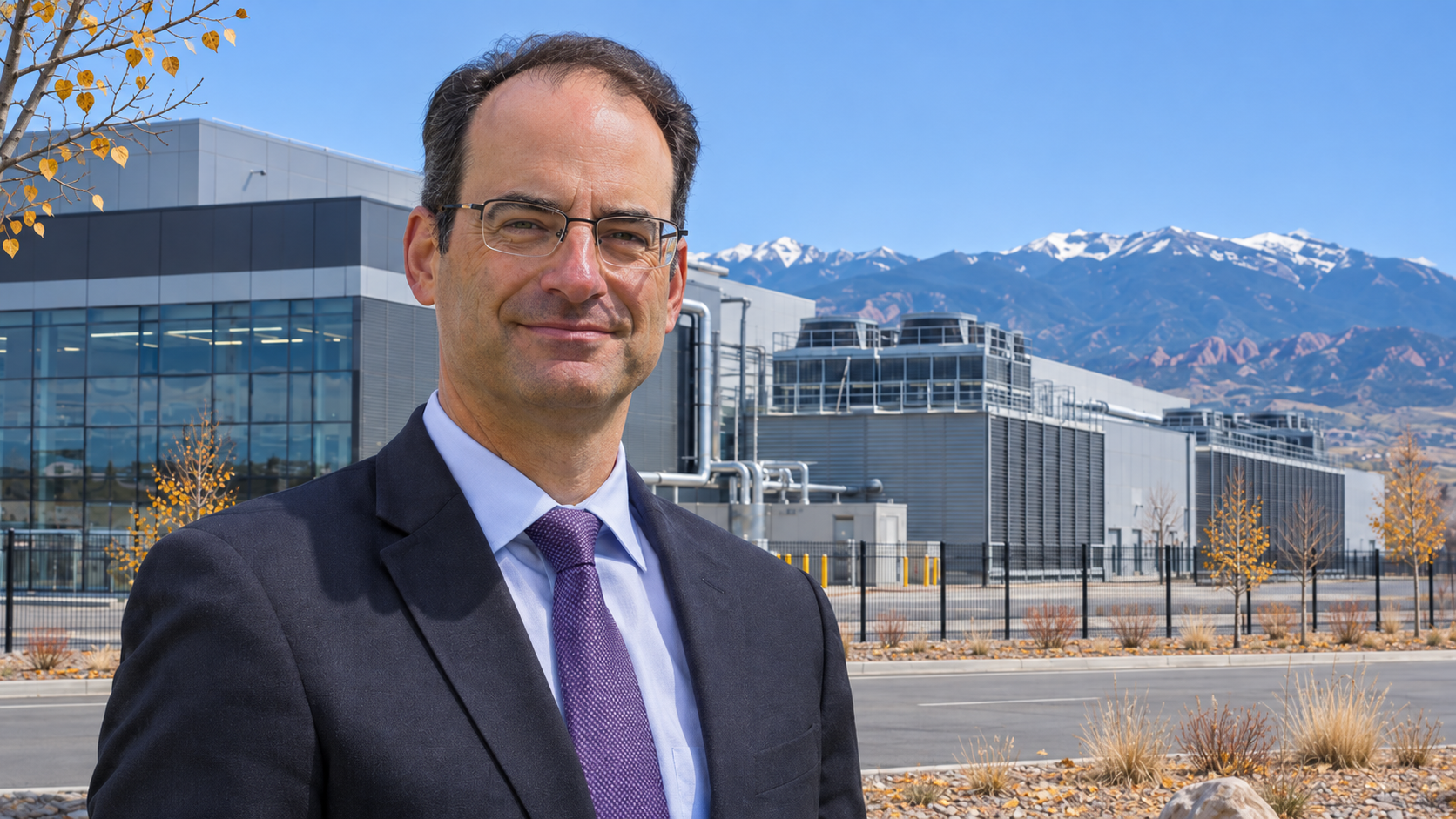
The third annual DenAI Summit brought public officials, technology leaders, and entrepreneurs to Denver’s Mile High Station on November 10 to explore “Governing in the Age of AI.” The summit's focus was on decisions already confronting cities and states, from energy and infrastructure to preparing people for a changing workforce. Strikingly, the event’s organizers can still call it the country’s only city-led AI summit – even as this month marks four years since OpenAI publicly launched ChatGPT.
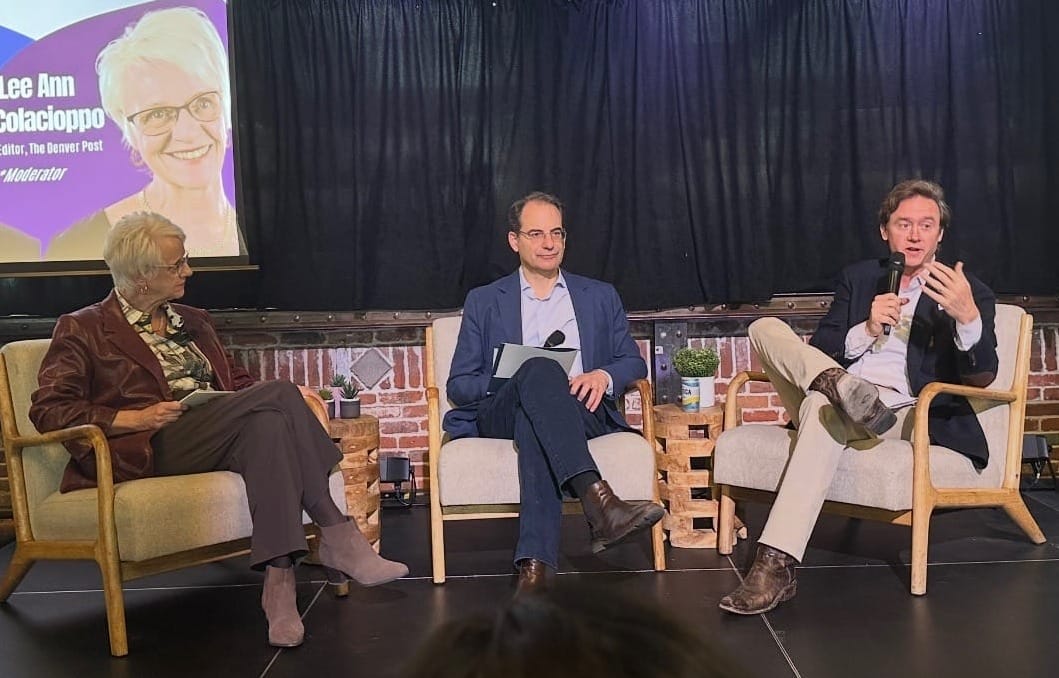
The day’s speakers included tech journalist, podcaster, and author Kevin Roose, former Denver Mayor Federico Peña talking with former New Orleans Mayor Mitch Landrieu, and former U.S. National Security Advisor Jake Sullivan, who joined Johnston for a conversation about AI and global concerns. Panels and company showcases rounded out the agenda. For this first piece from the summit, I’m focusing on the afternoon discussion between Colorado Governor-elect Phil Weiser and Denver Mayor Mike Johnston.
When Denver Post editor Lee Ann Colacioppo asked them how to make AI policy that could outlast the politics of the moment, Weiser reached for an important lesson he’d learned from former Gov. Roy Romer: “All truth is partial.”
Weiser went on to talk about Denver, Alamosa, and Grand Junction. A decision made in Denver can seem perfectly sensible to the people who made it, while it can look very different to the people expected to live with it in the San Luis Valley or on the Western Slope. (In fact, Weiser mentioned that decisions in Denver can sometimes feel like nails on a chalkboard to those Coloradans living far from the Mile High City.) His point was that their experience can tell you something you need to know before you make a statewide decision.
Weiser offered a practical example of that openness elsewhere in the conversation. A lawyer could give AI a legal brief and ask, “What are the best arguments against my position?” It’s a useful question well beyond the law. A business owner, a public official, or a writer could ask it about a proposal or an argument they’re developing. To me, it connected neatly with Romer’s advice. If our own view is, by definition, partial, then a willingness to examine its weaknesses must be an essential element of taking a position seriously.
That exchange was one reason I came away from Tuesday’s DenAI Summit feeling optimistic about how Colorado and Denver will handle AI going forward. Mayor Johnston gave me another. He talked in detail about how city governments can use the technology to make life easier for residents and city employees, and where he wants a human to be in the loop and make a call.
The lessons of social media
Last year at DenAI, I listened to Johnston and Buddhist monk Venerable Tenzin Priyadarshi discuss how government could use AI to deliver better services while staying connected to the people it serves. I wrote about that conversation at the time, and I thought about it again this week as the conversation returned to public trust and the lessons of social media.
In 2025, Tenzin described how sharing a happy experience online can turn into repeatedly checking for likes and questioning your own worth when the approval fails to arrive. He argued that platforms’ pursuit of engagement could damage users’ self-image and draw them away from the experience they wanted to share. Johnston picked up on the loss of something that had once been joyful. The warning for people building and adopting AI was clear to me. We need to consider how a technology shapes behavior and well-being from the outset, while we still have a chance to influence its design.
Social media came up again in this year’s discussion. Weiser described how tech companies’ careless treatment of young people through social media platforms and algorithms had damaged public trust, shaping the reception AI is getting today. This is an important insight for those wondering why Gen Z may be so opposed to AI. They may be young, but this is not their first rodeo.
Johnston brought the question home (literally), saying he thought he had given his own children smartphones too early. I appreciated that willingness to reconsider a decision – and to admit it publicly. It also moderated their optimism about AI. Both men acknowledged that people have reasons to be wary, and that government has to take those concerns seriously as it adopts this technology.
AI on the streets of Denver
Johnston brought the conversation down to the level of a resident trying to get something done. “They want services to be faster and easier to access, and they want things to work and work quickly,” he said. He described city employees juggling heavy workloads and the potential for AI to take routine tasks off their hands.
Johnston offered a striking comparison. “We replaced our intake permitting process with an AI tool that takes it from 28 days to about a half a second,” he said.
Denver’s new StartSmart application assistant checks submissions for missing information before formal city review. The city’s November 5 announcement describes instant feedback that could reduce the back-and-forth over incomplete applications. Significantly, Denver employees retain responsibility for intake and permit approvals. For someone trying to move a project forward, finding a missing document immediately could save not just days, but weeks, of waiting.
Johnston also discussed more efficient routes for inspectors and the possibility of making parking payments and enforcement easier. These are the kinds of improvements residents encounter on their own streets. After acknowledging that some of the companies presenting at the Summit offered seemingly “unsexy” tools for city government, he added, “If you are a mayor, this is like the sexiest thing you’ve ever seen.”
Colacioppo pressed Johnston on how he makes sure departments follow the same rules. His answer put some substance behind the familiar talk of guardrails. He said the city’s procurement process requires vendors to meet privacy and security standards before they can move forward. That's critical because the decision to buy a tool is also a decision about what information it will touch and who will be responsible for it. Residents have good reason to want those questions answered before the city signs a contract.
Those commitments are easy to agree with at a conference. I’ll be interested in what it means for someone on the receiving end. If the city flags something in my application that I think is wrong, can I reach a human who can explain what happened and correct an error? That answer would tell me more about whether a service has actually improved than simply a measurement of the time it took to get the first response.
Where data centers could make sense
Weiser’s answer on data centers offered a similarly practical way to think about responsible AI. He described concerns about communities having a voice on issues, households paying higher electricity rates, and the environmental demands of new facilities. He opposed a blanket moratorium or ban. “I believe it means we should have the right guardrails and figure out where and how it makes sense,” he said.
He then raised the city of Craig as an example of where geothermal-powered data centers might benefit a community. He presented that as a possibility, and the specifics would matter enormously. A project’s location, energy source, water demands, and effect on nearby residents all belong in the decision-making process.
That willingness to consider where a project might work reflected Weiser’s broader approach to AI policy. “Can we take a step back? Can we ask what makes sense and what does responsible AI policy look like?” he asked. He noted that education and law enforcement would call for different answers. That struck me as a useful starting point for governing a technology whose uses are so varied.
For data centers, the revealing moment will come when a proposal has powerful backers and nearby residents raise concerns about their electric bills or water supply. How early will they get answers, and what will they still have a chance to change?
Taking responsibility for what comes next
Near the end of the discussion, Johnston described a belief that “all of our problems are solvable, and we’re the ones to solve them.” He talked about bringing together public officials, businesses, faith leaders, and nonprofit partners, then seeking feedback and improving the approach. I liked that combination of confidence and a willingness to learn. It leaves room for people outside government to help shape what happens next.
I left the summit feeling that both the city of Denver and the state of Colorado are in good hands with AI. What encouraged me was hearing two leaders who take the mundane – but incredibly important – work of government seriously, while at the same time paying close attention to the big picture.
Somewhere in Denver there’s a permit applicant who wants an answer, and somewhere else there’s a resident who wants to know what a certain project will mean for her city. In both cases, somebody in government has to listen, make a judgment, and be able to explain it. That’s what I’ll be watching for as the Mile High City puts more AI to work for its residents and Governor-elect Weiser takes office on January 12.
I’ll return to other highlights from the DenAI Summit in upcoming columns, with additional reflections on what those conversations could signify for Colorado and our AI future.