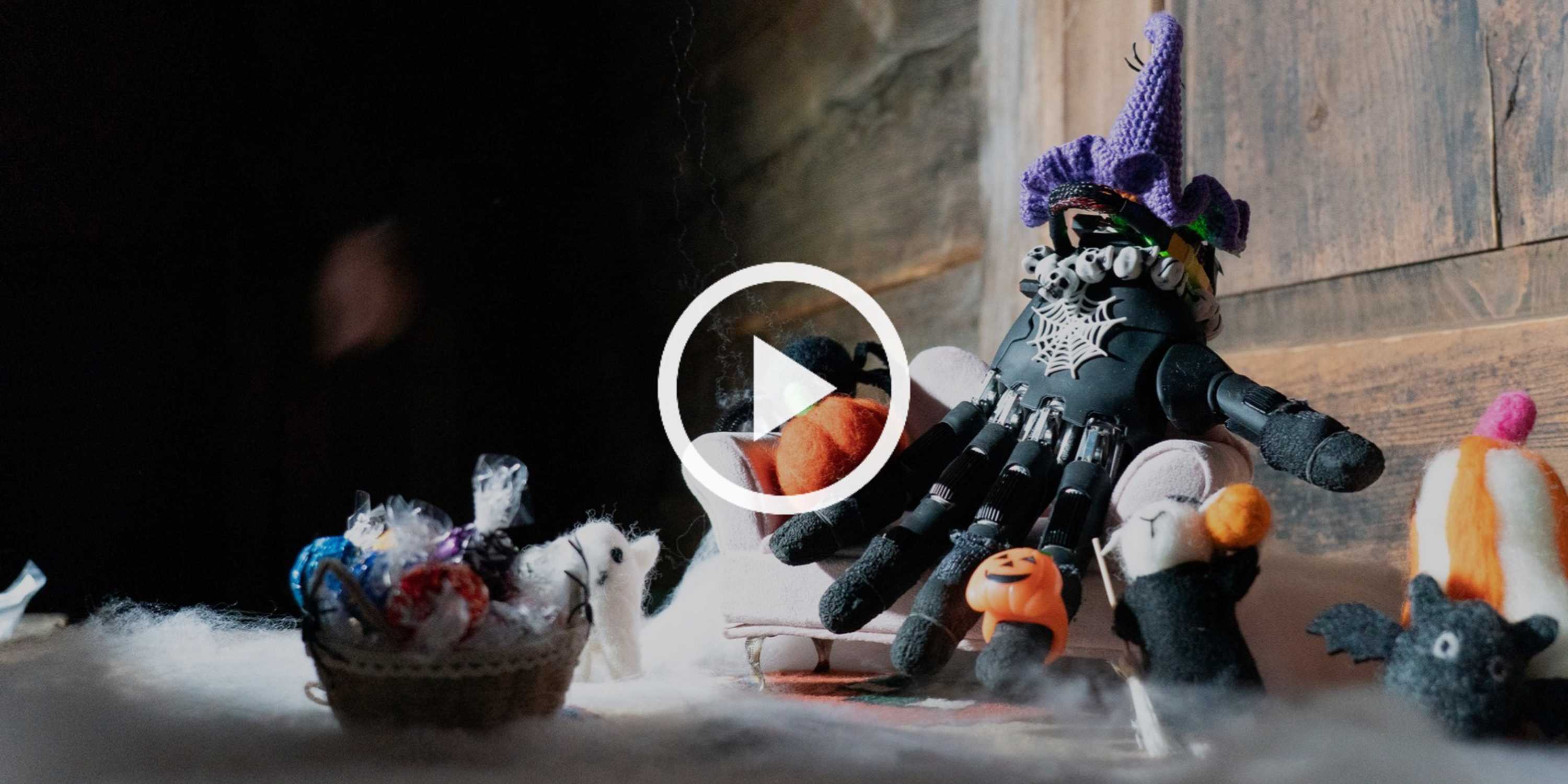
Fans of The Addams Family will remember Thing, the disembodied hand that appeared mysteriously throughout the family's mansion and, in later incarnations, scurried around on its fingers, delivered messages, and generally made itself useful. No arms, legs, or body required.
Now researchers in Switzerland have built something surprisingly similar, using artificial intelligence to accomplish some remarkably sophisticated feats of robotics.
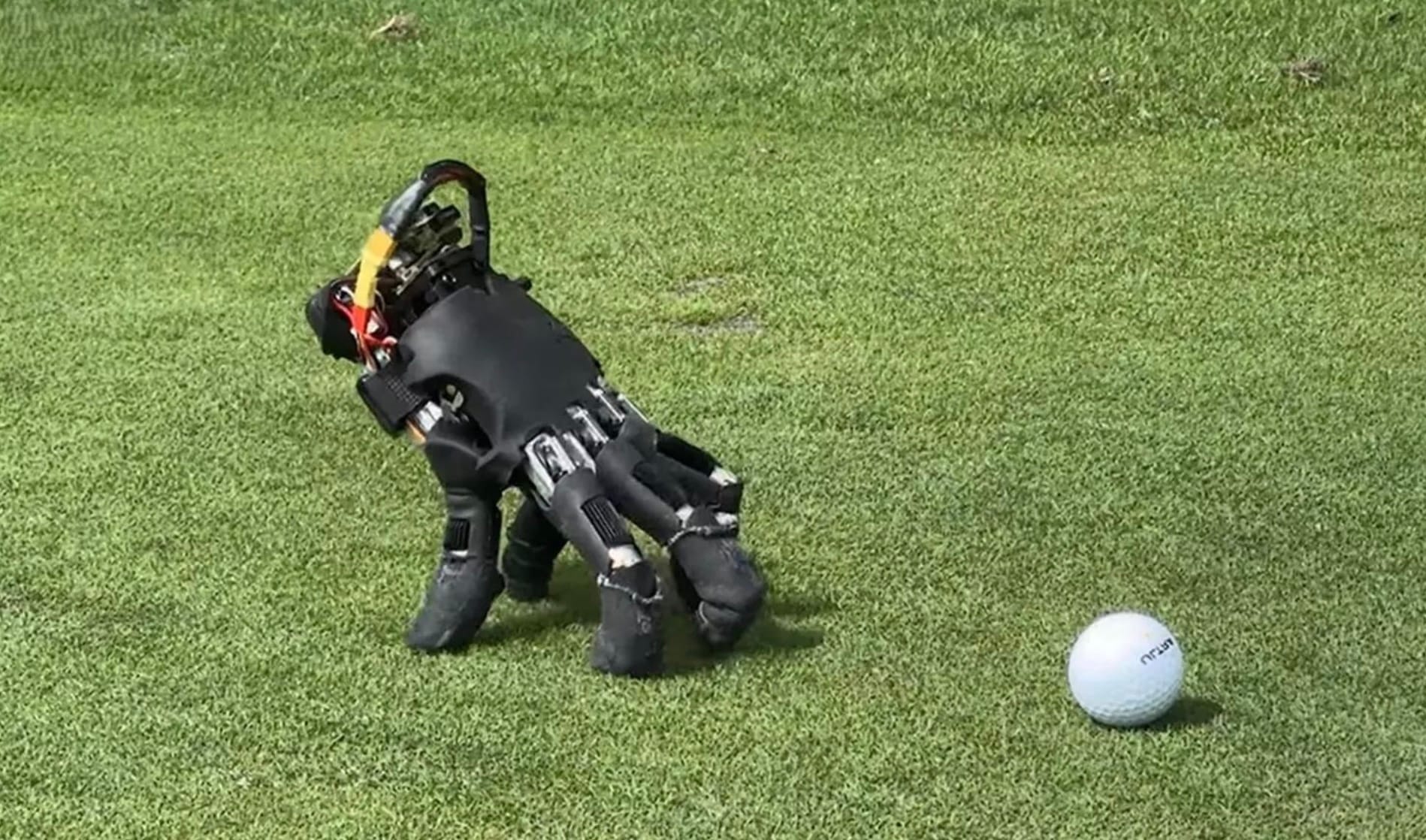
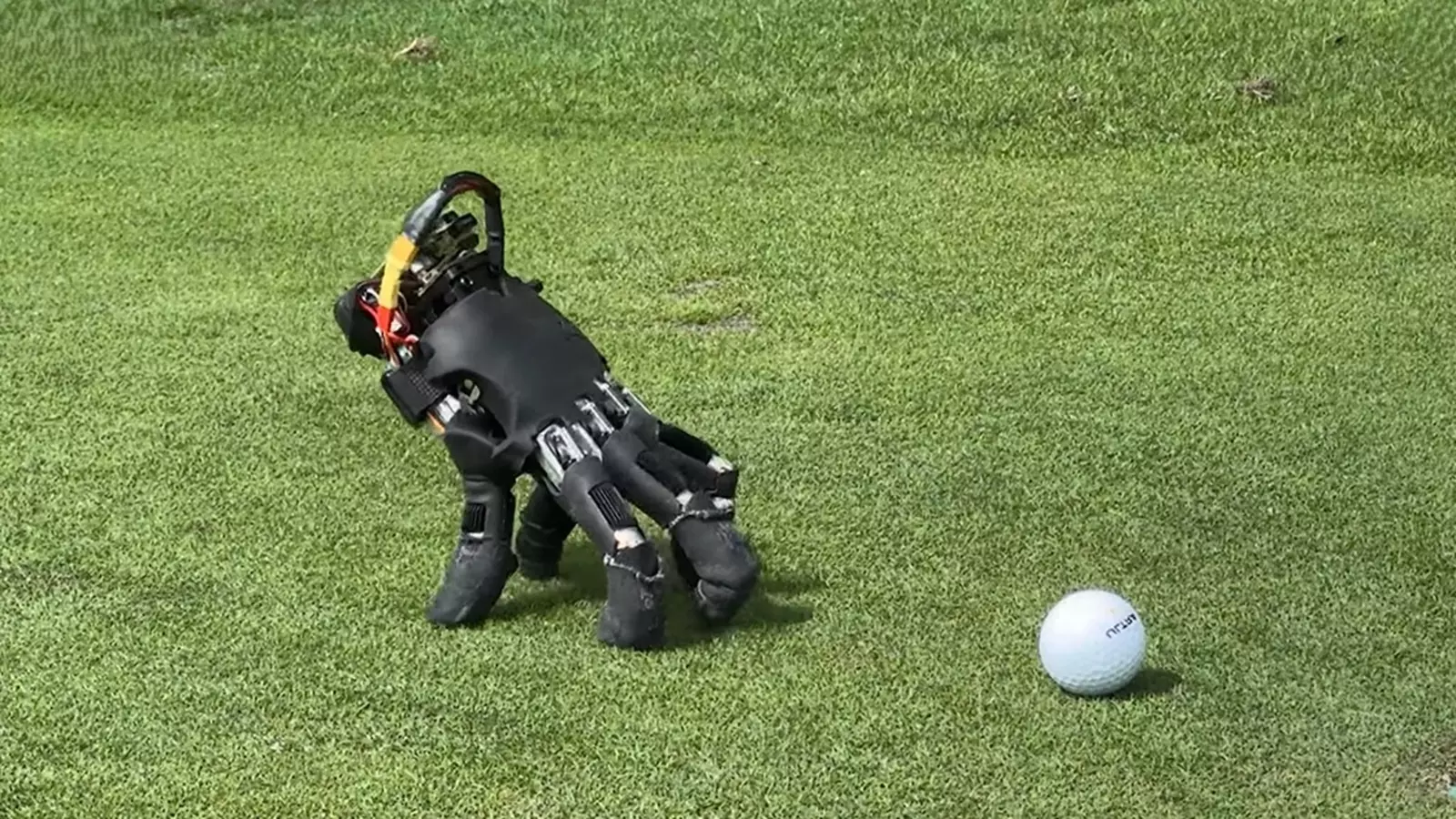
Meet October's Robot of the Month, a five-fingered robotic hand developed at ETH Zurich's Soft Robotics Lab that walks, rights itself when it falls over, pushes objects, and even operates a computer keyboard.
The resemblance to Thing is no coincidence. "I love the Addams Family!" Amirhossein Kazemipour, the doctoral student who led the project, told Fast Company in September, confirming that the famous character helped inspire the research.
But behind the Halloween-worthy appearance lies a serious engineering question: Why should a robotic hand have to wait for an arm to carry it somewhere?
 Nicole Davidson, Corporate Communications
Giving a hand some independence
Traditional robotic hands are attached to mechanical arms that position them to grasp objects, turn knobs, or perform other tasks. The hand does the manipulating; the arm handles the transportation. Kazemipour and fellow researchers Hehui Zheng and Robert Katzschmann wondered what might happen if a hand could do both jobs.
"I wanted to see how much a robotic hand could do without the rest of the robot," Kazemipour told IEEE Spectrum.
Other researchers have previously created robotic hands that walk, but often by designing specialized fingers and mechanisms. As Popular Science noted in October, some earlier approaches required making the fingers symmetrical. The ETH Zurich team took a different approach: They wanted to preserve the structure and dexterity of a commercially available humanlike hand while teaching it to move independently.
They started with a robotic hand from Wuji Technology, equipped with five fingers and 20 powered joints, and added a small backpack containing a battery, motion sensors, and a Raspberry Pi computer. The resulting robot weighs about 1.8 pounds and operates without an external power cord or computer.
But teaching a hand to walk presented an unusual problem. Unlike the relatively symmetrical legs of a robot dog, human fingers come in different lengths, with an opposable thumb thrown in for good measure. They're excellent for gripping objects but poorly suited to supporting a body's weight while moving across uneven terrain.
The researchers turned to reinforcement learning, an AI technique that allows a system to develop skills through trial and error, guided by rewards for achieving specific goals. (Unlike reinforcement learning from human feedback, or RLHF, commonly associated with training chatbots, this approach uses rewards based on predefined performance goals rather than human evaluations.)
Working in a computer simulation, they trained the hand to coordinate its fingers, maintain its balance, and move in different directions. One of their key innovations was to give each fingertip its own preferred resting position, taking into account the hand's asymmetrical shape. Rather than prescribing exactly which finger should move and when, the researchers allowed the AI system to learn how to coordinate those movements while maintaining the hand's balance.
Once trained, the resulting AI models ran on the hand's onboard computer, controlling its movements in the physical world. And the results were surprisingly impressive.
 Anton Kratiuk
Walking, falling, and typing
In laboratory and outdoor tests, the robotic hand crawled across 14 different surfaces, including grass, gravel, concrete, carpet, and metal grating. A human operator directed its movements, while the AI-trained software coordinated the fingers and maintained balance.
It also demonstrated a skill that any toddler learning to walk would appreciate: getting back up after a fall. The hand righted itself in 21 of 25 trials, an 84% success rate.
Then the researchers gave it more ambitious assignments. After being positioned at a keyboard, the hand balanced on some fingers while using others to press keys, successfully executing 29 of 32 commands. Those commands allowed a human operator to play Sokoban, a puzzle game in which players maneuver boxes around a confined space.
The hand also pushed small objects toward designated targets, using visual information from an overhead camera to guide its movements.
These demonstrations relied on separate AI-trained control programs, and some tasks still depended on human direction or external sensing. The hand isn't independently exploring the world or deciding what jobs need doing. Nevertheless, it has demonstrated something important: The same fingers can propel a robot, support its weight, and manipulate objects.
That versatility could eventually matter far beyond the laboratory.
A helping hand for the future
Imagine a maintenance robot working inside an industrial facility. It encounters a narrow opening that its mechanical arm cannot reach through. Rather than abandoning the task, the robot detaches its hand, which crawls through the opening, operates a switch or retrieves an object, and returns to the larger machine.
That's the kind of future Kazemipour envisions. In his interview with Fast Company, he described the possibility of robotic components becoming increasingly independent, separating from larger machines when necessary and reconnecting afterward.
Such systems could eventually prove useful in industrial maintenance, disaster response, or other situations where conventional robots struggle to maneuver. For now, those applications remain speculative. The ETH Zurich researchers have not demonstrated a hand that automatically detaches from an arm, navigates an unfamiliar environment, and reconnects afterward.
There are other challenges, too. Researchers interviewed by IEEE Spectrum noted that practical applications would require better onboard perception, more sophisticated navigation, and greater durability. After all, fingers designed to grasp objects weren't necessarily built to spend their lives walking on concrete.
The research also raises an intriguing question about the future of robotics. As Kazemipour put it in an October 29 ETH Zurich video, “How can we make robots more adaptable so that they can find new ways to use their bodies and interact with the world?”
Some of the most ambitious and highly publicized robotics projects aim to replicate the human body, complete with two legs, two arms, and two hands. The ETH Zurich team is exploring what happens when familiar robotic components are freed from their usual roles.
The ETH Zurich team is exploring what happens when familiar robotic components are freed from their usual roles. A hand can also be a set of legs. The same mechanical fingers can walk across a floor, support a body's weight, and manipulate an object. And perhaps someday, robotic body parts will move independently when the job requires it.
For now, the researchers have given us something rather wonderful: a disembodied hand that scurries around like a character from a 1960s television show, while demonstrating how artificial intelligence can help engineers find entirely new uses for existing technology.
Just in time for Halloween, Thing has some new tricks up his sleeve.
If only he had a sleeve.