When people arrive at RISE Comedy in Denver on Friday night for Robot Riot: The Robot Comedy Hour, one of the first things they’ll encounter will be a robot greeting them in the lobby.
They may want to say hello, but they should probably also say goodbye.
“The neck motors are slowly dying,” said Tom Williams, the Colorado School of Mines computer science professor who created and hosts Robot Riot. The robot in question has been kept largely powered down for three years to prolong its mechanical life. Williams and his students just recently switched it back on for Friday’s show.
“At the end of the show, we’ll be able to say, ‘Hey, that robot you saw when you came in? Make sure to say goodbye to it when you leave, because it’s slowly dying.’”
Welcome to Tom Williams’ particular corner of robotics.
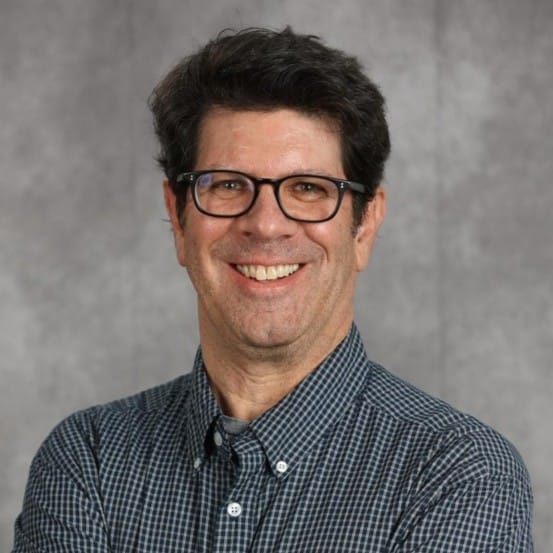
By day, Williams is an associate professor of computer science at Mines and director of its Mines Interactive Robotics Research Lab (aka MIRRORLab), where his work focuses on how humans and robots communicate – and how those interactions change depending on their social, environmental and moral context.
By night – and quite often, in fact – he does improv.
Williams started in musical theater, spent about a decade doing a cappella, and eventually moved into improv. These days, he said, he often performs four nights a week. And somewhere along the way, the two sides of his life began bleeding into each other.
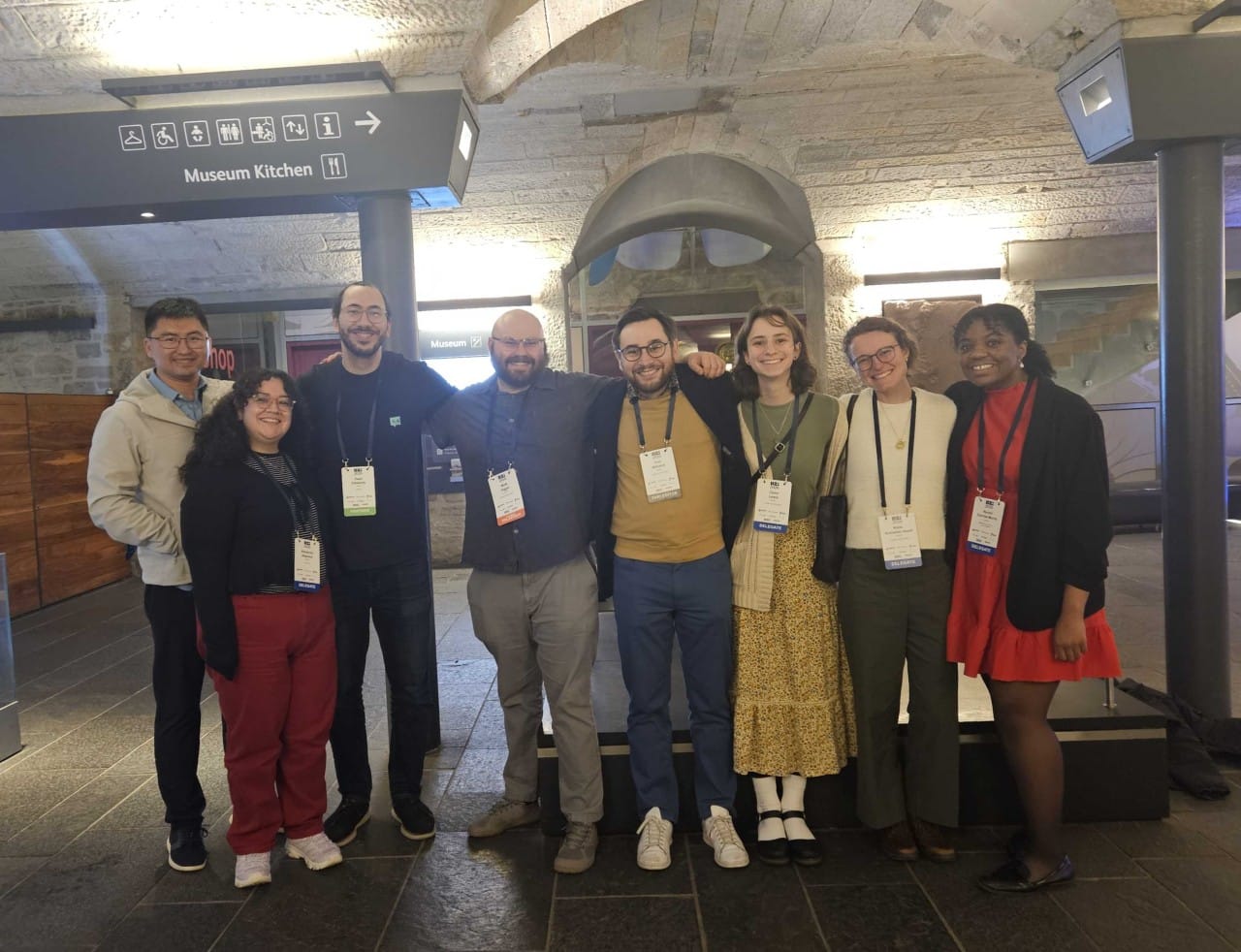
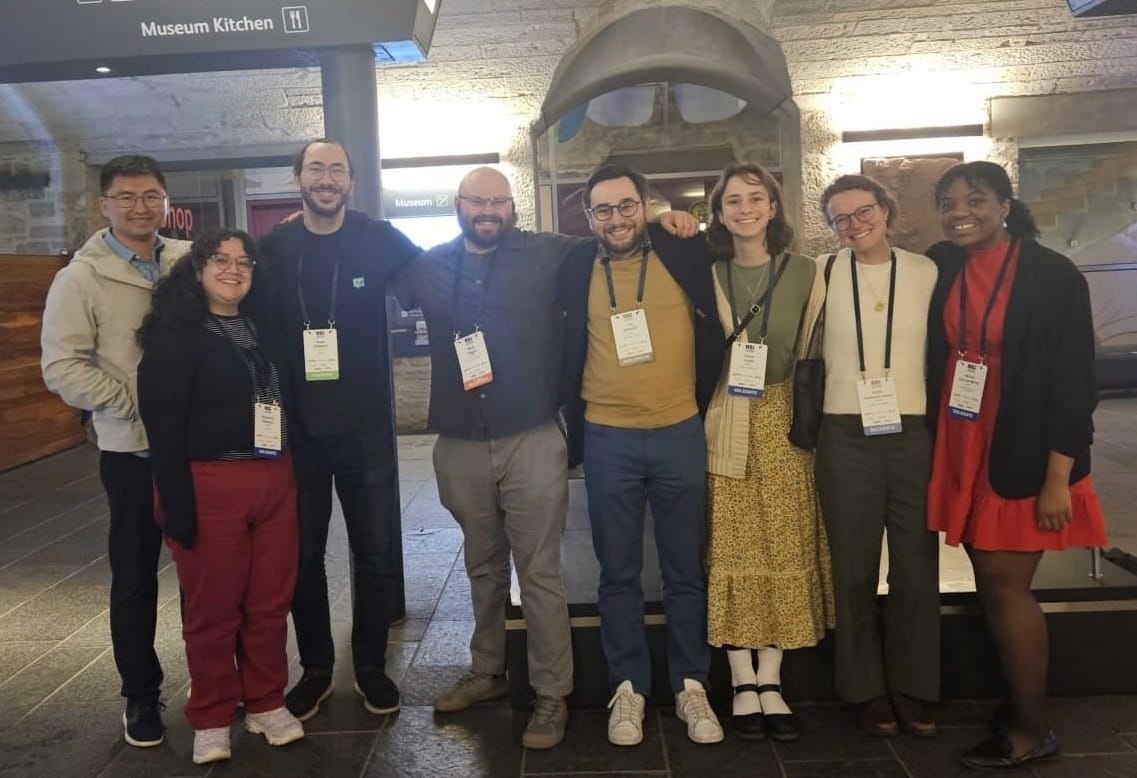
He had already been using improv exercises in robotics classes before he began performing Robot Riot onstage. Then, during a group trip to the Edinburgh Fringe – which is billed as the largest arts festival in the world – Williams encountered Improbotics, an international troupe that has been experimenting for years with robots, AI and human improvisers.
“I thought it would be very cool to build on that and do something similar in Denver that had a slightly different flavor,” Williams recalled. “So I pitched it to RISE, and they were like, ‘Yeah, let’s do it.’”
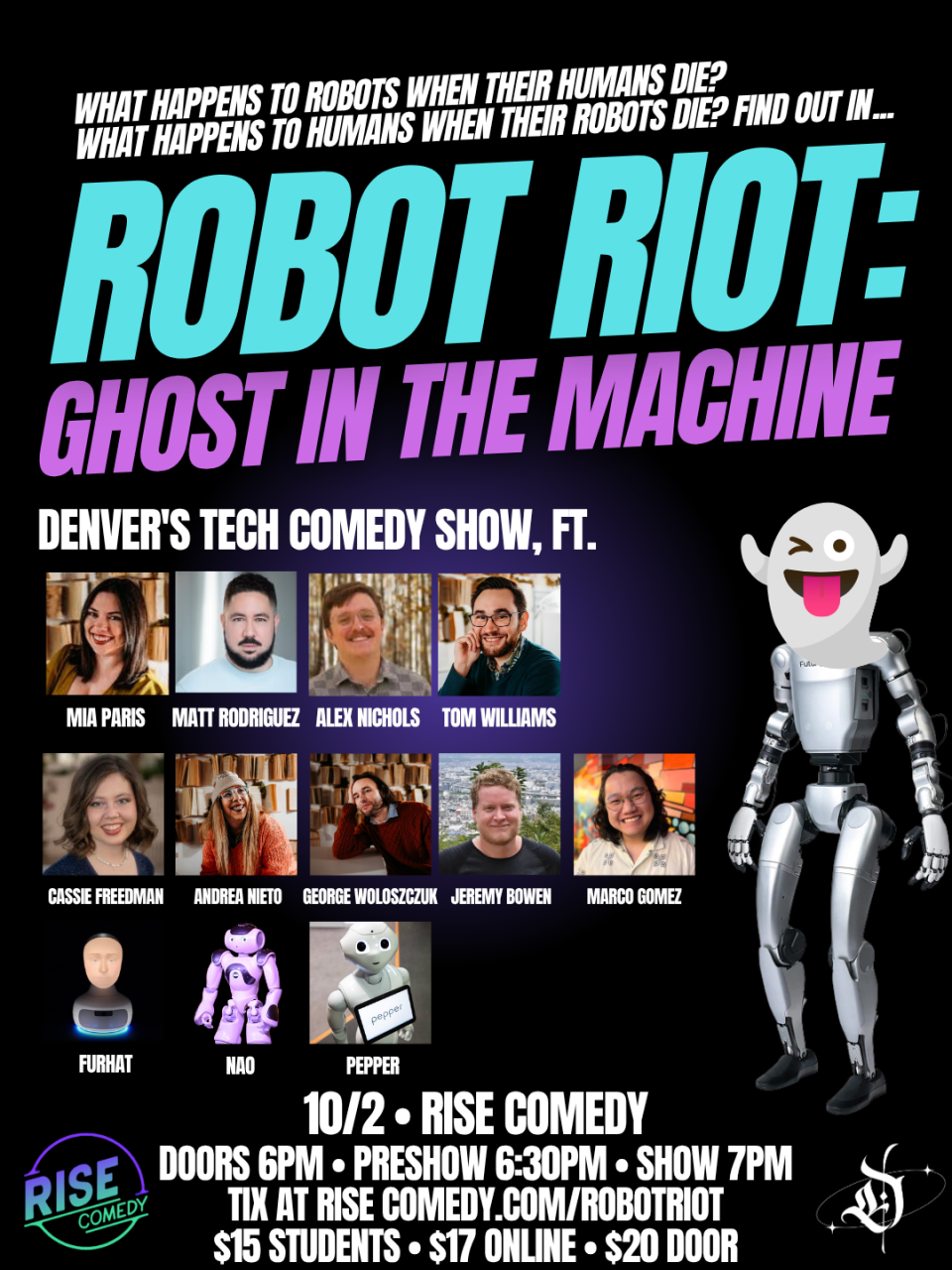
A trial Robot Riot ran at RISE Comedy last November, followed by the monthly series beginning this past spring. Friday’s show is the latest installment, and RISE currently has monthly Robot Riots scheduled well into 2027.
Laugh first. Think later.
Robot Riot borrows some of Improbotics’ tricks, including AI-generated material and robots interacting with human performers. But Williams has pushed the Denver show toward something that reflects his own academic interests: robot ethics.
The comedy becomes a way to put otherwise abstract questions in front of an audience.
For example, one could look at “enshittification," which can be summarized as the process by which online products and services become worse as companies squeeze more value from them. (The word was coined by Cory Doctorow in a 2022 blog post and popularized in his bestselling 2025 book that brought the concept into wide public consciousness.)
For their recent Enshittification show, the Robot Riot cast used an AI-generated PowerPoint as part of a fictional tech CEO’s product pitch. That led into a larger discussion of the choices companies make and what alternatives consumers might have.
Williams said the overall goal of Robot Riot is pretty simple: People laugh while they’re there, and after they leave, they keep thinking about the many issues and open questions that were raised.
“That’s the hope,” he said. During the Enshittification show, Williams noticed something that suggested the audience was doing more than just having a fun night out. Williams asked the audience, "What can we do about all this? We’ve actually got solutions to some of these things.” And to his delight, members of the audience had stopped laughing long enough to take photos of the suggestions he displayed on the screen.
For Williams, that kind of response is a big part of the point: Use comedy to draw people in, then give them something worth thinking about – and perhaps even acting on – after the laughs are over.
What happens when a robot dies?
Starting 30 minutes prior to this Friday night's show, Williams’ students will display robots in the lobby, while an on-screen “in memoriam” presentation remembers robots made by companies that went out of business. That isn’t entirely fictional territory.
Williams pointed to cases where connected robots have effectively been “bricked” after their manufacturers shut down – sometimes leaving children who had grown attached to them trying to understand why their robot suddenly no longer works.
“What happens to kids when their robot 'bricks' as the company goes under, and the parents have to explain to the kids that the robot died?” Williams said. “Which has happened, and it was traumatic. So we’re looking at both sides of this.”
The robot in Friday night’s lobby provides a physical version of the same question.
Its motors are failing. Nobody is claiming that it is alive, much less that it understands what is happening to it. But humans have a long history of getting emotionally attached to things that aren't alive. And increasingly, some of those things talk back.
The stage as a robotics lab
That boundary between engineering and human behavior is increasingly central to Williams’ work at Mines.
MIRRORLab researchers study robot communication through language, gesture, and augmented reality. More recently, Williams said, the lab has been bringing techniques from improv, puppetry, and even literary theory into robotics research and design.
“It’s all focused on human-robot communication,” he said, “and how to make that communication sensitive to environmental context, social context, and moral context.”
In other words, improv is much more than Williams simply blowing off steam after teaching computer science classes all day. Students use role-playing to work through questions such as where a robot should stand, how it should speak, what gestures feel natural, and even what kind of personality it should have. The same general idea can move from a Mines classroom to a Denver comedy stage.
Robot Riot appears to have found an audience for the experiment. “Of all the types of improv shows I do, Robot Riot has been by far the one that gets the most people in,” Williams said. “It gets people from many different types of communities and interests.”
That seems appropriate for a show occupying a unique intersection of science lecture, improv comedy, robot demonstration, and ethics seminar. Not to mention – at least, this Friday night – something of a memorial service.
Robot Riot: The Robot Comedy Hour
Friday, Oct. 2, 7 p.m.
RISE Comedy, 1260 22nd St., Denver
Tickets: $17 online, $20 at the door.