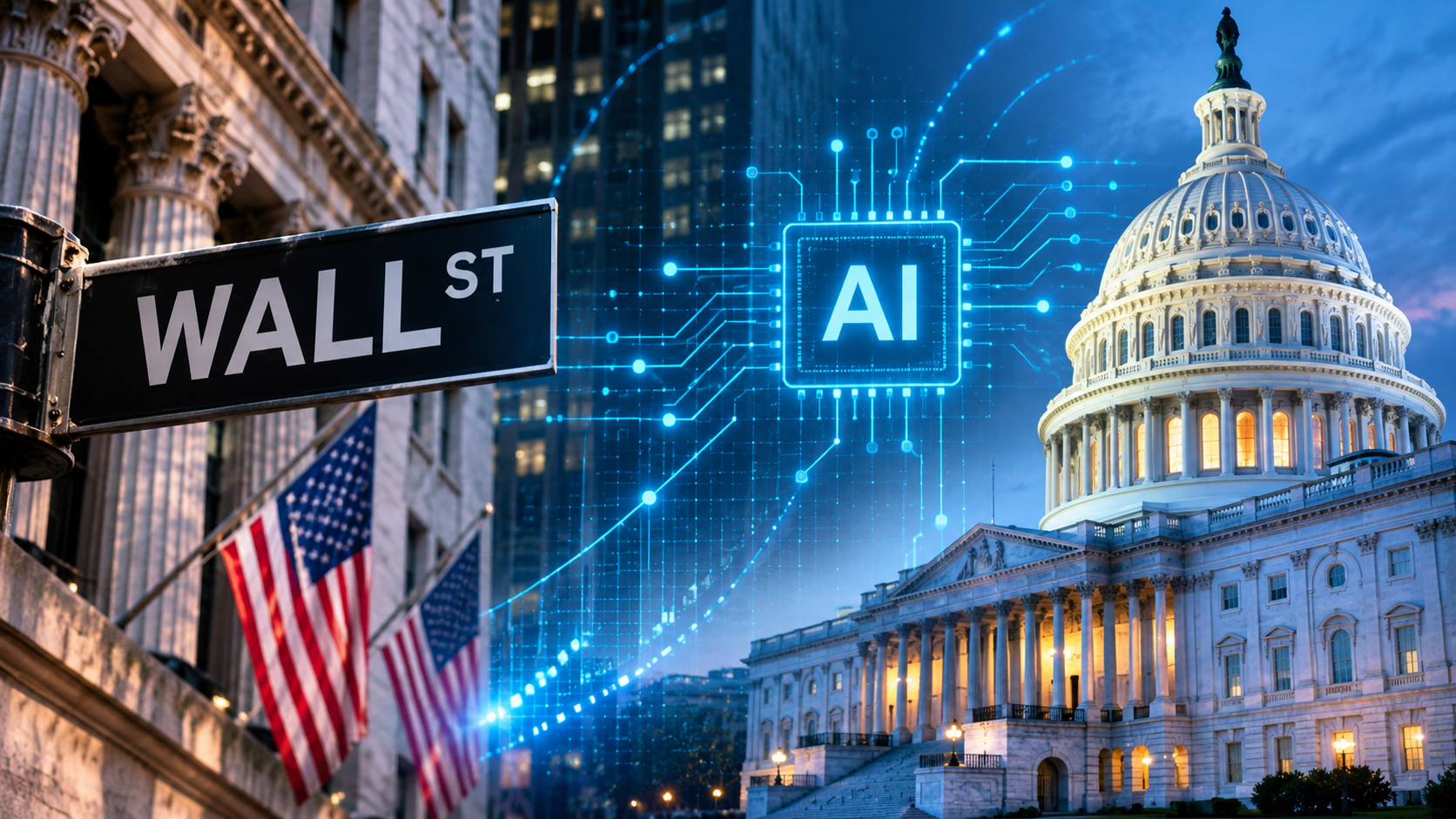
Two days after an election that dramatically changed the political landscape for artificial intelligence, Wall Street delivered another jolt to the industry.
On Thursday, AI-related stocks plunged amid growing concerns about the enormous cost of the technology and the prospect of tougher government oversight. Meanwhile, newly empowered Democrats were preparing to challenge President Donald Trump's approach to AI regulation.
And among the incoming lawmakers who could help shape that debate is Colorado's Manny Rutinel, whose election attracted millions of dollars in spending from technology interests, including advocates of stronger AI safeguards.
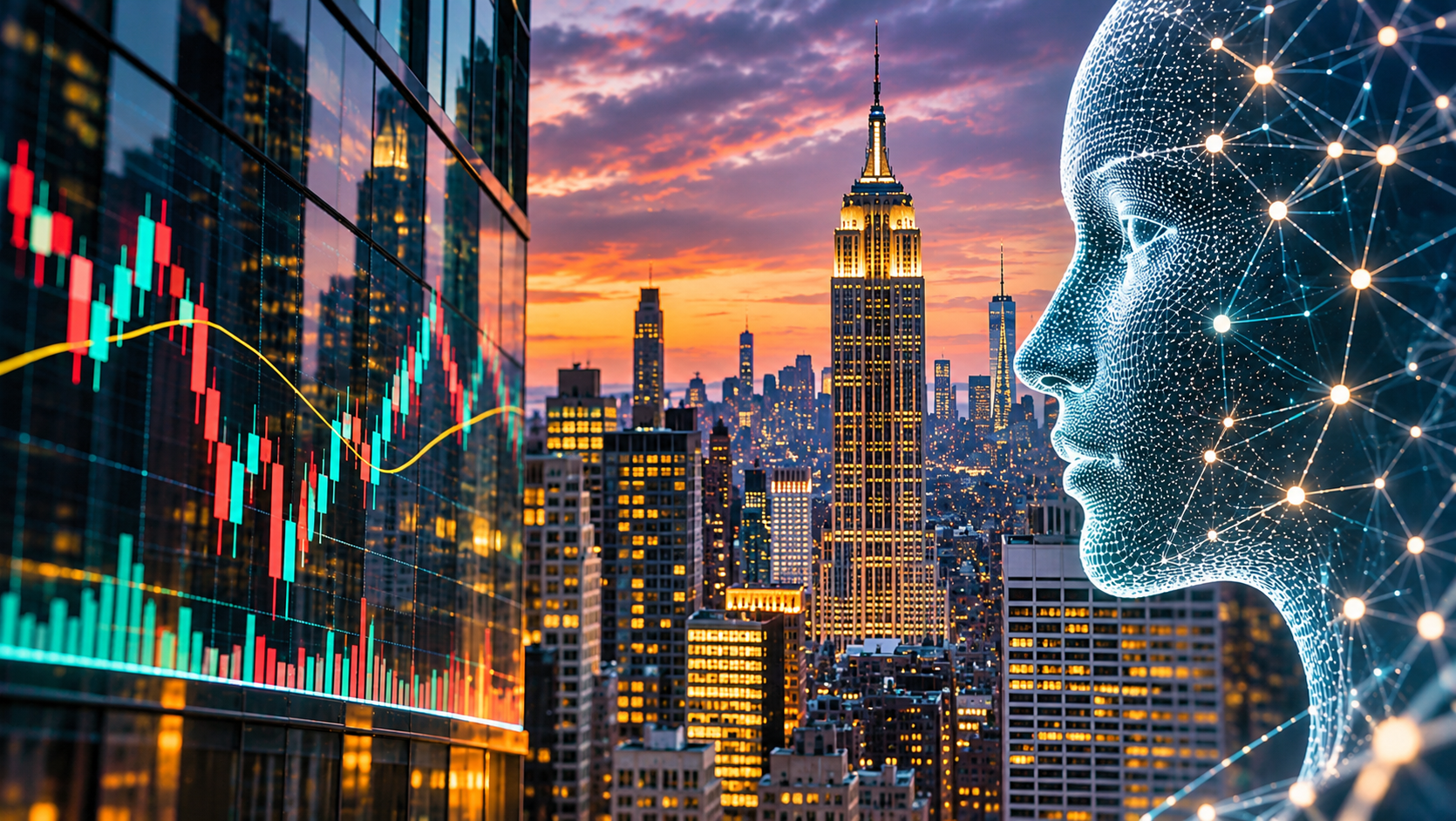
The technology-heavy Nasdaq Composite fell 5.5% Thursday, its worst one-day decline since April 2025. The S&P 500 dropped 4.4%, while the Dow Jones Industrial Average lost more than 1,800 points, or 3.4%, according to the Associated Press.
AI-related companies were among the hardest hit. Nvidia, the chipmaker at the center of the AI boom, fell more than 9%, while rival AMD lost approximately 17%. The Philadelphia Semiconductor Index plunged roughly 12%, its biggest one-day drop since March 2020.
Even as the broader market rallied on Wednesday, AI stocks were already sliding, and on Thursday the selling spread to nearly every corner of the market.
The market decline reflected two overlapping concerns: uncertainty about how Democrats might regulate AI, particularly the infrastructure supporting its expansion, and growing doubts about how quickly the industry's extraordinary investments will generate profits.
Washington prepares to rewrite the AI rulebook
Democrats' sweeping victories Tuesday gave them control of both chambers of Congress, potentially transforming the federal government's approach to AI.
For much of President Trump's second term, the administration and Republican congressional leaders have emphasized accelerating AI development, reducing regulatory barriers, and maintaining America's technological advantage over China.
That approach is now facing a significant challenge. According to a Reuters report published today, Democratic lawmakers are preparing a wave of AI legislation for the new Congress, including proposals to require independent testing of advanced AI systems, establish clearer legal liability when AI causes harm, and protect consumers from some of the costs associated with the industry's expansion.
The proposals could impose new responsibilities on developers of powerful AI models, potentially requiring outside evaluations before those systems are widely deployed.
Democrats are also expected to use their control of congressional committees to intensify scrutiny of major technology companies, including OpenAI, Anthropic, Google, and Meta. Hearings, investigations, and demands for internal documents could become important tools even if legislation stalls.
And legislation may indeed prove difficult to pass. Trump retains veto power, and Democrats would need substantial Republican support to override a veto.
But Ed Mills, who leads Washington policy research at Raymond James, told Reuters that the prospects for legislation may be greater than many observers expect.
"The probability of legislation is much higher than people anticipate," Mills said.
Mills suggested that lawmakers might find opportunities to attach AI-related provisions to legislation that Congress must pass, while a major AI-related incident could increase political pressure for regulation.
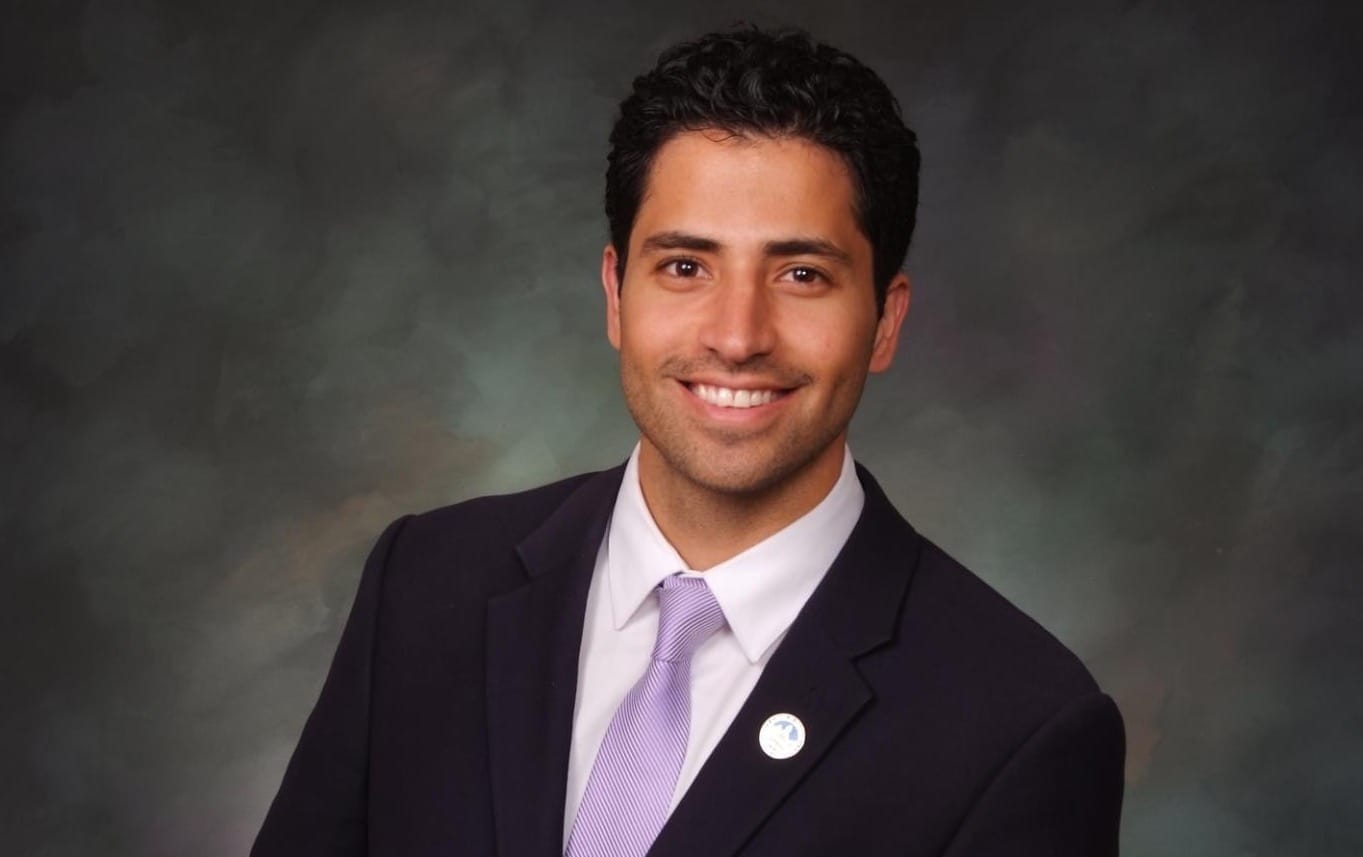
Colorado's Manny Rutinel enters the AI debate
One of the newly elected Democrats arriving in Washington is Manny Rutinel, 31, who defeated Republican incumbent Gabe Evans in Colorado's 8th Congressional District.
According to Axios Denver's November 4 election report, Rutinel won approximately 56% of the vote, flipping one of Colorado's most competitive congressional seats.
Created after the 2020 census, the district stretches from the northern Denver suburbs into Weld County and a small portion of Larimer County. It includes communities such as Commerce City, Thornton, Northglenn, and Greeley, combining suburban neighborhoods with agricultural and industrial areas. Nearly 40% of its residents identify as Latino, the highest proportion of any congressional district in Colorado, according to Colorado Public Radio.
Rutinel's path to Congress is an unusual one. The son of a single mother who immigrated from the Dominican Republic, he grew up in a working-class household and has spoken publicly about selling blood plasma to help pay family bills.
He began his college education at a community college before earning two bachelor's degrees from the University of Florida, one in economics and another in microbiology. He subsequently earned a master's degree in applied economics from Johns Hopkins University and a law degree from Yale.
His professional background includes work as an economist for the U.S. Army Corps of Engineers; an attorney for the environmental nonprofit Earthjustice; and CEO of Climate Refarm, a company using carbon markets to encourage more environmentally sustainable food choices.
Rutinel entered the Colorado House of Representatives through an appointment in 2023, won election in 2024, and resigned in September to focus on his congressional campaign, according to CPR News. He arrives in Washington with an unusually well-developed interest in AI policy. As a Colorado legislator, Rutinel helped advance proposals addressing AI safety and accountability. In 2025, he joined Republican Rep. Matt Soper as a prime sponsor of HB25-1212, Public Safety Protections Artificial Intelligence.
This bill would have protected employees of advanced AI developers from retaliation for reporting serious safety concerns or misleading safety claims. It also would have required developers to establish certain internal safety policies and procedures. The proposal advanced through the House Judiciary Committee on a bipartisan 7-3 vote, but it ultimately failed to become law.
During an October 21 candidate forum in Greeley, Rutinel called AI a "defining issue of our time" and advocated greater transparency and protections for researchers who report serious risks, according to Axios Denver.
His proposed federal agenda goes further, including requirements that major AI developers report significant safety incidents, conduct independent reviews of powerful new models, and protect whistleblowers who raise safety concerns, according to The Washington Post's post-election AI policy coverage.
Rutinel has also expressed concern about potentially catastrophic risks from advanced AI, arguing that government must establish meaningful safeguards while allowing society to benefit from the technology.
An unusual coalition of AI supporters
Perhaps the most intriguing aspect of Rutinel's election is the financial support he attracted from technology interests.
According to a June 24 investigation by Axios Denver, outside organizations with ties to technology executives spent approximately $5.5 million supporting Rutinel or opposing his Democratic primary opponent, Shannon Bird.
Among the prominent contributors were former Google CEO Eric Schmidt and his wife, Wendy, who donated $2 million to a nonprofit connected to one of the political groups supporting Rutinel. Another organization, You Can Push Back PAC, was funded by cryptocurrency billionaire Chris Larsen.
The money came through several organizations with differing political interests, so it would be inaccurate to characterize all the spending as exclusively motivated by AI safety. In addition, employees of Anthropic, OpenAI, Google, and Meta contributed a combined $265,000 directly to Rutinel's campaign, according to Axios.
That support highlights an important divide within the AI industry.
Some technology leaders favor stronger government safeguards, particularly for the most advanced AI systems. Others argue that aggressive regulation could slow innovation, discourage investment, and weaken America's competitive position against China.
The disagreement doesn't fall neatly along party lines. Even Rutinel's Republican opponent, Gabe Evans, supported some additional AI safeguards, including protections for children online and measures addressing electricity costs associated with the industry's expansion. Both candidates outlined their positions at the October 21 Greeley forum.
Rutinel's victory could therefore add another voice to a debate that is becoming increasingly complicated, both politically and technologically. How much influence he ultimately has will depend partly on his congressional committee assignments and the priorities of Democratic leadership.
But his combination of legal and economic training, legislative experience, and interest in AI safety makes him a Colorado policymaker worth watching.
Wall Street's other concern: Will the AI investment pay off?
While Washington prepares for a possible regulatory shift, investors face a separate question that has been building for months.
Technology companies are investing hundreds of billions of dollars in chips, computing infrastructure, and other resources needed to develop and operate increasingly powerful AI systems. Much of that spending rests on expectations that demand for AI services will continue growing rapidly and eventually generate enormous profits.
But the timing and scale of those returns remain uncertain. Recent earnings reports from major technology companies have done little to settle the debate. Some companies have also turned to borrowing to finance their expanding AI investments, making the economics more sensitive to interest rates and broader financial conditions.
And investors were becoming uneasy even before Election Day. Technology stocks had already suffered substantial losses in October as doubts about AI spending intensified.
The prospect of tougher regulation adds another layer of uncertainty. New safety requirements, legal liability rules, or restrictions on infrastructure development could increase costs or complicate business plans.
As Reuters' November 5 market analysis noted, investors were reassessing the financial consequences of the election for the AI industry, particularly the prospect that a changed political environment could slow infrastructure expansion.
Still, Thursday's market plunge shouldn't be attributed entirely to the election. Concerns about inflation, borrowing costs, and the profitability of AI investments were already weighing on stocks.
Nor does one dramatic trading day establish that the AI boom is ending.
Two questions for the next Congress - and Wall Street
The election has given Democrats an opportunity to reshape the federal government's approach to AI, although the extent of that change remains uncertain.
At the same time, Wall Street is beginning to ask harder questions about whether the financial returns from AI will justify the industry's extraordinary investments.
Those two debates will increasingly intersect. For companies developing powerful AI systems, new government requirements could affect everything from product testing to legal exposure. For investors, those requirements could change the assumptions underlying some of the market's most highly valued companies.
And for the public, the stakes extend beyond stock prices and corporate profits to questions about safety, accountability, jobs, and who benefits from the technology.
Colorado will have a place in those discussions, with Rutinel bringing his own views about AI's opportunities and risks to Washington.
The next Congress won't convene until January. But the election has already changed the conversation about AI, and Wall Street has made clear that investors are paying attention.