
Techstars Boulder is more than halfway through its first accelerator class since returning to the city where it got its start. The nine-company cohort will pitch at Demo Day on December 7, offering an early look at whether the revived program can recapture some of what made the original Boulder accelerator work.
At Colorado Startup Week in September, new Techstars Boulder Managing Director Shay Har-Noy offered an unusually candid explanation for what had gone wrong.
“We grew too big too fast,” Har-Noy told the crowd at the program’s first public cohort reveal since it shut down its hometown accelerator in 2024. “It broke that connection to the local communities. Maybe we deserved to be shut down.”
I’ve sat through plenty of relaunch announcements, and that admission caught my attention.
Har-Noy’s comments raised a broader question about growth: What can an organization lose as it scales, and what happens when money, incentives, and decisions move farther from the people closest to the work?
Why Techstars left Boulder
David Cohen, Brad Feld, David Brown, and Jared Polis founded Techstars in Boulder in 2006, launching its first cohort the following year. Each class brought a small group of founders together for three months, supported by mentors who showed up in person and local investors who put money into the companies.
In February 2024, under then-CEO Maëlle Gavet, Techstars announced Techstars 2.0. The plan called for 700 to 800 investments that year across more than 50 programs, a greater presence in the world’s largest tech hubs, and a corporate headquarters move from Boulder to New York. The Boulder accelerator would close after its spring class.
The closure upset longtime supporters. Mentor Scott Yates told The Colorado Sun it felt like McDonald’s closing its first restaurant. Former staff described another concern to TechCrunch: Pooling investment capital centrally had reduced the financial stake local investors held in their city’s companies.
Cohen returned as CEO a few months later. In a June 2025 letter marking a year back in the role, he called the criticism valid and summarized the new direction plainly: “Bigger isn’t better; better is better.” Boulder, Chicago, and Atlanta would return with greater local ownership and involvement.
Interviewed on a Leeds School of Business podcast in May, Har-Noy explained that pooling the city funds had “removed some of those economic incentives and financial interests away from the community.”
The relaunched Boulder program is now a locally owned partnership with Techstars, with alumni and mentors among its investors. CU Boulder became a formal partner in April, and program manager Brian Seckel joined from the Deming Center Venture Fund. Har-Noy said he and Seckel conducted roughly 200 applicant interviews over several weeks.
The nine-company class started September 8 and will pitch at Demo Day on December 7. Techstars invests $220,000 in each accelerator company. The deal includes 5% common equity plus a $200,000 SAFE — a simple agreement for future equity that can convert into additional ownership later.
Two companies, Navi and Patrol 6, are described by Techstars as AI companies. A third, Sunzu, is built around a behavioral engine. Others work in areas including Medicaid care, municipal road inspection, PCB assembly, semiconductor authentication, and 3D-printed rocket propellant.
With so much attention focused on AI software, the cohort’s relatively strong showing of hard-tech and physical-world companies stands out.
What this has to do with scaling AI
I’ve spent 20 years working inside growing companies, so Har-Noy’s comments about incentives caught my attention. As organizations expand, leadership often centralizes funding and decisions. The people who helped make something work can end up with less influence over it and less reason to stay involved.
That appears to be part of what happened in Boulder. Alumni became mentors and investors, putting their experience and money into the next generation of companies. Pooling the funds weakened the financial connection between those investors and the local startups.
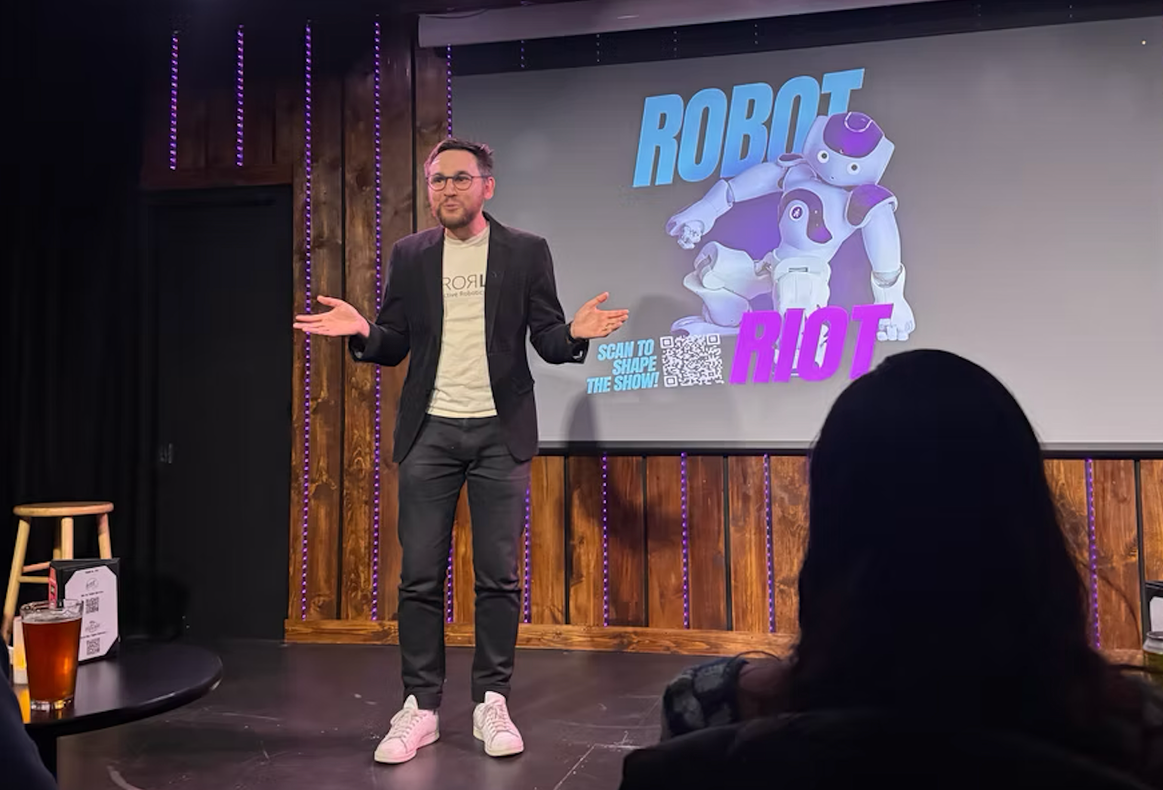
I teach AI for go-to-market teams, and I see a similar risk when companies expand a successful AI pilot.
A tool may work well for a sales representative who knows the accounts, understands the customers, and knows when the standard playbook doesn’t apply. Leadership sees the results, automates the outreach, and moves the rep into overseeing the system. But a persona written into a prompt may not capture the account history, judgment, or customer knowledge that made the pilot successful in the first place.
The company can send more messages while getting fewer useful responses.
At Startup Week, Cohen argued that human trust becomes more valuable as founders spend more time working with AI agents. Nicole Glaros, who ran the Boulder program for years, also emphasized the importance of getting founders together in person. Otherwise, she said, they tend to stay in front of their screens. Startup Week itself had no virtual option, reflecting a similar belief in the value of face-to-face interaction.
Har-Noy told Leeds that AI has also made prototypes dramatically easier and cheaper to build. That lowers the barrier to creating software and raises the importance of having something competitors cannot easily replicate. His investment priorities include proprietary data, deep domain expertise, and physical problems that are harder to copy. The Boulder cohort reflects some of those priorities.
Techstars also benefits from telling its comeback story well. It has a reputation to rebuild and a financial interest in the cohort’s success. Demo Day on December 7 will offer an early look at the companies. It will take longer to see whether restoring local ownership and financial incentives leads to sustained support.
Questions to ask before scaling AI
If you’re expanding an AI pilot across your company, I’d ask three questions before going further.
- Who has a stake in making this work? Before centralizing a workflow, identify the people responsible for its results and what will change for them. Will they retain enough authority, ownership, and incentive to keep contributing? Address those changes before automating the work.
- Where do customers need direct contact with your team? Techstars is bringing founders and mentors together in person. In your business, identify where customers rely on someone who understands their situation, can exercise judgment, or has the authority to resolve a problem. Consider what would be lost if you automated those interactions.
- What knowledge are you about to automate away? A successful pilot may depend on things that never made it into the workflow: account history, customer relationships, experience, or judgment. Before scaling it, identify what the people doing the work know that the system doesn’t.
Techstars helped build Boulder’s startup community and later damaged its relationship with that community when it left. Restoring local ownership and incentives gives the accelerator a chance to repair some of that damage.
For companies scaling AI, that’s the part I’d pay attention to: Do the people who made the early work successful still have a meaningful role as the company grows?