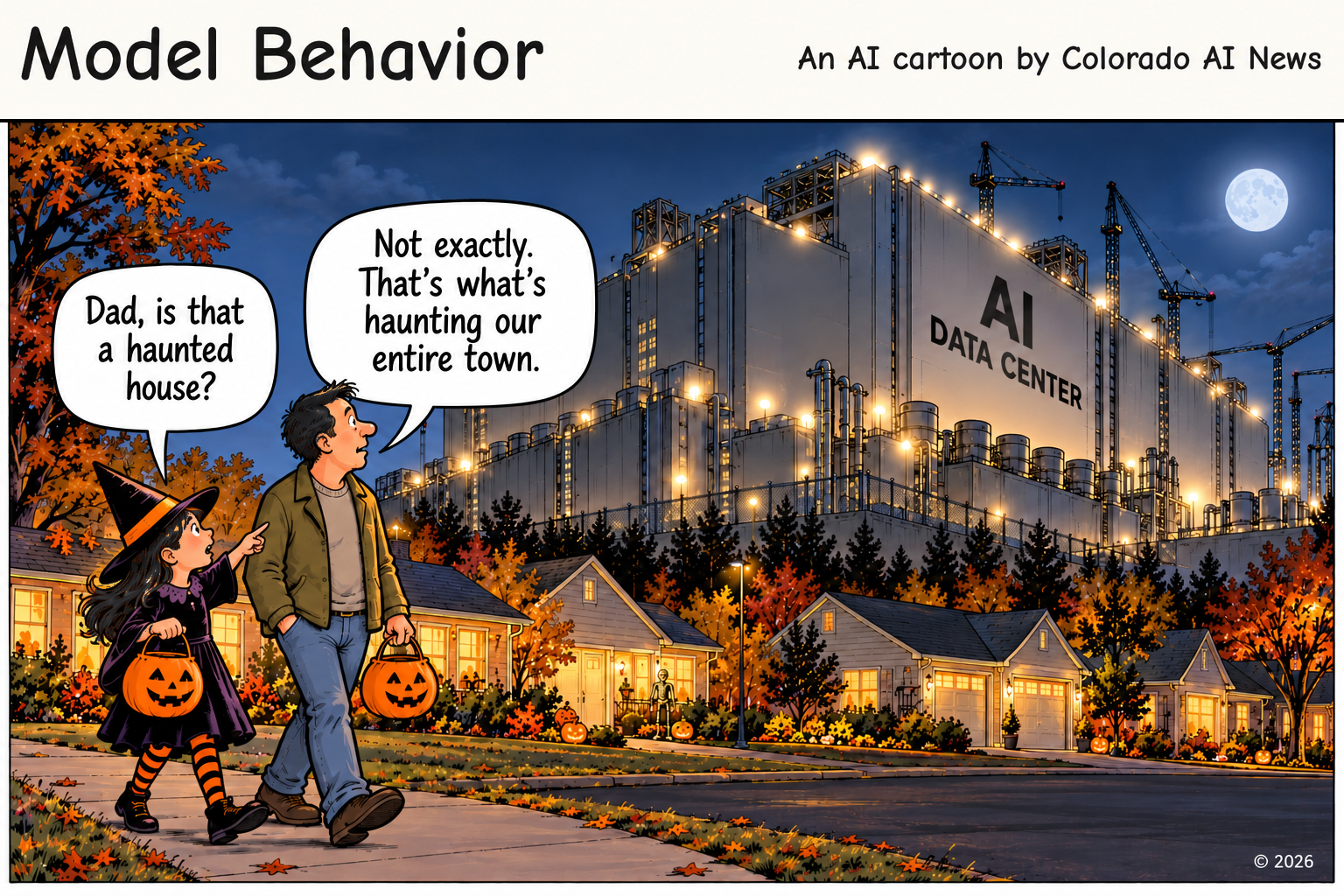
Tuesday's sweeping Democratic election victories have created a new challenge for one of America's fastest-growing industries: the massive data centers powering artificial intelligence.
From Texas to Georgia, candidates campaigning to pause or restrict data-center development won gubernatorial elections. Across the country, voters approved dozens of local measures limiting where and how new facilities can be built.
By Thursday, the scope of that resistance was becoming clearer. According to new reporting from the Associated Press, restrictions prevailed in 44 of the 45 completed local data-center referendums tracked by Redbud Consulting.
For the technology companies investing billions of dollars in AI infrastructure, the results raise important questions about where and how the next generation of data centers will be built. Colorado will be part of that debate.
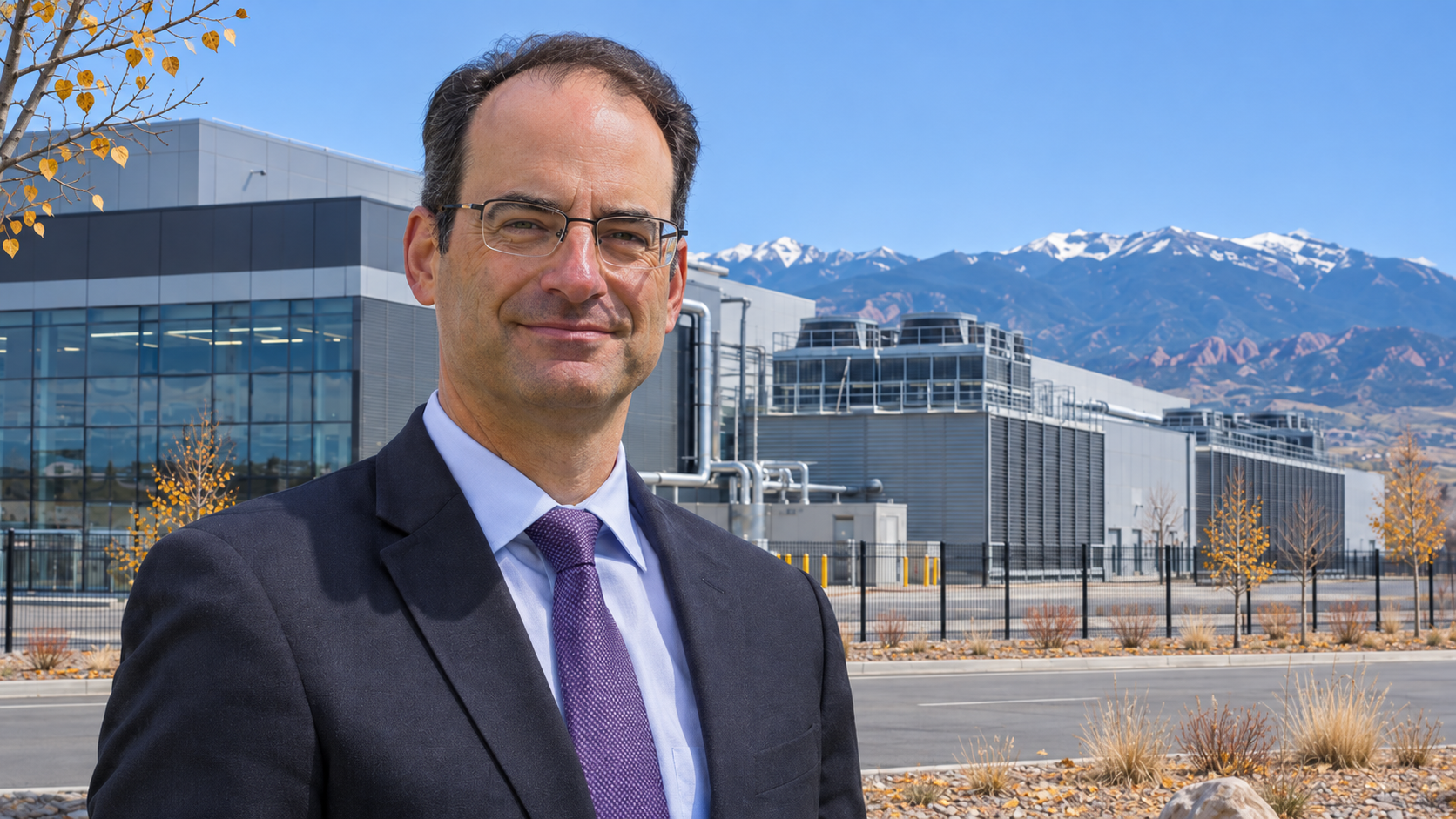
Democrat Phil Weiser, who defeated Republican Victor Marx on Tuesday to become Colorado's next governor, has promised to make data-center regulation a top priority when he takes office in January.
At his first post-election press conference Wednesday, Weiser reaffirmed this commitment, according to Colorado Public Radio, citing the importance of community input, affordable electricity, clean energy, and water protection.
But unlike some of his newly elected counterparts, Weiser hasn't proposed a statewide construction moratorium. He sees economic opportunities in projects that meet his requirements.
Whether that approach can satisfy Coloradans deeply skeptical of data-center development will be an early test of his administration.
The data-center backlash goes national
The election delivered several major victories for politicians promising to restrict the industry's expansion.
In Texas, Democrat Gina Hinojosa defeated Republican Governor Greg Abbott after campaigning for a moratorium on new data-center approvals until the state establishes stronger protections for residents and communities.
In Georgia, former Atlanta Mayor Keisha Lance Bottoms won the governorship after calling for a temporary pause while officials evaluate the industry's environmental and economic effects.
Ohio voters elected Democrat Amy Acton, who has pledged to block data-center projects that fail to meet specified standards.
And the issue had become a prominent part of campaign advertising. According to AdImpact data cited by the AP, campaigns spent more than $380 million on television ads mentioning data centers, with Democrats outspending Republicans by more than three to one.
The results also rattled Wall Street. In a note to clients after the election, Goldman Sachs analysts estimated that states likely to tighten data-center rules account for about 45% of planned U.S. capacity, with Texas alone representing roughly a quarter. The firm said it expects some newly elected Democratic governors, including in Texas and Georgia, to impose conditional moratoria while legislatures write new rules on tax breaks, electricity, water and environmental permits.
Goldman also expects any such pauses to be short-lived, in part because data centers weren’t a top priority for most voters. That makes the near-term risk more about timing than lost capacity.
Those figures illustrate the financial stakes. However, election results alone don't establish how much opposition to data centers influenced voters' choices.
The AP Voter Poll found that roughly three-quarters of voters opposed a new data center in their community. Yet only about one-quarter described the issue as crucial to their congressional vote, well below the shares citing the cost of living or government corruption.
Looking ahead, the industry's future is increasingly intertwined with political concerns about affordability, energy, water, and economic development.
Weiser: New rules, but opportunities remain
Colorado's incoming governor has outlined his conditions for data center development. At his November 4 press conference, Weiser repeated his concern that local communities had been excluded from decisions involving large data centers.
"There have been data centers where communities feel they've been shoved down their throats," he said, adding that Colorado needs protections to ensure developers cover their electricity needs while respecting the state's clean energy and water commitments.
Weiser also emphasized that, given the following three conditions, there are opportunities for data-center development in Colorado:
- Community acceptance. Residents must have meaningful opportunities to influence whether projects are built, and local governments must have appropriate authority over development decisions.
- Protection for utility customers. Developers should pay the additional infrastructure and electricity costs their facilities create, rather than shifting those expenses to households and other businesses.
- Environmental safeguards. Projects must support Colorado's clean energy transition and protect water supplies and water quality.
In an October 14 KUNC interview, Weiser called data-center legislation his first priority and said statewide safeguards would be necessary alongside local decision-making.
In a separate October 5 interview with Colorado Public Radio, he criticized zoning rules that allow certain industrial developments to proceed without sufficient community input. However, he acknowledged that the legal details of local authority remain to be worked out.
That distinction could become critical. Giving communities a voice in approving data centers may satisfy some residents, but others may demand the legal authority to reject projects outright.
An economic opportunity for Colorado?
Despite his emphasis on stronger regulation, Weiser has also discussed circumstances in which data centers could provide substantial economic benefits.
In a May interview with Colorado Public Radio, Weiser pointed to the communities of Craig and Hayden in northwestern Colorado, where the closure of coal-fired power plants threatens jobs and local tax revenue. Weiser suggested that data centers powered by geothermal energy could help those communities transition to a new economic future, potentially providing jobs for workers displaced by the coal industry's decline.
Weiser even expressed a willingness to consider state subsidies for projects tied to that transition. The proposal remains hypothetical. No specific geothermal-powered data-center development in either community was announced in his remarks.
Still, the example illustrates an important difference between Weiser's approach and that of politicians favoring broad restrictions. Weiser wants Colorado to establish conditions under which data centers can operate responsibly and contribute to local economies. He has also indicated that particular projects could warrant financial support when they serve broader public goals.
Whether developers can satisfy those requirements – and persuade local residents that the benefits outweigh the costs – is another question.
Colorado's resistance runs deep
Public opinion suggests Weiser will face considerable skepticism.
A September survey by Colorado-based Magellan Strategies found opposition to data centers across the board, and the closer a facility came to home, the more the opposition grew. Seventy-five percent of registered voters surveyed opposed a data center elsewhere in Colorado, rising to 86% for one near their own neighborhood.
When asked how their own community should handle data-center projects, a majority went further than regulation. Fifty-five percent chose a ban on all data-center construction, while 26% preferred a new zoning and land-use code written specifically for data centers. Only 4% favored a temporary delay.
The self-funded survey included 1,389 Colorado registered voters interviewed between August 26 and September 2. Its results demonstrate broad public skepticism among respondents, although they don't reveal how strongly the issue influenced Tuesday's election.
That opposition is already affecting local governments. Brighton residents filled City Hall last month to oppose a proposed 2.5-million-square-foot data center in the northeast part of the city. After hours of public testimony and the withdrawal of the developer's zoning application, the City Council gave initial approval to a one-year moratorium on new data-center applications.
In Aurora, a contentious effort to revive a proposed moratorium fell short of the two-thirds vote needed for reconsideration on October 26. City officials and residents continue debating how future developments should be regulated.
As Crys Black documented in her September Human Input column for Colorado AI News, residents' concerns extend well beyond general attitudes toward artificial intelligence. They include electricity costs, water consumption, generator noise, transparency, and questions about the permanent jobs promised by developers.
Can Colorado lawmakers find common ground?
Weiser's promised legislation will revisit an issue Colorado lawmakers failed to resolve earlier this year, as two competing proposals died in committee in May:
- House Bill 26-1030 would have created a data-center development and utility modernization program, including tax exemptions for qualifying projects.
- Senate Bill 26-102 emphasized accountability for large-load data centers, including clean energy requirements, reporting on electricity and water use, and protections for utility customers.
According to preliminary reports, Democrats emerged from Tuesday's election with a supermajority in both chambers of the Colorado legislature, giving the incoming governor significant opportunities to pursue his agenda. But the failure of the two earlier proposals illustrates that agreement on the need for data-center policy doesn't necessarily translate into agreement on what that policy should require.
The industry is also responding to the need for change. On Thursday, OpenAI announced new commitments and policy recommendations addressing community participation, the costs of powering data centers, and the economic benefits available to host communities. Its commitments for future company-owned and operated campuses reflect growing pressure on developers to demonstrate that their projects benefit local residents.
Industry representatives, including the Data Center Coalition, argue that new restrictions could cost host communities tax revenue and investment. Those competing concerns will likely shape Colorado's 2027 legislative debate:
- Should communities have the power to reject data centers even when developers meet statewide requirements?
- What standards will ensure that electricity customers are not paying for infrastructure built primarily to serve large technology companies?
- How should Colorado evaluate water use and clean energy commitments?
- When, if ever, should the state provide financial incentives?
The answers will help determine whether Colorado becomes a more welcoming environment for carefully regulated data centers, or whether public resistance makes large-scale development increasingly difficult.
The national election results have given data-center opponents greater political influence. But the industry's future will ultimately depend on the regulations officials enact and the decisions communities make.
Weiser enters office promising to balance the expanding infrastructure needs of the technology industry with the concerns of Coloradans who want greater control over what gets built around them. His first legislative session will offer an early indication of whether that balance is achievable.