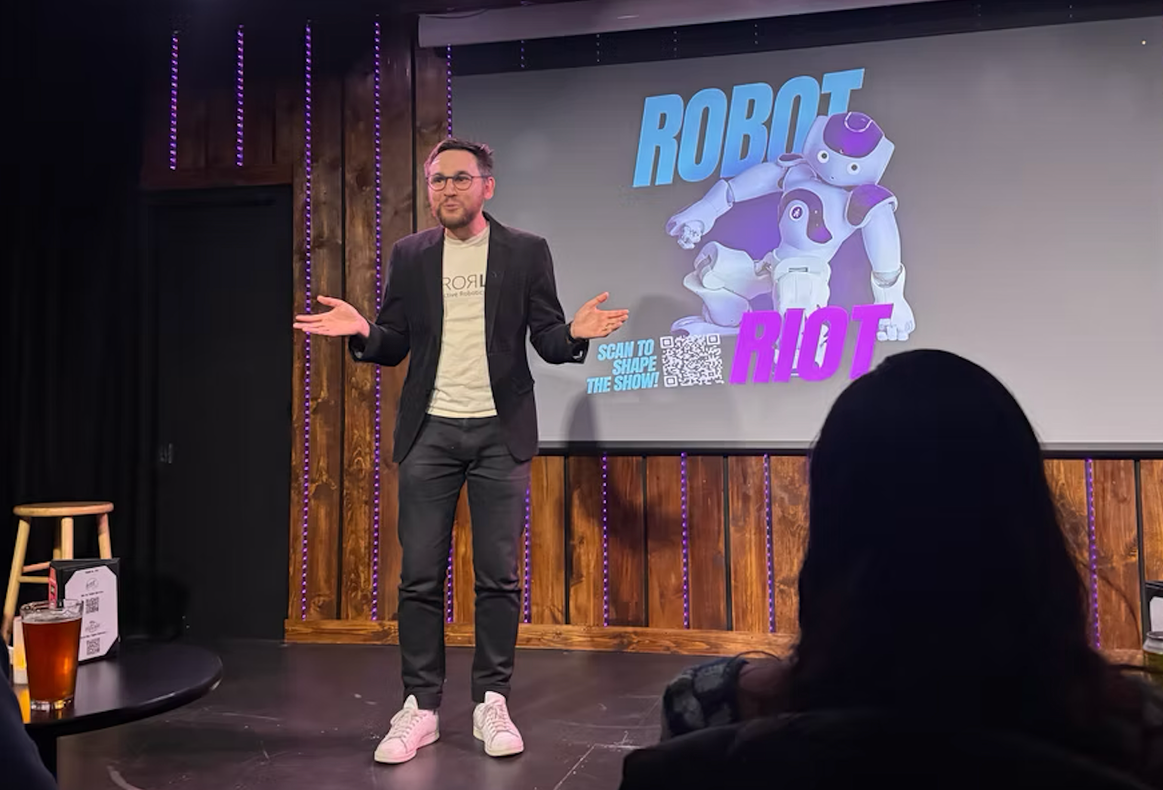
A few weeks ago, I stood in a meeting room at the Loveland Public Library, and a man asked me how often data centers test their backup diesel generators.
He didn't ask me whether AI is conscious. Or whether we can trust Sam Altman. He wanted the testing schedule, because that is when data centers can be at their loudest.
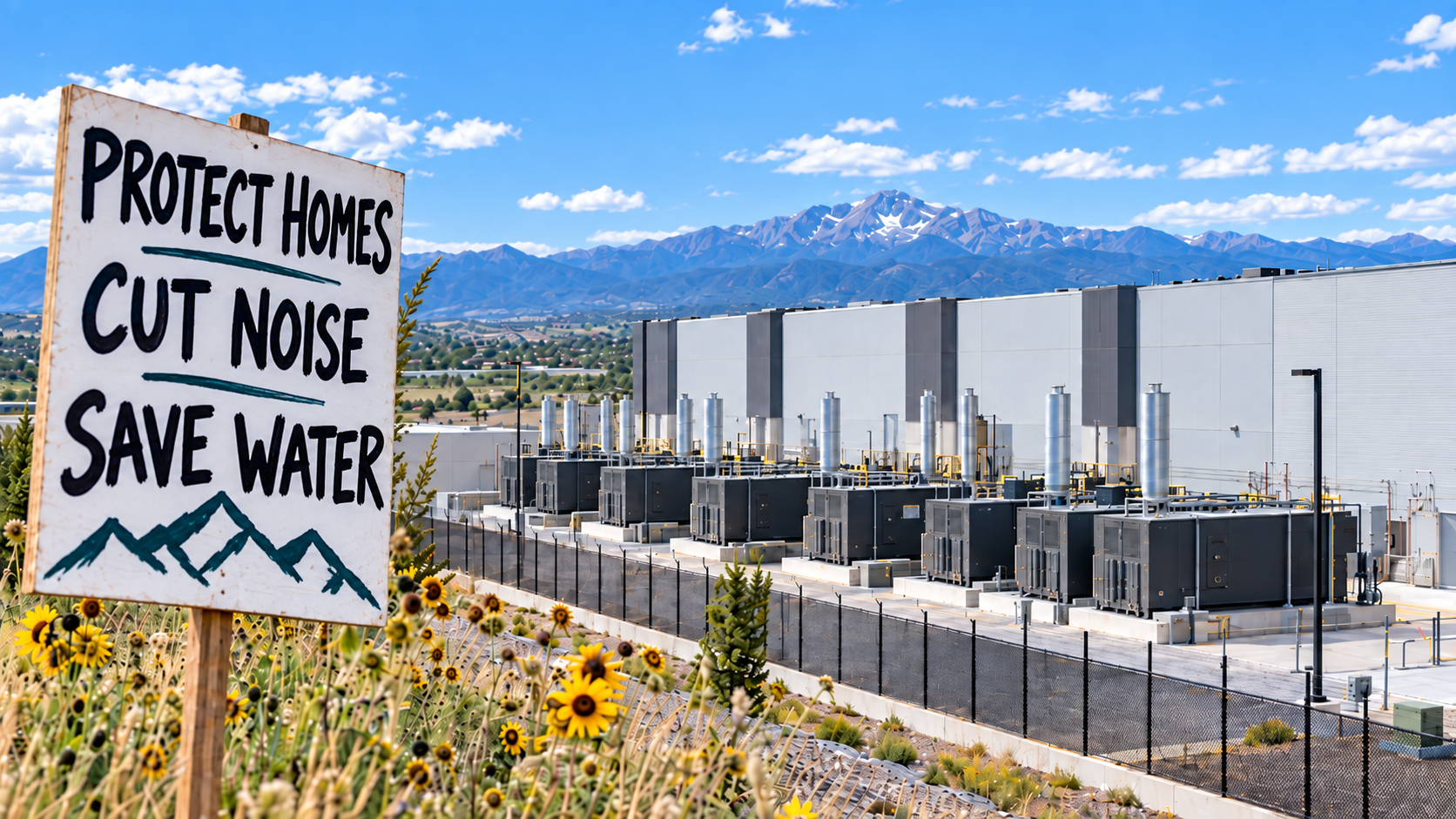
I did not have the answer. A retired IT architect two rows back did: monthly, sometimes more, and that is before you get to the operators building their own gas turbines on site. He was right to care. Colorado's largest data center, the QTS campus in Aurora, has proposed adding another 98 diesel backup generators to the 40 it has already installed.
I have spent the summer reading what Colorado communities put on the record about these buildings. Applications, ordinances, survey results, hearing outcomes. What I found does not match the story being told about them nationally.
Mark Cuban's theory of the fight
On June 25, Mark Cuban posted on X that “the fight against data centers has nothing to do with data centers.” They have become, he wrote, “a proxy for the hate towards AI and the concentration and accumulation of wealth it's creating.” His advice to the industry was to run a community tour and fund local programs, because the big model companies “all suck at putting people first.”
To his credit, Cuban softened the next day, writing that he does not think most of these data centers get built. By then the original post had cleared 700,000 views and drawn what the Houston Chronicle called a firestorm, with hundreds of people telling him he had no idea what it is like to live next to one.
Cuban is right about who broke this. He is wrong to reduce the fight to AI. And the part he gets wrong hands every city council in Colorado permission to stop listening to the guy asking about the generators.
The internet has to live somewhere
Something gets lost when a data center story runs under an AI headline. Data centers are not an AI invention. They have been around for 30 years, and much of what they support has nothing to do with chatbots. Your email lives in one. So does your bank's ledger, your kid's school portal, your doctor's records, the show you fell asleep to last night, and this publication.
Colorado has somewhere around 56 of them by industry counts, and most people in this state have never noticed one because many of the older facilities are smaller, lower-draw, and mostly invisible.
I use these tools every working day. So, I am not a neutral party here, and I will not pretend to be one. This infrastructure is necessary, and it is going to get built somewhere because we keep asking it to do more: higher-resolution streaming, cloud computing, telehealth, and, yes, AI.
That makes this the same category of problem as a water treatment plant or a waste transfer station. Nobody wants one at the end of their street. Everybody needs one to exist somewhere. This is exactly the kind of conflict that land-use planning exists to resolve. You decide where it goes, how loud it can be, how much it can draw, and who pays for the pipes.
Data centers have at least one advantage over the transfer station. They do not smell.
With no statewide rules, local governments stepped up
Colorado has no comprehensive, statewide data center law. In May, both attempts died within four days of each other. The industry incentive bill from Rep. Alex Valdez was postponed indefinitely on May 7. SB26-102, the guardrails bill from Sen. Cathy Kipp of Fort Collins, went down in committee on May 11 at the request of its own sponsor, who has said she will bring it back next year.
So cities and counties started writing their own.
Larimer County adopted a moratorium in January and has extended it twice, most recently to February 25, 2027, because the county land use code does not currently define the words "data center." Denver, Jefferson County, and Boulder County all hit pause. Longmont, my town, voted 6 to 1 in June to ban any facility drawing 100 megawatts or more. Weld County took a different route: Rather than pause applications while it studied the issue, it amended its zoning code to regulate data centers directly.
Loveland may be the clearest example of a city trying to get ahead of the issue. The proposal that first put data centers on the city’s agenda this summer still has not produced an application. But at a packed September 1 City Council meeting, about 20 people spoke before a study session, and staff confirmed that Loveland has neither a pending data center application nor an NDA with a prospective developer.
What Loveland does have is a development code written before facilities of this scale were contemplated. As the code stands today, large data centers are allowed by right in six zoning districts, meaning one could potentially move through the development process without a formal City Council hearing. The scale matters, too: Loveland’s record peak electricity demand is 189 megawatts, so a 70-megawatt data center would add demand equal to roughly 37 percent of that peak. Utility staff also raised the possibility of requiring additional financial guarantees so existing ratepayers are not left paying for infrastructure if a large customer leaves.
By the end of the meeting, council members had agreed to bring back a temporary moratorium for a formal vote on September 15 while staff studies permanent land-use and utility rules. Colorado Springs learned what happens when an application arrives before the rules do. Loveland, at least for now, is trying to reverse that order.
The national mood is not subtle. Gallup found in March that 71 percent of Americans oppose an AI data center in their local area, with majorities in every party opposed. More people object to a data center nearby than to a nuclear plant.
The county-level number is even harder to dismiss. When Larimer County asked its own residents this spring what they wanted in the new rules, 94 percent of respondents opposed data center construction in the county. That is not a poll about how people feel about AI. That is a county land use survey, and the result was unusually emphatic.
Project Taurus in Colorado Springs tests Cuban's theory
If Mark Cuban's theory about data centers were correct, Project Taurus in Colorado Springs should be a non-event.
Raeden, an Oakland company, wants to put roughly 50 megawatts of computing into a dead Intel fabrication plant off Garden of the Gods Road in Colorado Springs. No new construction is needed. It's a 451,000-square-foot building that has been sitting empty on land already zoned industrial. Closed-loop cooling, which means roughly 200,000 gallons to fill the system once, and by Raeden's account, zero gallons per day after that.
There’s no farmland being converted, no new smokestack, and no (in)famous billionaire’s name on the door. If the objections are really about AI, billionaires, or giant new industrial campuses, Taurus should be an easy case.
And yet, it drew resident appeals, a 14-hour planning commission hearing across July 23 and 24, two more appeals filed by the August 3 deadline, and a special City Council meeting coming up on September 17. The city moved it to the Pikes Peak Center for the Performing Arts for additional space and reserved time for 120 speakers at two minutes each.
In other words, the city budgeted four hours for public comment on a single building.
What set off the furor in Colorado Springs was not just the megawatts, but the process. The City had approved the project administratively in June, with no public hearing, on the reasoning that a data center was already a permitted use in an industrial zone. Neighbors found out afterward and had nine days to appeal.
The planning commission did not kill the project. It denied the appeals 6 to 2 and attached four conditions. Raeden has to report its utility use for the first ten years of operation. It is capped at 50 megawatts, and going higher would mean going back to the commission. It owes a corrected sheet on the building plan. And the sound-monitoring plan now has to add "dB(C) monitoring in the same fashion as dB(A) monitoring and reporting."
The noise metric most ordinances miss
Nearly every noise ordinance in the U.S. measures A-weighted decibels. A-weighting filters the reading to match what the human ear picks up most easily, which means it purposefully discounts low frequencies. On the other hand, C-weighting, dB(C), leaves them in.
That sounds academic until you see the size of the discount. At 63 hertz, about where big cooling fans hum, the A-weighting curve subtracts roughly 26 decibels from the reading, while C-weighting subtracts less than one decibel. At even lower, infrasonic frequencies, the discount becomes more extreme: a peer-reviewed review of infrasound and low-frequency noise in data center environments found that A-weighting can subtract more than 50 decibels from the reading. Those are precisely the frequencies produced by cooling fans, HVAC systems, transformers, and diesel generators.
That matters because a data center can run its chillers all night, pass an A-weighted test, and still be the reason your home's windows buzz. In northern Virginia, data centers cluster more densely than anywhere in the country. Researchers at Fairfax County’s George Mason University reported that noise measured on residential property near facilities that were generating complaints came in between 40 and 59 decibels. That’s quieter than a conversation, and comfortably inside the local ordinance. And yet, the neighbors reported sleep disruption, trouble concentrating, and giving up on their own backyards.
This is not new knowledge, which is the frustrating part. Section 4.3 of the World Health Organization's 1999 Guidelines for Community Noise puts it in one sentence: “When prominent low-frequency components are present, measures based on A-weighting are inappropriate.”
Inappropriate is the WHO's word, not mine. That has been the published guidance since 1999, and it is still not what most county codes say, because those codes were written before anyone parked a hundred megawatts of cooling fans next to a subdivision.
The same passage from the WHO hands city councils a test they can use right now. Take the C-weighted reading, subtract the A-weighted one, and if the gap exceeds 10 decibels, the WHO recommends a full frequency analysis of the noise. Which is precisely why Colorado Springs asked for dB(C) monitoring “in the same fashion” as dB(A). The gap tells regulators whether the low-frequency component is significant enough to require a full frequency analysis.
Williston, North Dakota offers a warning about what happens when those problems aren’t addressed early. Residents near the Atlas Power data center sued in 2023 over noise they said wrecked their property values and their sleep. Williams County levied $232,000 in code violation fines and ordered acoustical panels installed as a sound barrier. Settlement checks started going out to residents in March. The county ordinance now keeps data centers a full mile from any home.
Obviously, somebody in that Colorado Springs hearing had read the acoustic study and knew to ask for the right instrument. They didn’t stop the project, but they used the hearing to make the permit better.
When the filing and the PR pitch don't match
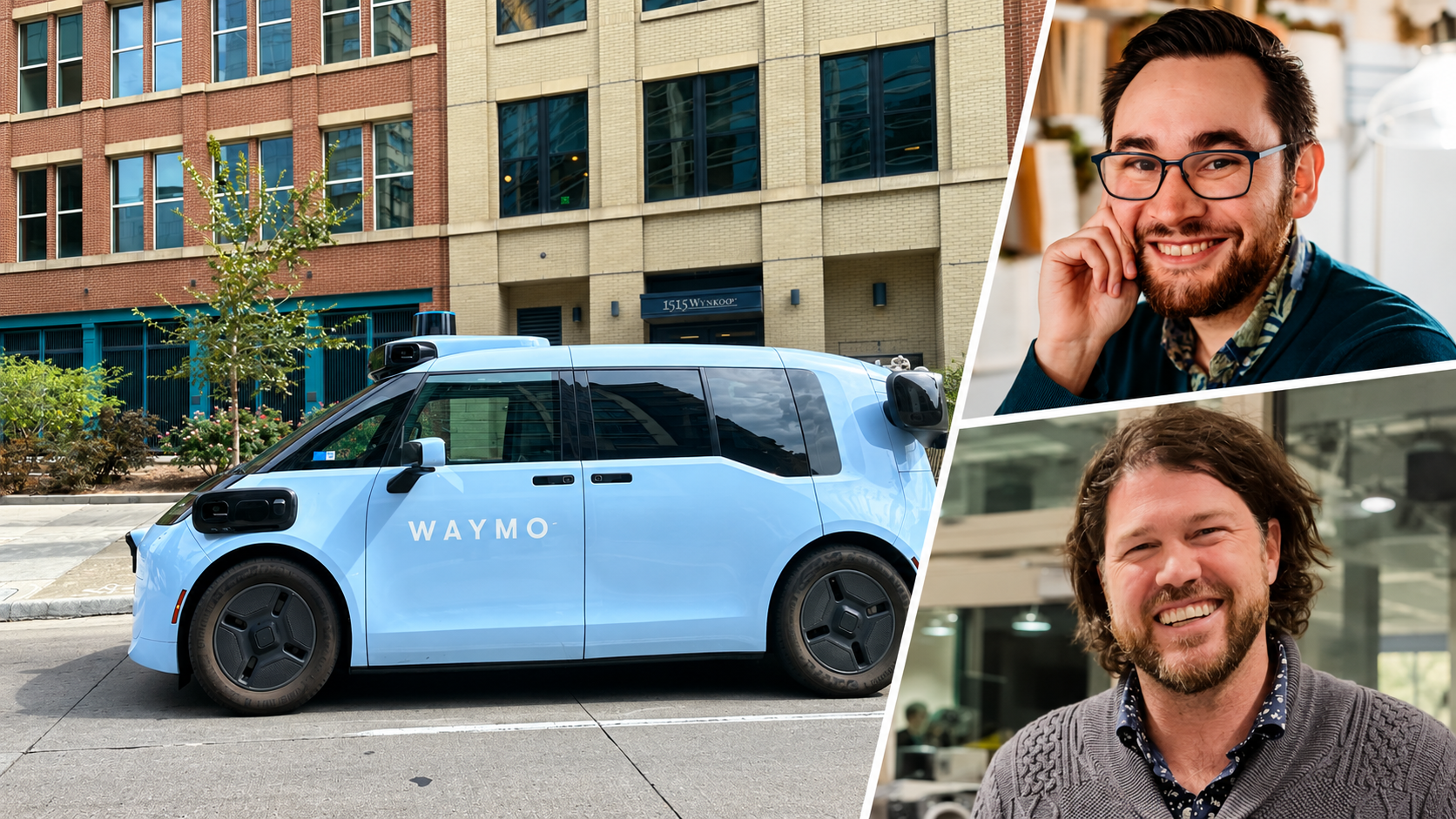
Then there is the credibility problem, which is documentary rather than emotional. Global AI told Weld County in its April application for the old Eastman Kodak site near Windsor that once construction ends, the workforce would drop to as few as 18 people. However, the company's public materials promised more than 200 permanent positions.
The county filing says 18. The company’s public materials say more than 200. No community tour fixes that.
And the disconnect did not stop at the job numbers. All 20 residents who spoke at last week's Weld County Planning Commission hearing opposed the project; eight raised concerns about transparency or the company's previous unpermitted construction. The Planning Commission nevertheless recommended approval unanimously.
On September 9, the Weld County Commissioners did the same, approving Global AI's permit 5–0 after hearing additional concerns about water, noise, the power grid, and community outreach.
That does not mean public comment is pointless. It means public comment is not a substitute for enforceable rules. Global AI argued that it met the county's criteria for approval, and its attorney pointed out that accusations of deception were not among those zoning criteria.
If communities want transparency, noise limits, water and power guarantees, or accurate job reporting to affect whether a project can be approved, those requirements need to be written into the rules before the application arrives.
What communities are actually asking for
Cuban's actual instruction to the industry was this: "How can they help? They will tell you. You will need to do what they ask."
Colorado communities have already told them what they want, often in ordinances and permit conditions. Aurora is the clearest case. On August 11, the city council rejected a moratorium and passed rules instead, including a prohibition on evaporative cooling and new setbacks near homes. That approach is already visible at the QTS campus, which is on track to become the largest data center in the state, and which uses only about 2,400 gallons of water a day. An evaporative design at that scale would have used orders of magnitude more.
That requirement materially changed how the facility uses water.
Meanwhile the community tour Cuban prescribed already exists, at scale. Meta has put more than $94 million into data center host communities globally through its grants program. Note that Meta’s grants haven’t prevented fights over siting. In the Colorado meetings I’ve followed, the demands have mostly been for measurable operating requirements, not community grants.
The one industry move that maps to the ask came from Microsoft, which stopped signing NDAs with local governments on March 18 and began terminating the active ones. Unlike a community grant, ending NDAs addresses the transparency problem directly by removing confidentiality from those local-government negotiations.
Three lessons from Colorado’s data center fights
- Read the filing, not the press release. The land use application and the marketing website make two different promises, and only one was submitted to a government agency. Ask for the filed number, out loud, in the meeting.
- Turn the concern into a measurable requirement. "We are worried about noise" loses. "Amend the sound plan to include dB(C) monitoring" wins, and it survives a change in ownership. Same with ten-year utility reporting and a cooling mandate. Enforceable conditions outlast goodwill.
- If you are building anything in Colorado, publish before you are asked. What angered neighbors was finding out after the approval. Colorado Springs is having to plan for four hours of public comment not because 50 megawatts is a lot, but because the approval happened in June and the neighbors didn’t find out until July.
The rules are being written right now
Look at what Colorado has asked for: A C-weighted reading at the property line. Ten years of published utility data. A ban on evaporative cooling. A publicly filed job number that matches the one on the website.
None of those demands are about whether AI should exist; they are about where an industrial facility can be built and how it is allowed to operate.
The choice is not necessarily between having the infrastructure of the digital economy and wanting a house that does not hum at three in the morning. Most of us live on both sides of that tradeoff.
I’d rather see communities spend their energy writing rules than chasing every announced project. Chasing an announcement is exhausting and frequently pointless. A standard applies to whichever project turns out to be real.
And those rules are being drafted this fall. Your county planning department is writing the definitions. Your city council votes on the standards. Your planning commission attaches the conditions that bind. If you live in Loveland, Fort Collins, Longmont, or Estes Park, you own your electric utility through the Platte River. Four cities, no distant shareholder. In Colorado Springs, the council is also the utilities board.
Public comments are already changing what gets written. Larimer County is writing a land use code from scratch because residents demanded rules. In Colorado Springs, neighbors scrutinized an acoustic study closely enough to get low-frequency noise monitoring written into a permit that a well-funded company will have to follow for a decade.
On September 17 at 9 a.m., Colorado Springs will hand a microphone to as many as 120 people for two minutes apiece. Somebody should count how many of them mention artificial intelligence at all. My bet is they will be talking about water, noise, rates, and who gets shut off first when the grid gets tight.