At about 8:15 Sunday morning, vendors were setting up tents and unloading trucks at Denver’s South Pearl Street Farmers Market when an uninvited vehicle joined the procession.
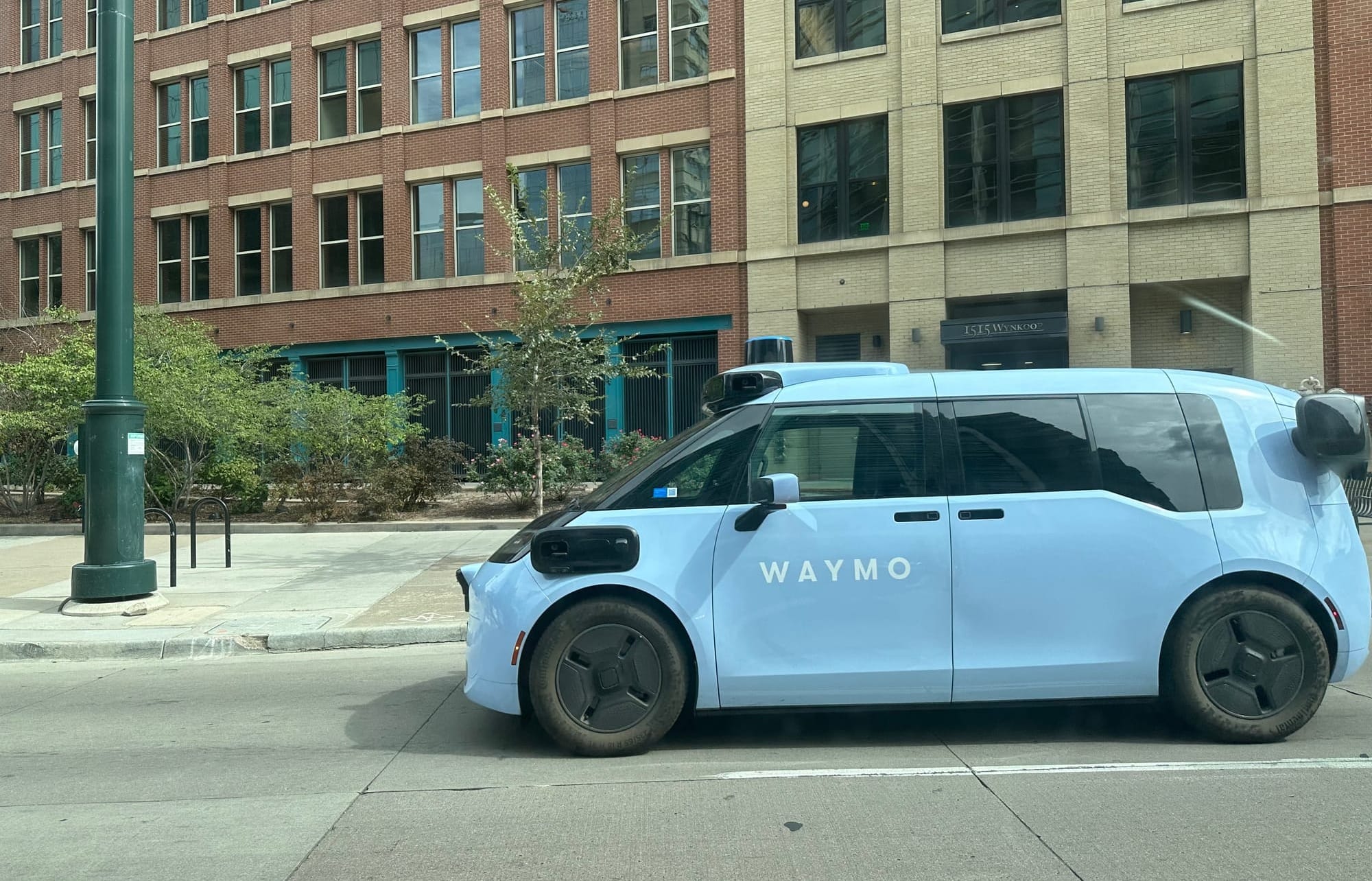
It was a baby-blue Waymo Ojai, covered with cameras and sensors and carrying no one behind the wheel.
The driverless vehicle followed a vendor past a “Road Closed” sign and onto South Pearl Street. With barricades moved partly aside to accommodate arriving merchants, the Waymo apparently interpreted the opening as an invitation. It continued through the market area before making its way out at Arkansas Avenue.
No one was injured, nothing was damaged and the vehicle was not speeding through a crowd. Nicole Jarman, the market’s production director, told Denver7 that it followed the vendor traffic pattern and “wasn’t recklessly driving.”
Nonetheless, it was somewhere it was not supposed to be. And what happened afterward may be more consequential than the wrong turn itself.
According to 9News, neither the Denver Police Department nor the Colorado State Patrol had a legal mechanism for issuing the autonomous vehicle a traffic citation. Colorado law requires Waymos to obey the same traffic rules as every other vehicle, but operating companies are not considered “drivers.” With no human at the wheel, there was no one to ticket.
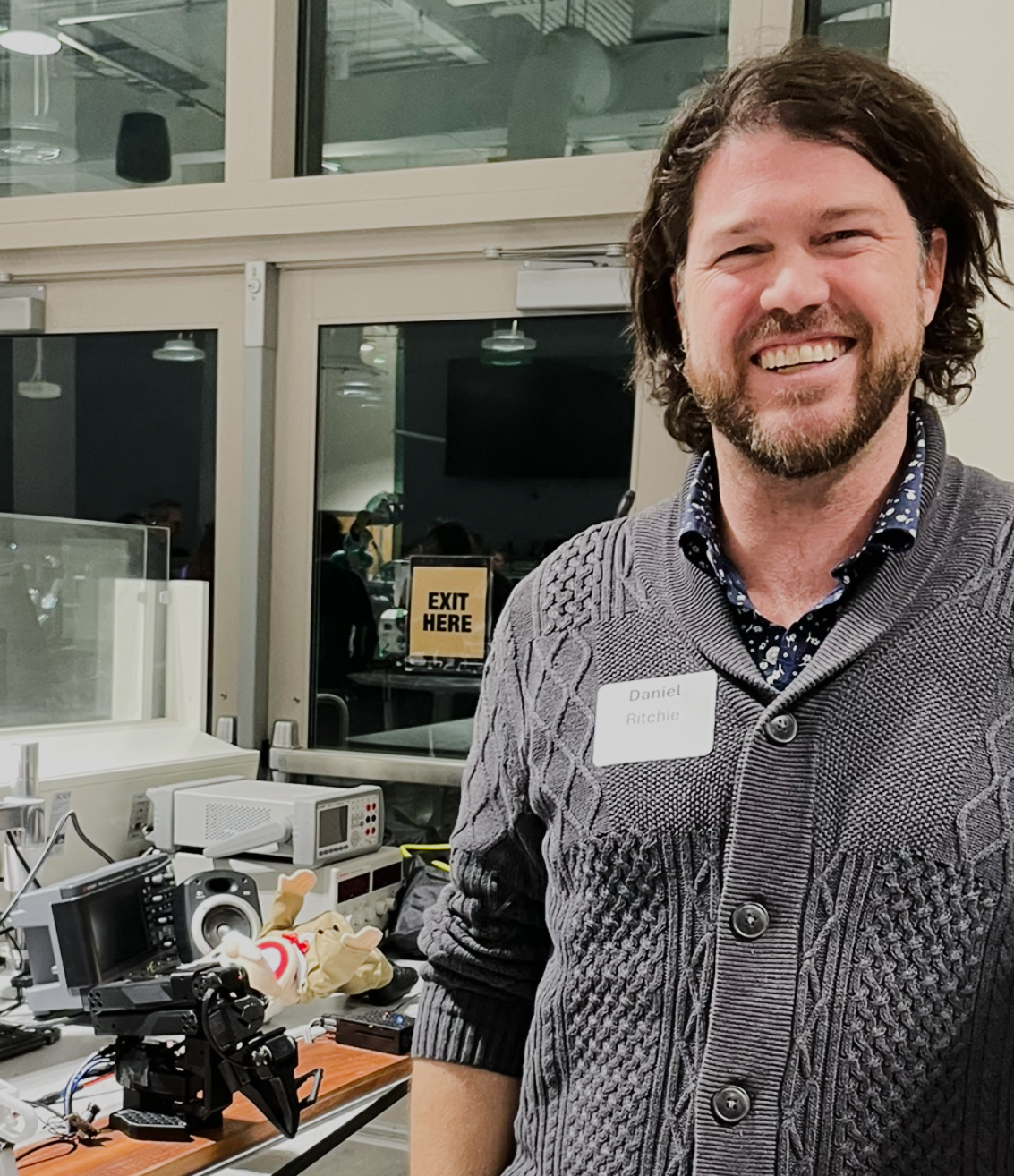
That makes little sense to Daniel Ritchie, a Denver roboticist and Colorado AI News’ resident robot expert. He said, “A Waymo vehicle is registered, it has a license plate, and the company is licensed to operate it. Why should having AI drive the vehicle prevent us from doing anything when it breaks the rules?”
This reporter had spotted one of the blue Ojais on a Denver street only a few days earlier and grabbed a photograph. At the time, it felt like a simple marker of arrival: a technology familiar on the streets of Phoenix, San Francisco, and Los Angeles had reached Colorado.
The farmers market incident makes that arrival considerably more complicated.
Denver is now hosting one of the world’s most advanced autonomous-driving systems. Colorado is relying largely on a law written in 2017, before Waymo offered its first fully driverless public rides.
The state welcomed the robots, but it never finished writing the rules for what happens when they misbehave.
The backstory: Google’s self-driving project grows up
Waymo is owned by Alphabet, Google’s parent company. It began in 2009 as Google’s self-driving-car project, led by Sebastian Thrun, a Stanford professor who had helped lead the winning team in the Pentagon’s 2005 DARPA Grand Challenge for autonomous vehicles.
Early versions used modified Toyota Priuses and Lexus SUVs. Google later developed the Firefly, a small, rounded prototype without a steering wheel or pedals. In 2015, legally blind passenger Steve Mahan took what the company describes as the first fully autonomous ride on public roads.
The project became a separate Alphabet subsidiary named Waymo in 2016. An early-rider program followed in Phoenix in 2017, and Waymo launched its commercial ride-hailing service the next year. In 2020, it began offering fully driverless rides to the Phoenix-area public.
Waymo has since established a considerable lead in the American robotaxi business. It now reports more than 500,000 paid rides a week and says it is aiming for 1 million weekly rides by the end of 2026.
The company currently lists ride-hailing operations in 15 U.S. markets: Atlanta, Austin, Dallas, Denver, Houston, Las Vegas, Los Angeles, Miami, Nashville, Orlando, Phoenix, San Antonio, San Diego, the San Francisco Bay Area, and Tampa. Riders use Uber to book Waymos in Atlanta and Austin; Waymo uses its own app in the other markets. The availability and size of the service vary by city.
Waymo is also preparing or testing in cities including Boston, Chicago, Detroit, New York, Philadelphia, Portland, Seattle and Washington, D.C. Plans to go international include London, Munich, Singapore, and Tokyo.
The company’s ambitions come with enormous financial backing. Waymo raised $16 billion in February at a valuation of $126 billion, with Alphabet leading the investment round.
Denver gets the Ojai
Most Waymos that Americans have encountered are white Jaguar I-PACE electric SUVs carrying the company’s fifth-generation autonomous-driving system.
Denver received something different. The city’s vehicles are baby-blue Ojais, roomy electric vans manufactured by the Chinese automaker Zeekr and customized for Waymo. Pronounced “oh-hi,” the Ojai carries the company’s newer and less expensive sixth-generation Waymo Driver.
Its sensor array includes 13 cameras along with lidar and radar. Lidar emits laser pulses to build a three-dimensional representation of the vehicle’s surroundings; radar helps determine the distance and speed of nearby objects; cameras interpret signs, lights, lanes and other visual information. The onboard system combines those inputs to steer, brake, accelerate and decide how to respond to its environment.
Waymo calls the vehicle fully autonomous, or Level 4. Within a defined service area and approved conditions, it can perform the entire driving task without a human either monitoring the road or waiting to intervene.
The Colorado Sun reported in August that “a couple dozen” Ojais were roaming Denver during final testing. Public records obtained later by Denverite identified 26 Ojais registered to carry paying passengers when service began. Waymo also operates test vehicles that were not included on that list.
Company spokesperson Chris Bonelli said the fleet will grow into the hundreds as Waymo admits more riders and expands the operation.
Service opened Sept. 1 with an approximately 60-square-mile territory that includes downtown, Capitol Hill, Cherry Creek and RiNo, along with Coors Field, Ball Arena and Empower Field.
Waymo eventually wants to serve Denver International Airport. That will require a separate airport permit, and no timetable has been announced.
The law that welcomed Waymo
Colorado passed its principal autonomous-vehicle law in 2017. It allows Level 4 and Level 5 systems to operate with or without a human driver as long as they are capable of complying with every applicable state and federal law.
If a system cannot meet those requirements, its operator must seek approval from the Colorado Department of Transportation and the Colorado State Patrol. But Waymo maintains that its system can comply, so it did not have to go through that approval process before deploying here.
The law declares autonomous-vehicle regulation a matter of statewide concern. Cities and towns cannot prohibit the vehicles or impose standards different from those applied to human drivers. Denver therefore cannot devise its own comprehensive permitting or enforcement system for Waymo even though the company’s Colorado service currently operates in the city.
The result is an odd division of responsibility. Colorado has said an autonomous system may drive here if it can obey the law. But the state has no dedicated agency comprehensively overseeing autonomous-vehicle safety, privacy and accountability. And if a driverless vehicle commits a moving violation, police cannot cite the operating company because Colorado’s traffic code does not recognize the company as the driver.
The citation problem was known before Sunday. A Colorado State Patrol spokesperson told the Sun in August that officers could pull over an autonomous vehicle but could not ticket it. Waymos can receive parking citations because those can be issued to the registered owner rather than a human operator.
California has begun addressing the same problem. Its system allows law-enforcement officers to issue a “notice of autonomous vehicle noncompliance” to the manufacturer when a driverless vehicle allegedly commits a moving violation. The Golden State also requires a two-way communications device that first responders can use to reach the company. Colorado, however, has no comparable process.
The farmers-market encounter exposed the practical consequences. Market workers could wave and yell, but there was no driver to respond. Jarman said the city planned to ask Waymo what organizers should do if it happens again.
Waymo said the vehicle was traveling to an address on Pearl Street, identified the situation and maneuvered out of the market area. Its public response offered little: “The trust and safety of the community is our top priority. We are dedicated to learning from this situation as we continue improving road safety in the cities we serve.”
When a Waymo encounters something it does not understand, it can ask a remote employee for help interpreting the situation. The employee might identify a police officer’s hand signal or confirm that a road is closed, but does not take control of the vehicle. The Waymo’s automated-driving system decides what to do next.
Sunday raises an obvious question: Did the vehicle request remote assistance, and if so, what guidance did it receive? Waymo has not publicly said.
What if someone had been hurt?
The lack of a ticketing mechanism does not mean Waymo would necessarily escape responsibility for an injury.
Colorado law expressly says that liability for a crash involving an automated system is determined under existing state, federal or common law. Depending on the facts, an injured person could potentially pursue a negligence, product-liability or insurance claim against the responsible parties.
But civil litigation after someone is hurt serves a different purpose from traffic enforcement and regulatory oversight.
A human driver who ignores a road closure may face a citation whether or not anyone is injured. That penalty reinforces the rule, creates a record of the offense and can support escalating consequences for repeated violations.
Colorado currently lacks an equivalent process for a company operating a fleet of driverless vehicles. A Waymo can violate a traffic rule, avoid a collision and leave the scene without any formal citation being issued to anyone.
“Using AI is not some magical, get-out-of-jail-free card,” Ritchie said. “There’s always somebody behind the curtain, and whoever that is needs to be responsible for the actions of these products.”
That becomes even more critical when one considers that software errors can be repeated across an entire fleet.
Denver will test more than the law
Phoenix gave Waymo wide roads and relatively predictable weather. San Francisco supplied dense traffic, steep hills, cyclists, pedestrians and unusual street layouts. Los Angeles added sprawling geography and freeway travel.
Denver presents a new set of complexities. Snow can hide lane markings, curbs and signs. Slush changes traction. Ice creates hazards that cameras cannot solve by simply seeing them. Bright sunlight reflecting from snow produces severe glare, while blowing snow can obscure both the roadway and the vehicle’s sensors. Cold temperatures reduce electric-vehicle range and complicate charging.
Waymo says the Ojai was designed with harsher conditions in mind. Its sensor pods include cleaning systems and heaters intended to prevent snow and ice from accumulating.
Of course, Denver’s nearly continuous road construction presents another challenge: Temporary lanes, cones, flaggers, and sudden closures require vehicles to understand conditions that can change faster than their maps.
Waymo’s record shows why that matters. In June, the company recalled 3,871 fifth-generation automated-driving systems after at least 13 incidents in which vehicles entered freeway construction areas in Phoenix and the San Francisco Bay Area. According to the federal recall report, some failed to recognize ramp-closure signs; others drove between cones into closed lanes. No injuries were reported, and Waymo deployed a software update.
A separate May recall covered 3,791 vehicles after Waymos entered flooded roads in San Antonio, including one vehicle that was swept away. No one was injured, but Waymo suspended service there for several months and revised the system’s ability to recognize dangerous water.
Those incidents and Sunday’s excursion share a theme. Temporary changes to the road environment – cones, barricades, floodwater, construction or a farmers market – can create situations the system does not interpret correctly.
Safer than human drivers?
None of this erases Waymo’s central argument: Its vehicles appear to be substantially safer than people.
A peer-reviewed study examining 57 million fully autonomous Waymo miles found statistically significant reductions in crashes involving reported injuries, airbag deployments and suspected serious injuries compared with human-driver benchmarks adjusted for the same locations and road types.
Another analysis conducted with reinsurer Swiss Re examined 25 million autonomous miles and reported 88% fewer property-damage claims and 92% fewer bodily-injury claims than expected from human drivers.
Waymo’s newer data, covering 221 million rider-only miles through March, show 94% fewer serious-injury-or-worse crashes than comparable human drivers, according to the company.
Those findings deserve to be taken seriously. They also come with qualifications. Waymo participated in much of the research, its vehicles operate within selected geographic boundaries, and people have driven vastly more miles across a much wider range of roads and conditions.
Still, human drivers can and do speed, text, become impaired, fall asleep, and sometimes, lose their tempers. Waymos do none of those things. Comparing every unusual robotaxi mistake with an imaginary flawless human driver would badly distort the question.
The real comparison is between two imperfect driving systems – one human, one technological – and the frequency and severity of the errors each produces.
The robotaxi race
Waymo has a substantial lead, but Alphabet is not alone. Tesla is pursuing autonomy through a camera-centered system trained on data gathered from customer vehicles. Its consumer Full Self-Driving system still requires supervision, while its robotaxi deployment remains much smaller than Waymo’s. Tesla’s planned Cybercab dispenses with conventional controls entirely.
Amazon-owned Zoox has designed a purpose-built robotaxi resembling a small carriage, with passengers facing one another and no steering wheel or pedals. It began charging for rides in Las Vegas this summer and is expanding testing into additional cities.
Uber and Lyft mostly retreated from building their own autonomous systems and are positioning themselves as marketplaces and operating partners for other companies’ vehicles. Waymos are already available through Uber in Austin and Atlanta. Uber also has agreements with companies including Avride, May Mobility, Nuro and Wayve.
General Motors once looked like Waymo’s strongest American rival through Cruise. GM ended funding for Cruise’s standalone robotaxi business after a Cruise vehicle struck and dragged a pedestrian in San Francisco, triggering investigations, suspended permits and an expensive operational shutdown.
Waymo is also looking beyond company-owned taxis. Hyundai is preparing IONIQ 5 vehicles for the Waymo fleet, while a partnership with Toyota is exploring how Waymo’s technology might eventually reach personally owned cars.
If that happens, Waymo’s future could extend far beyond summoning a robotaxi through an app.
A robot in the wild
The baby-blue vehicle I photographed does not resemble a science-fiction robot. It has no arms or legs, does not perform backflips, and it will not carry a box across a factory floor.
Yet the Waymo may be the most consequential kind of robot most Coloradans have yet encountered. It moves through public space, interprets human behavior, and makes real-time, life-and-death decisions around pedestrians, cyclists, workers. and other drivers.
Its arrival comes with a remarkable safety record, ambitious expansion plans and the financial backing of one of the world’s richest companies. It also comes with the possibility of mistakes that no human inside the vehicle can correct.
Sunday’s mistake ended without an injury or even a dent. The Waymo moved slowly through a farmers market still being assembled, and then found its way out.
Colorado should use that good fortune to answer the questions raised on South Pearl Street before the next mistake carries a higher price.