
The actor Reese Witherspoon said something in April that made a lot of people angry. I addressed one part of the backlash in a column two months ago, but I have continued to think about the larger issue her comments raised.
Speaking to her virtual book club, Witherspoon laid out a set of numbers: Women are using AI at a rate 25% lower than men, and the jobs women hold are three times more likely to be automated. Her message was urgent and direct: Learn this technology or get left behind.
The backlash was swift. Critics called it tech boosterism from someone insulated by wealth. She held her ground, acknowledged the valid concerns about job impacts, clarified that no one was paying her to say it, and kept going.
As I’ve followed the debate and read research that has come out since then, I believe it missed a more important question. AI is already arriving in the places where women work, and most of those women have no say in how it shows up. That is the part of the conversation we keep skipping.
The women most exposed to AI
Two research reports dropped in the last three months that deserve far more attention than they have gotten.
On March 5, the International Labour Organization (ILO) published data showing that female-dominated occupations are nearly twice as likely to be exposed to generative AI as those dominated by men. About 29% of jobs in female-dominated fields have significant AI exposure, compared to 16% in male-dominated roles. At the highest levels of automation risk, the gap widens further: 16% of women's jobs fall into that category, versus just 3% of men's.
Then on April 28, the National Partnership for Women & Families released "AI and Emerging Risks for Women Workers." The headline number: Women are 47% of the American workforce. They make up 82% of workers in the most AI-vulnerable occupations. Secretaries. Administrative assistants. Payroll clerks. Tax preparers. Receptionists.
And it gets more specific from there. More than 30% of workers in the most AI-vulnerable jobs are women of color, concentrated in roles where the capacity to adapt and transition is also the lowest.
The ILO made one more observation that rarely makes the headlines. The primary impact of generative AI on these roles is not likely to be mass layoffs overnight. It will show up as increased monitoring, intensified workloads, reduced autonomy, and shrinking career mobility. These harms are quieter. more incremental, and often harder to fight.
Who gets to shape AI - and who has to live with it
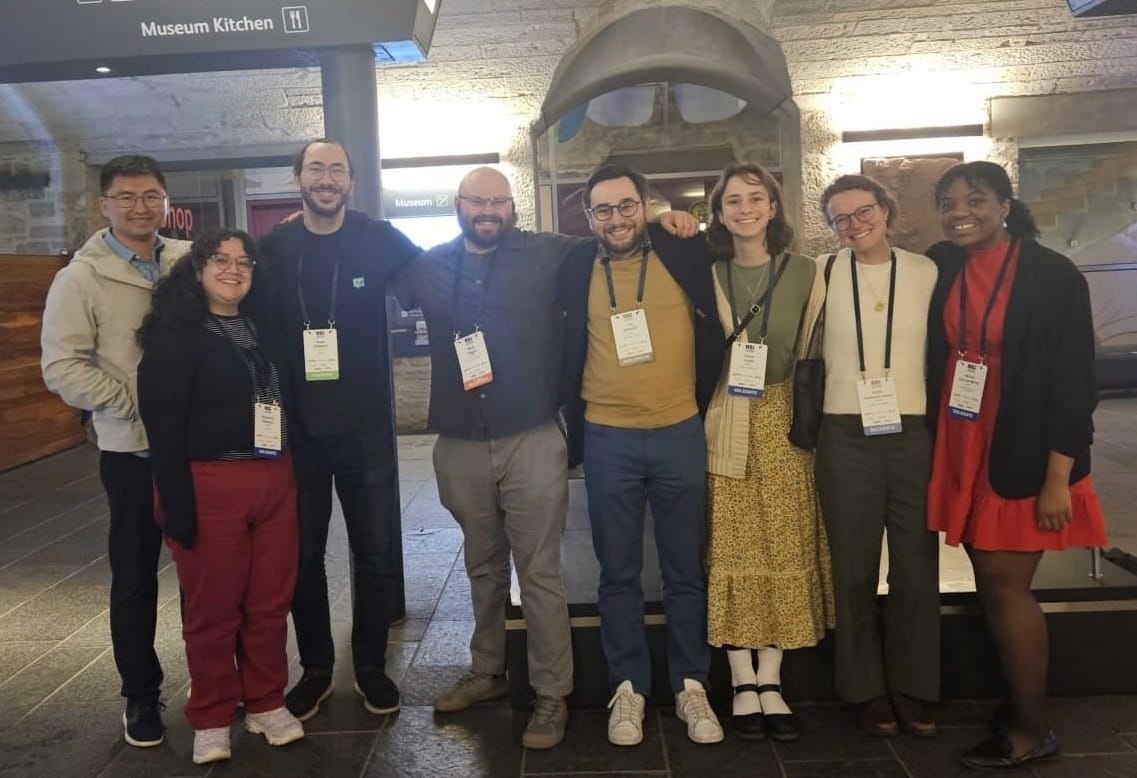
I spend a lot of time in rooms where women in AI are celebrated. I'm the lead instructor at Women in AI Colorado and on the incoming board of Rocky Mountain AI, the nonprofit that oversees Rocky Mountain AI Interest Group. I watch incredible women learn this technology, build with it, lead with it.
And I also read the Chief 2026 study on Women Leaders in the Agentic AI Workforce, which found that 85% of senior women leaders are actively shaping their organization's AI governance. Establishing guidelines. Building solutions. Designing how humans and agents will work together.
That number is exciting. It matters.
But here is where I keep getting stuck. The senior women in that study are mostly designing the AI systems. The women in the National Partnership report are more likely to experience systems designed and deployed by others. These are not the same population. And we are rarely having the same conversation with both groups at the same time.
When we focus exclusively on getting more women into AI careers, building AI products, and leading AI teams, we celebrate real and important progress. But we can end up telling a story that implies the solution is individual: Learn the tools, adapt, get ahead of it. Reese Witherspoon's message, however well-intentioned, lives inside that frame.
The 82% of women workers in the most AI-vulnerable occupations do not fit that frame.
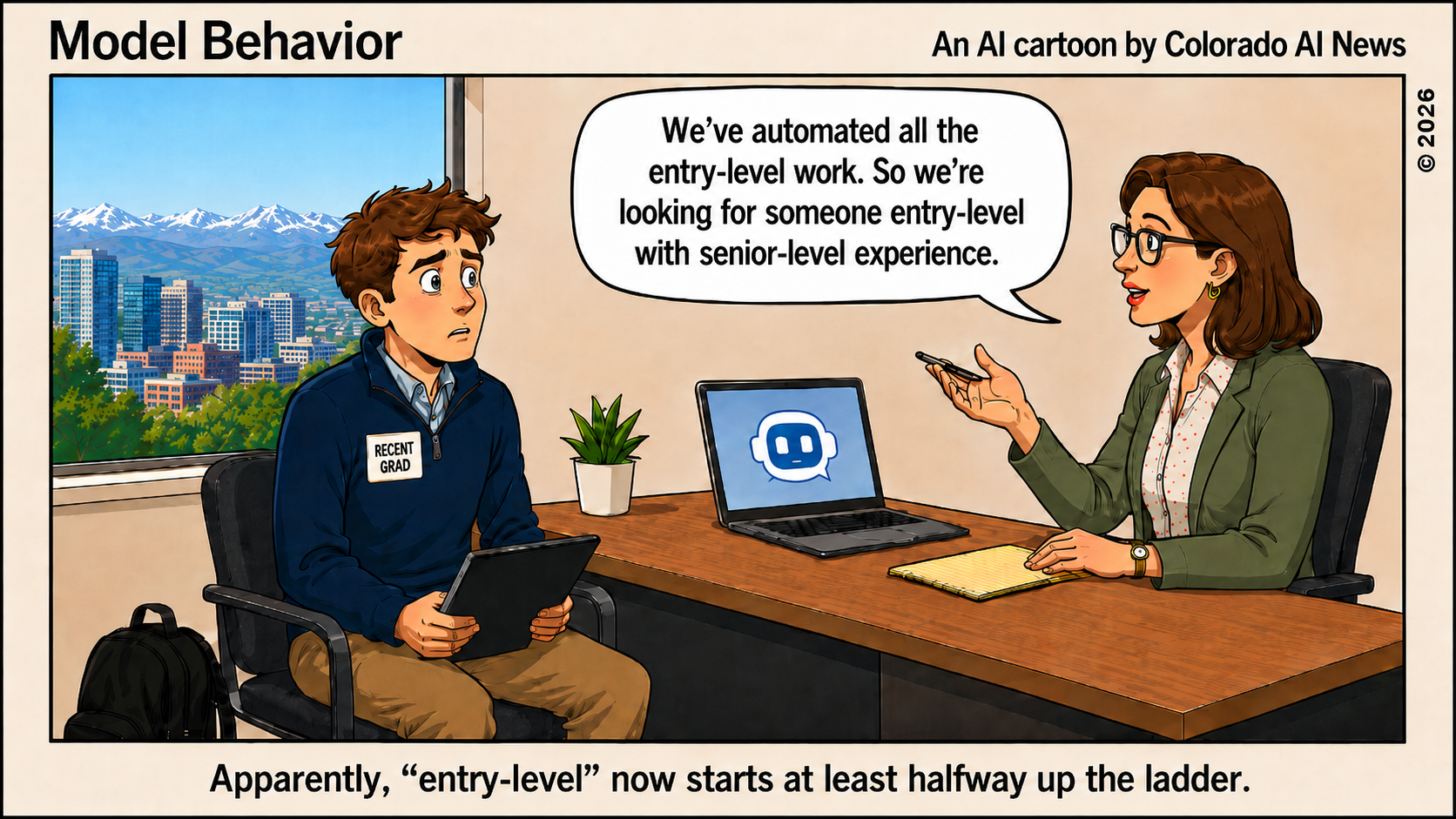
You cannot individualize your way out of structural occupational segregation. Telling administrative professionals (many of them women of color working jobs with thin margins and thin safety nets) that the answer is simply to learn how to use a chatbot is, frankly, an incomplete answer to a structural problem.
The danger is that this can slide into a form of victim-blaming. I do not believe this was Witherspoon's intent, and some of the backlash she received was unfair. But the "learn AI or get left behind" frame, however urgent and however true, carries an implicit message: If you end up on the wrong side of this transition, you did not try hard enough. That is how we let the organizations making deployment decisions off the hook for what happens to the workers absorbing the consequences.
The leadership pipeline story and the workforce displacement story need to be told at the same time.
It's in that spirit that Susan Adams founded Women in AI Colorado, which is structured around a more participatory approach to AI education. As Susan describes it, "The labs we run on Saturdays are built around the conviction that you cannot give someone agency with AI by handing them a tutorial.” On Saturday, July 11, I will lead the group’s next session, Build Your AI Assistant: A Foundation Lab, a 3½-hour workshop offered on a sliding scale so that cost is not a barrier to anyone's participation. Additionally, the discount code COLORADOAINEWS will take 20% off the full price.
What employers can do now
Business leaders, startup founders, and executives have more agency here than they often realize. A few places to start:
1. Ask where AI is already making decisions in your organization. HR screening tools. Customer service automation. Scheduling and workload distribution. These are often the first places AI gets deployed, and they disproportionately touch the roles women hold. If you cannot name the systems, you cannot assess the impact.
2. Separate your "AI adoption" metrics from your "AI equity" metrics. Saying your company uses AI tells you nothing about who benefits and who absorbs the risk. Track both. Who is being monitored more? Whose work is being restructured without their input? Whose skills are becoming redundant while someone else's are being augmented?
3. If you are building AI tools, pressure-test this question early: who bears the downside? The ILO was clear that AI can improve job quality when applied thoughtfully and degrade it when it is not. That difference usually lives in design decisions made before anyone thinks to ask.
4. Fund the transition, not just the transformation. A lot of companies are investing heavily in AI integration while treating workforce upskilling as an afterthought. These are not the same budget line. If your AI spend is not accompanied by a real investment in learning for the roles being restructured, you are optimizing for efficiency at the direct cost of people.
RMAIIG member Melissa Reeve makes exactly this case in her new book, Hyperadaptive. Citing research finding that 80% of AI initiatives fail to meet expectations, she argues that the technology is rarely the central problem. Organizations stumble when they fail to restructure roles, governance, funding, and decision-making alongside it. The companies that get AI right are treating workforce transformation as a design problem, not a budget afterthought.
Reese Witherspoon was right that women need to be in this conversation.
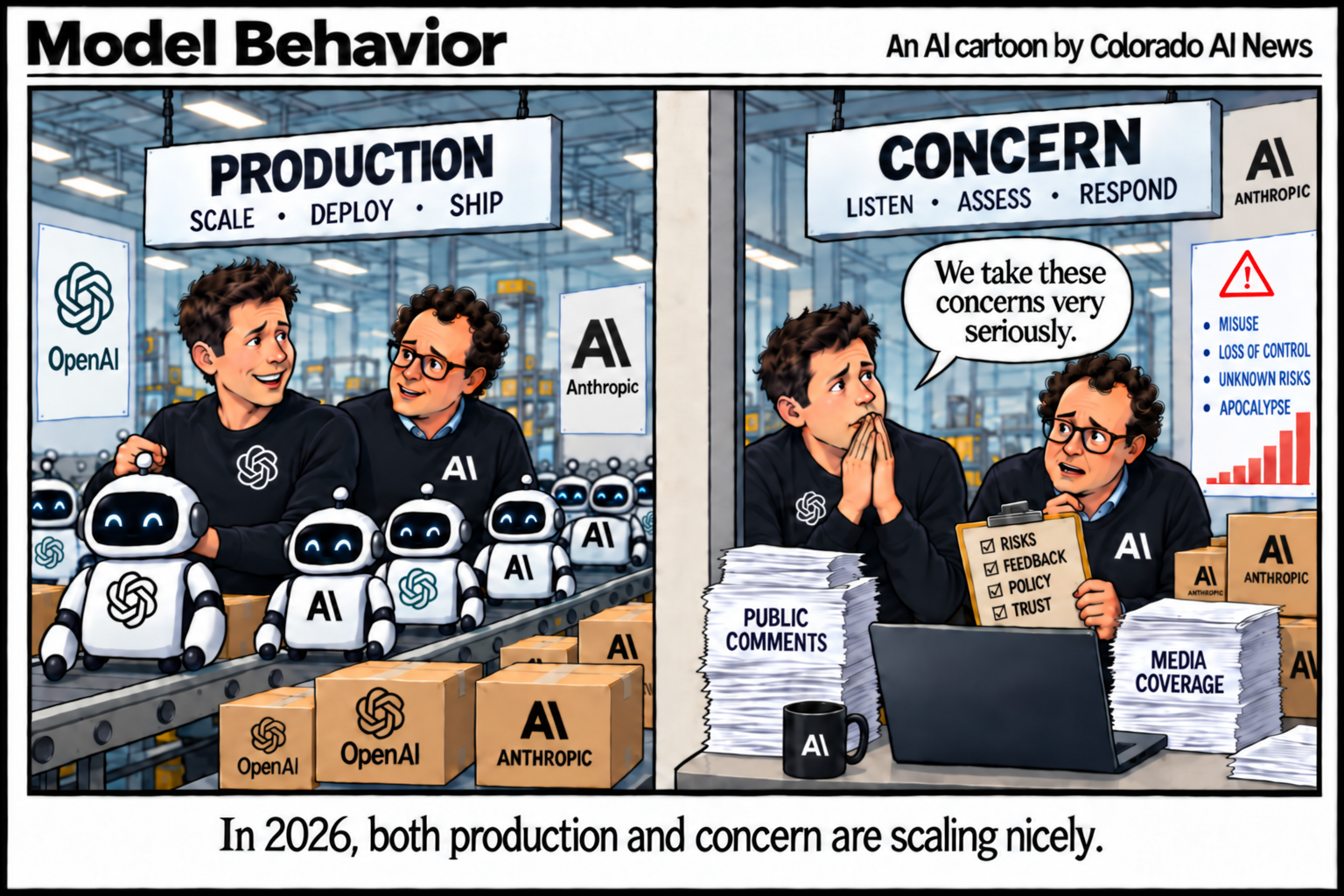
I'd just push the frame a little further. Who is paying attention to the cost side of AI deployment inside organizations? By which I mean, the human cost. What happens when deployment proceeds exactly as planned, but gradually makes certain jobs smaller, more closely monitored, and harder to escape?
The data is not in dispute. The ILO published it. The National Partnership published it. Researchers across multiple countries are pointing at the same pattern.
So here is my question for you: What are you actually doing with it?
If you are a business leader reading this and you have a real answer, I’d love to hear it. And if you do not have an answer yet, that is worth sitting with, too.