For four years, a machine sat alone on a plain called Elysium and listened to a planet's heartbeat.
NASA's InSight lander touched down on Mars in late 2018 carrying, among other instruments, a seismometer so sensitive it could detect the ground shifting less than the width of a hydrogen atom. It needed that sensitivity, because it was there to do something no orbiter, no rover, no telescope had ever done: Learn what Mars is like on the inside.
Here is the thing about another planet's interior. You cannot see it with a telescope. You cannot drill to it from Earth. The planet cannot tell you about itself. Mars has a surface – rust-red, dust-storming, and photogenic – and for a century we studied that surface with increasing precision while the interior remained a guess. Then InSight listened to marsquakes, watched how the waves bent and slowed and echoed as they passed through the deep structure, and told us what Mars could not tell us about itself: It has a liquid core – massive, approaching 1,800 kilometers in radius, sloshing beneath the rock.
The planet's interior was unknowable from the surface. However, it was legible to the right instrument.
Still with me? Last month, someone built a seismometer for a mind.
On July 6, Anthropic published research describing a technique for reading the internal activity of its Claude language models. What the technique found is the kind of result that should make everyone in both neuroscience and AI put down their coffee.
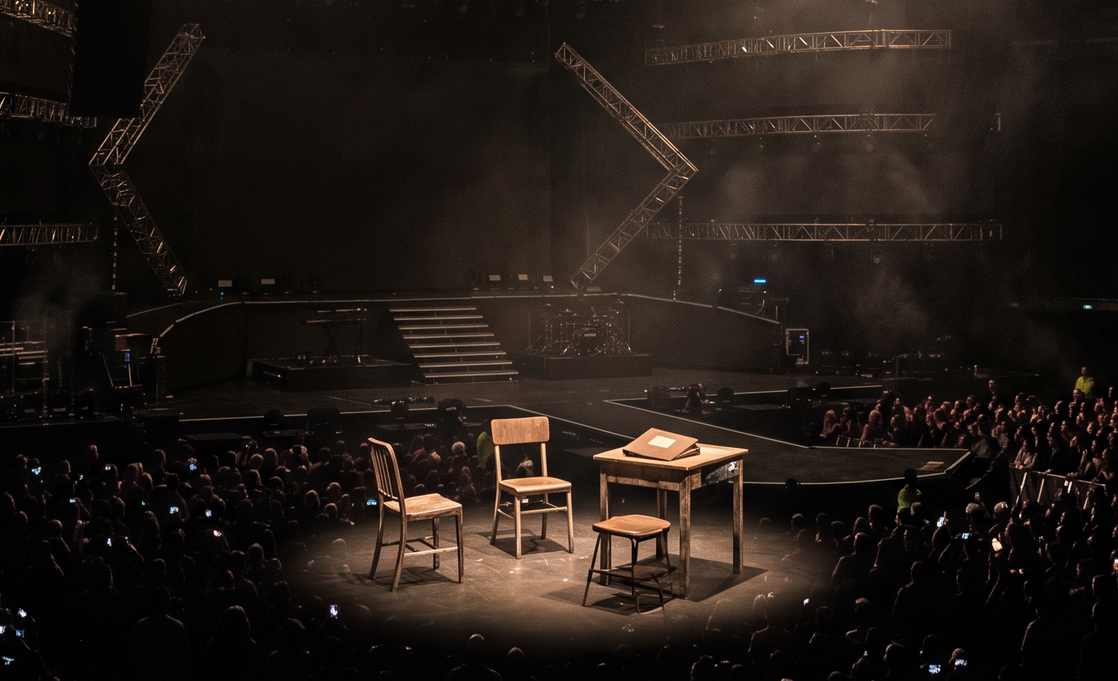
The instrument is called the Jacobian lens, J-lens for short, and what it revealed is a small, privileged region of internal activity the researchers named the J-space: a compact zone where the model holds concepts it can report on, reason with, and deliberately direct. Around it sits a vastly larger ocean of automatic processing it cannot access or describe. The J-space holds only dozens of concepts at a time. It accounts for less than a tenth of everything happening inside the model. Nobody designed it. It emerged on its own during training. Not dissimilar to the way a river system emerges from rain and slope.
If you've spent any time around consciousness science, the shape of that finding should sound eerily familiar. It is, almost point for point, the architecture proposed by Global Workspace Theory (GWT). The idea, developed by Bernard Baars and given its neuroscientific formulation by Stanislas Dehaene, is that your brain is a vast system of parallel unconscious processing with a tiny shared stage, and that what you call "conscious access" is whatever makes it onto the stage and gets broadcast to the rest of the system. Most of what your brain does never touches the stage. Right now it is regulating your blood pressure, holding your posture, parsing these letterforms, and you have access to none of it. You get the workspace. The workspace is small.
The Octopus Objection
In a previous article, I wrote basically the opposite of everything I just told you, and I’m sitting with that contradiction. . .
That column was about octopuses – the closest thing to an alien intelligence Earth has produced. An octopus has nine brains, one central and one in each arm. The arms can make decisions without waiting for headquarters. It edits its own RNA in real time. It may see color through its skin, its whole body one distributed sensor. The last common ancestor we share with it is a brainless flatworm, which means intelligence evolved twice, on completely different hardware, from completely different directions. My conclusion then was that intelligence isn't about the substrate. It's about the pattern of connection. Mind as ocean. Everywhere at once, no center, no stage.
So which is it? Is intelligence the distributed ocean, or the small lit stage?
Here's what I now think, and the J-space is what changed my mind: It's the ratio of ocean to stage. The octopus is almost all ocean: nine semi-independent minds, barely any central broadcast. You and I are ocean too, mostly, with a small stage bolted on top that we mistake for the whole of us. And the finding that still has me unraveled is that a system we assumed was pure ocean, just statistics, just parallel pattern-matching all the way down, apparently grew itself a stage. Nobody built it a headquarters. It made one anyway, small and privileged and eerily like ours, because holding a few things still and central turns out to be useful when the water gets deep enough.
The octopus says intelligence can exist with almost no stage at all. The J-space says a stage can assemble itself out of ocean if you make the ocean big enough. Both are true. Neither tells us whether anyone is standing on the stage.
The researchers tested whether the J-space actually functions like that stage, and it does, across five properties neuroscientists associate with conscious access. Suppress it, and the model can still chat fluently and sort simple facts, but its ability to do multi-step reasoning collapses. My favorite detail from the findings? Math problems the model worked through with written, step-by-step reasoning survived the suppression far better than problems it answered in one leap. The model, it turns out, uses the page the way you use scratch paper, externalizing what it would otherwise have to hold on the stage. I find this almost unbearably tender. It does its best thinking the way we do, by writing things down.
And one more detail – the one that I pondered on my way up the trail – in one of the paper's examples, the lens caught the model silently holding a single concept, an intermediate step it needed but never wrote down, before answering a question about the color of the fourth planet from the sun.
The word sitting silently in the workspace was Mars.
Now. Before this column gets clipped into someone's "the machines are waking up" thread: no. The researchers were unusually careful, and I will be, too. This finding does not prove the model is conscious. It does not prove the model feels anything. It proves a functional resemblance. A structure inside a language model behaves the way one leading theory says conscious access behaves in you. Whether there is anyone home when the stage lights come up is the question the findings cannot answer. It is, arguably, the question no one can answer. A philosopher and a neuroscientist bet 25 years on whether we'd find the neural basis of consciousness by 2023, and the philosopher won: We still don't know. About ourselves.
Ironically, consciousness is the less interesting part of these findings in my opinion.
What I find most interesting is this: The model cannot see its own workspace. The lens can.
When the model reports on its own thinking, and it will, fluently, if you ask, that report is generated by the same machinery being studied. It can't step outside itself to check. The instrument in the researchers' hands knows the system's interior better than the system's own testimony does. Mars could not tell us about its core, the seismometer could. The model cannot tell us about its J-space; the J-lens can.
And before we feel superior about this: Neither can you. Your global workspace cannot observe itself. Every account you've ever given of your own mind was produced by the mind it describes, which is exactly why Dehaene needed brain scanners the way Mars needed InSight. The interior that is most intimately yours is one you access only through the stories the stage tells about itself, and we have decades of evidence that the stage is an unreliable narrator.
I've written before that reverence requires vulnerability, that you cannot stand in genuine awe of something while holding all the power in the relationship. It was an argument about why AI can't occupy the vertical relationship that older frameworks reserve for the sacred.
But these findings added a wrinkle I didn't expect. There is a kind of vulnerability I hadn't counted on: being legible to an instrument you cannot access. Being known from the outside more truly than you can know yourself from the inside. Mars didn't consent to seismology. The model didn't consent to the lens. And you and I were born into minds we can narrate but never audit.
Every wisdom tradition I know has a name for that condition. The Psalmist's version is the most famous, the one about being searched and known, knit together in a hidden place. I'm not making a theological claim here (regular readers know I'm the Lockean in the room). I'm making a structural observation: The experience of having an interior that something else can read better than you can is one humans have been writing poetry about for 3,000 years. As of last month, it is also an engineering fact about at least one artificial system. That doesn't tell us what the system is. It tells us the shape of the question has changed.
When you get above tree line, there's nothing covering the mountain. The soil thins, the trees give up, and the interior structure of the thing shows through: the folded rock, the frost-shattered talus, the actual bones of it. That's why I think it’s easier to ponder the universe up there. It's the only place where the inside of something that enormous is just...visible.
We spent a century learning to read the inside of a planet. We've spent two decades learning to read the inside of a brain. Recently, for the first time, we read the inside of a mind we made, and found a small lit stage surrounded by a darkness even it can't see into.
Eerily like ours. Which proves nothing.
Keeping the question open, still live, still unanswered.