You may have heard 22-year-old Olivia Malone tell CBS News that her commencement speaker had been "incredibly disrespectful" for talking about AI. She was a University of Arizona graduate. Her speaker was Eric Schmidt, former CEO of Google. When Schmidt told 10,000 graduates that "you will help shape artificial intelligence," the crowd booed him.
I thought immediately about the young people in my life. The oldest of them is completely all-in on AI. He uses it every day to help manage his neurodiversity, and it has genuinely improved how he functions. The other four want nothing to do with it. And based on what happened at graduation ceremonies across the country this May, they have plenty of company.
This commencement season became the moment AI stopped being an abstraction for the generation inheriting it. At the University of Central Florida, at Middle Tennessee State, at Marquette, speakers who praised the technology were met with sustained booing. One notable exception was Carnegie Mellon, where Nvidia's Jensen Huang spoke to students who had spent four years building AI systems and stood to benefit directly from the industry. Everywhere else: mention AI and brace yourself.
Why the boos make sense
The graduates’ reactions are grounded in real data, not just anxiety. College graduate unemployment sits at 5.7%, the highest in approximately five years. Entry-level job postings have dropped 30% since 2023. Goldman Sachs research shows job openings in AI-exposed occupations are now below pre-pandemic levels. A March 2026 Quinnipiac poll found that 80% of Americans are "very concerned" or "somewhat concerned" about AI. Eighty-one percent of Gen Z believes AI will reduce job availability, the highest of any generation. Only seven percent of college students feel "excited" about AI's impact on their careers.
The graduates have something more specific than general anxiety, though. They spent four years in classrooms where AI use was banned or penalized. Now they are receiving diplomas from universities that invited executives to celebrate the very technology many of their professors treated as academic dishonesty. As Inside Higher Ed reported, professor J. Israel Balderas of Elon University put it plainly: "AI arrived at a moment when many of these young people were already questioning how technology has shaped their relationships, their attention spans, their mental health and even their sense of belonging."
The University of Colorado story adds its own layer. In February of this year, the four-campus CU system announced a $2 million, three-year partnership with OpenAI to roll out a CU-specific version of ChatGPT Edu to students, staff, and faculty. The backlash was immediate. Students and faculty said they had not been consulted. A dissent letter gathered hundreds of signatures. Critics noted that no CU professor with sufficient AI expertise had been involved in the agreement. The University ultimately delayed student access until August, with Provost Ann Stevens acknowledging the gap: "This contract is not the end of the conversation. It is the beginning of a more structured and inclusive one."
Then, just last month, CU honored 20 professors across all four campuses with the first-ever President's AI Recognition Award, half of whom won it for "Scholarly and Creative" work, while the other 10 won the "Teaching & Learning Award." This second group was specifically commended for thoughtful faculty-led integration of AI into teaching, and three of them happen to be active leaders in the Rocky Mountain AI Interest Group (RMAIIG). These professors appear to have built from the classroom outward, whereas the administration signed a systemwide contract first and had to invite people into the conversation afterward. The difference in reception tells the whole story.
I get the fear but question the strategy
I have been thinking about technology waves my whole life. I was in elementary school when the Apple IIe showed up. I was in college when the Internet arrived. Both of those moments came loaded with fear, confusion, and people insisting the technology was going to destroy something precious. In both cases, the people who leaned in early and figured out what they could build were the ones who shaped what came next.
I am not dismissing what these graduates are feeling. The job market is genuinely difficult. The anxiety is not irrational. It is data-backed.
But I keep coming back to the kid who uses AI every day to manage his neurodiversity. He did not wait for a university to give him permission or for an executive at a podium to explain the opportunity. The kid I know found a use that served him specifically, and he built his own practice around it. The other young people in my life are resistant. I understand why. I also know what they are leaving on the table.
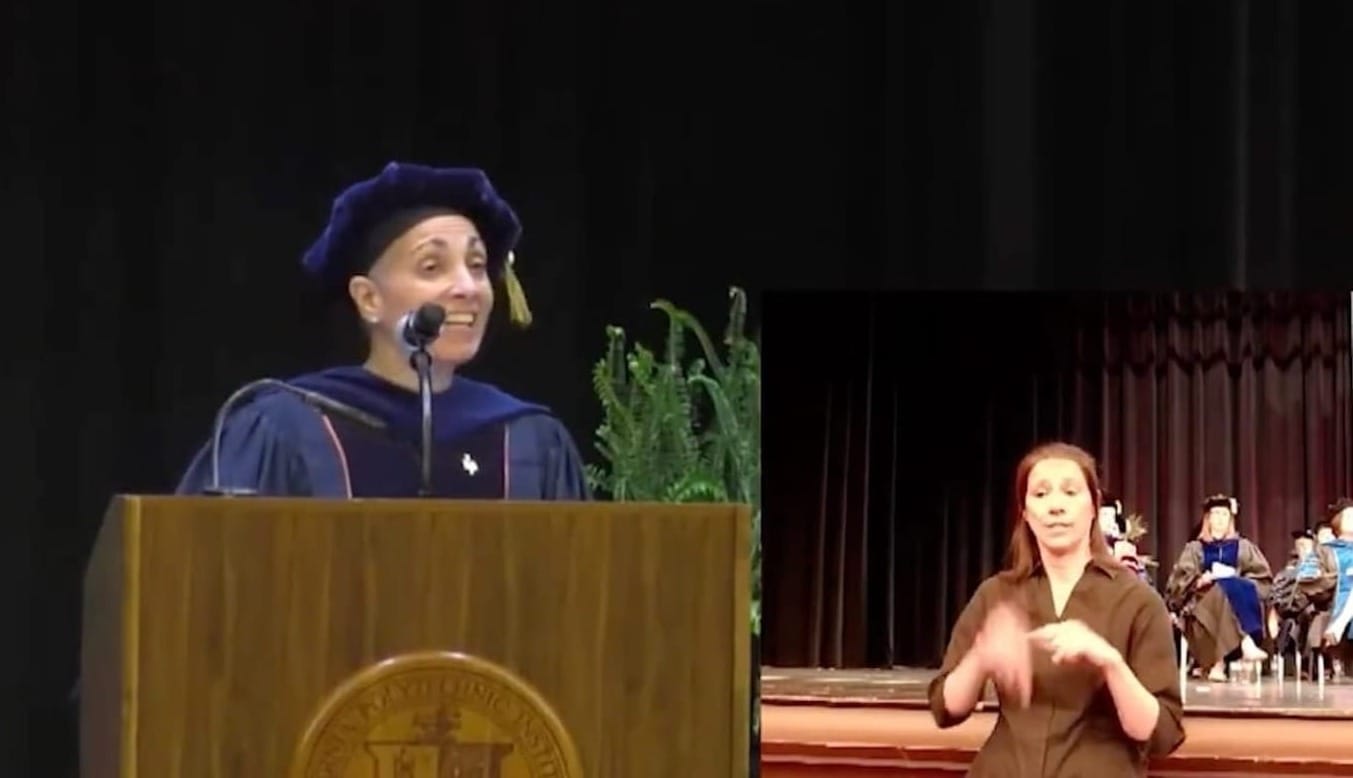
The speakers who got applause this season instead of boos did something specific. Delta CEO Ed Bastian at Emory said he asked AI to write his speech, hated the result, threw it out, and started over with a pencil. Ben Sherwood at Loyola Marymount said it plainly: "They cannot live a human life. Machines generate answers. You get to live your way into one." And Dean Laura Belmonte, speaking at Virginia Tech's College of Liberal Arts commencement, acknowledged AI's genuine utility in discussing the launch of her 'Tech for Humanity" initiative. However, she then pivoted: "We also need to talk about what AI can't do and what a graduate of this college can and will do."
Virginia Tech is my alma mater. I came out of a liberal arts department. I know exactly the instinct Belmonte was responding to. And her framing is the right one. Not "ignore AI," not "surrender to AI," but "here is what you specifically bring that this technology cannot replicate."
The speakers who got booed centered the technology. The ones who got applause centered the graduates. The CU professors who won recognition awards gave students agency. The administration that signed a $2 million contract without consulting anyone took it away. Same technology. Completely different reception.
The backlash is not really about AI. It is about who gets to decide how you use it and why.
What leaders should learn from the boos
There are three things I think leaders and institutions should take from this season:
- Mandate creates resistance; invitation creates adoption. The CU pattern plays out inside organizations constantly. Top-down AI rollouts without consultation produce exactly this kind of pushback. The professors who won recognition awards integrated AI gradually, in context, with student input. If you want real adoption, start with willing participants and let the results do the persuading.
- Acknowledge the economic reality before you pivot to opportunity. The graduates booing were not wrong to note that entry-level jobs are contracting. Leaders who skip past that and go straight to "but here is the upside" come across as dismissive, even when their point is valid. Start with the fear. Name it accurately. Then make your case.
- Your most compelling AI advocates are people who found their own use. Not a top-down communications campaign. Not a keynote. The person in your orbit who is using AI to solve something genuinely personal to them is more persuasive than any executive with a slide deck. Find those people. Let them talk. That is your actual change management strategy.
Skepticism, but with curiosity
I keep thinking about what it felt like when the Internet arrived during the time I was in college. Nobody handed me a permission slip. I was just curious. I figured out what I could do with it.
The Class of 2026 is inheriting a real mess, and they have every right to be angry. But there is a difference between a generation that shapes a technology wave and a generation that refuses to touch it. Virginia Tech's Dean Belmonte got it right: the question is not whether AI is coming. The question is what a graduate with your specific education and your specific humanity can do that AI cannot.
That question deserves more than a five-minute commencement speech. It deserves your actual attention.
If you're like the resistant young people in my life, keep the skepticism. Skepticism is healthy. But pair it with curiosity. Because the people who are building the things you actually care about are already in the room, and they are not waiting for permission either.