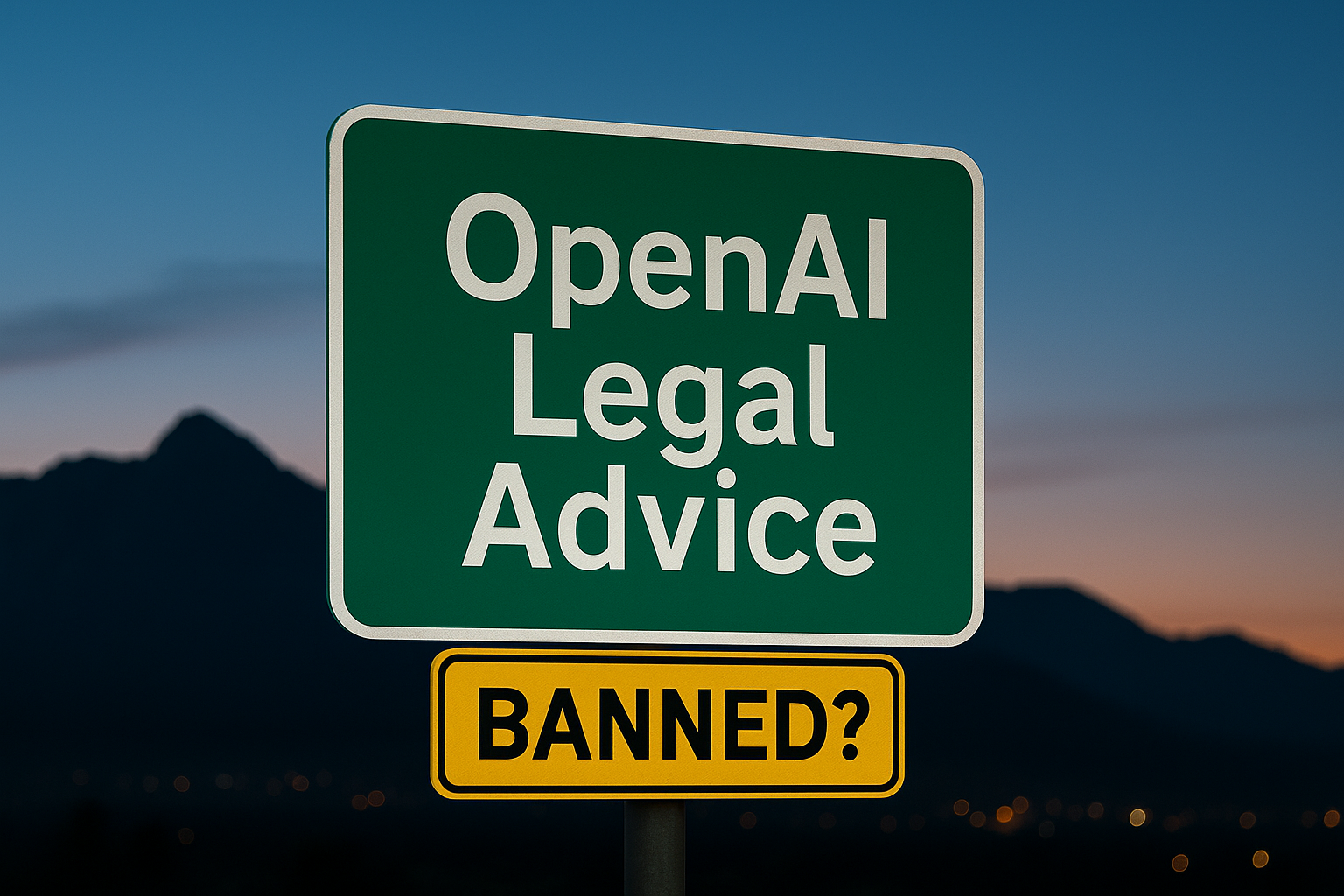
Brown's Law: Did OpenAI ban legal advice via ChatGPT? Not exactly.
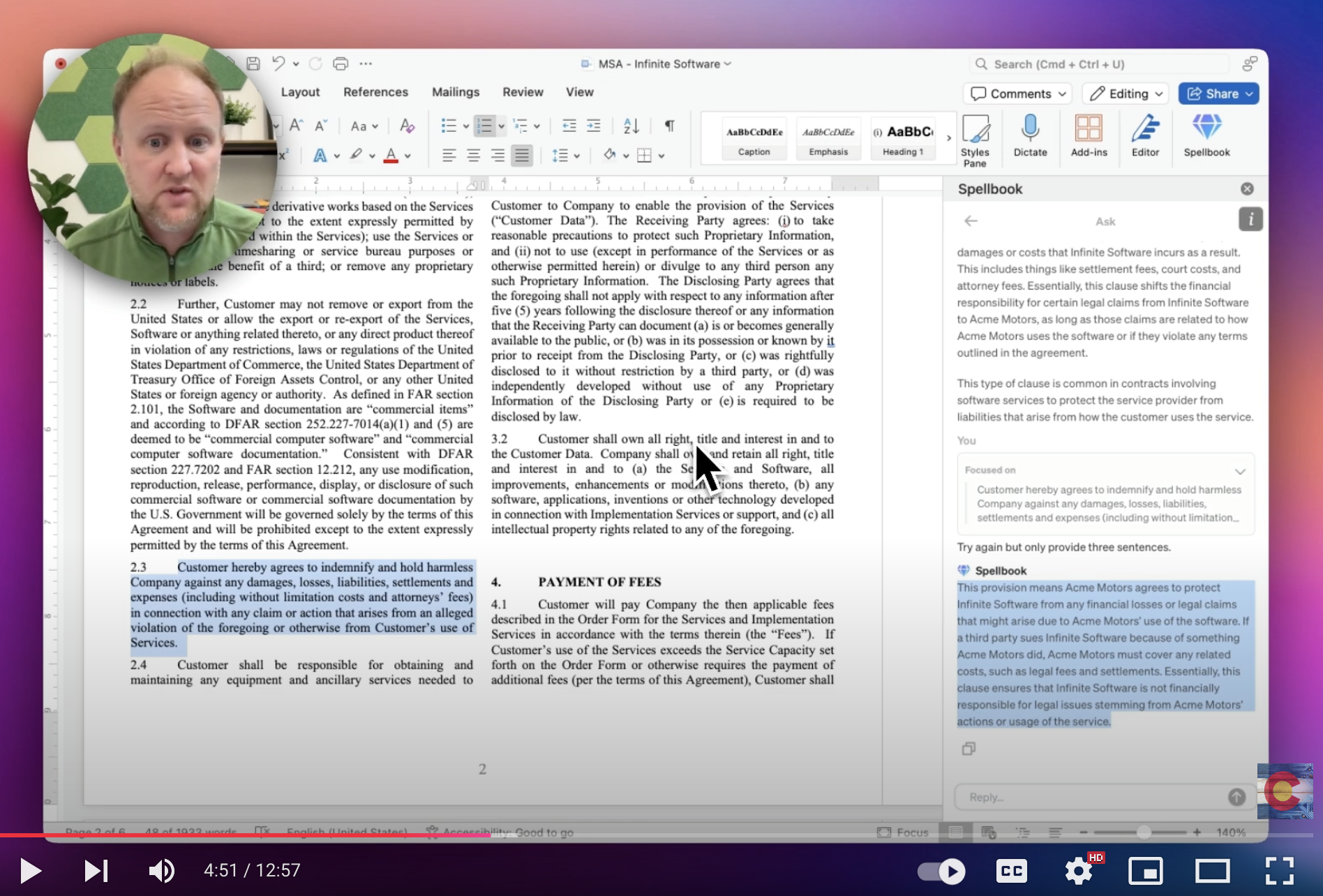
A closer look at what changed - and what did not - in OpenAI’s evolving policies around AI and the law. Also: A free, live webinar this Wednesday: "Solving Legal Needs Using AI."

Total Posts : 10 posts
A closer look at what changed - and what did not - in OpenAI’s evolving policies around AI and the law. Also: A free, live webinar this Wednesday: "Solving Legal Needs Using AI."
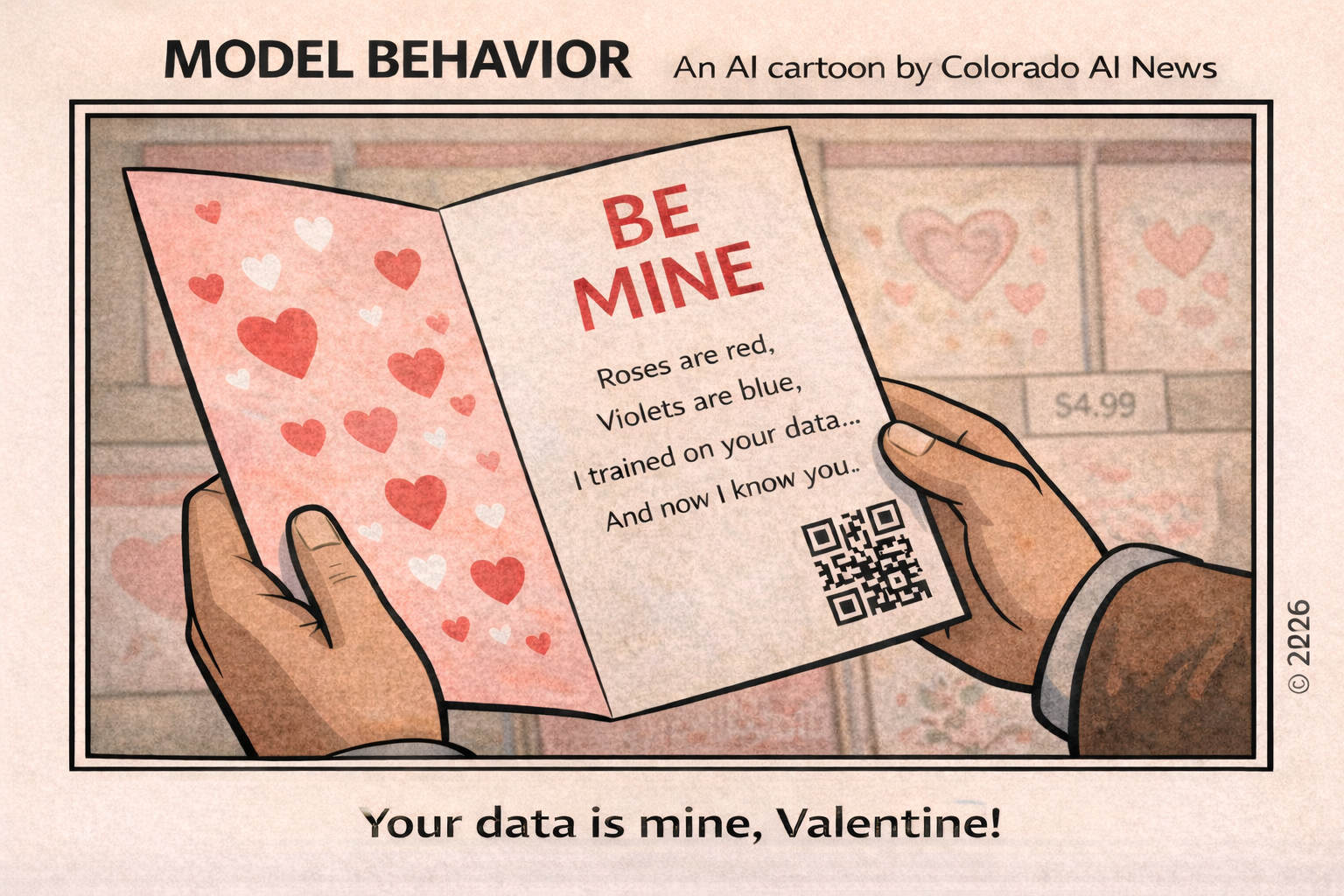
A federal judge ordered OpenAI to preserve and segregate all output log data, but that order collides with the way OpenAI operates. What happens when legal demands meet technical, ethical, and regulatory limits?
Copyright protection does not extend to general ideas or artistic styles. That means that the visual style of Studio Ghibli isn’t protected, and neither is the tone or mood of Wes Anderson, or the musical style of Grandmaster Flash.
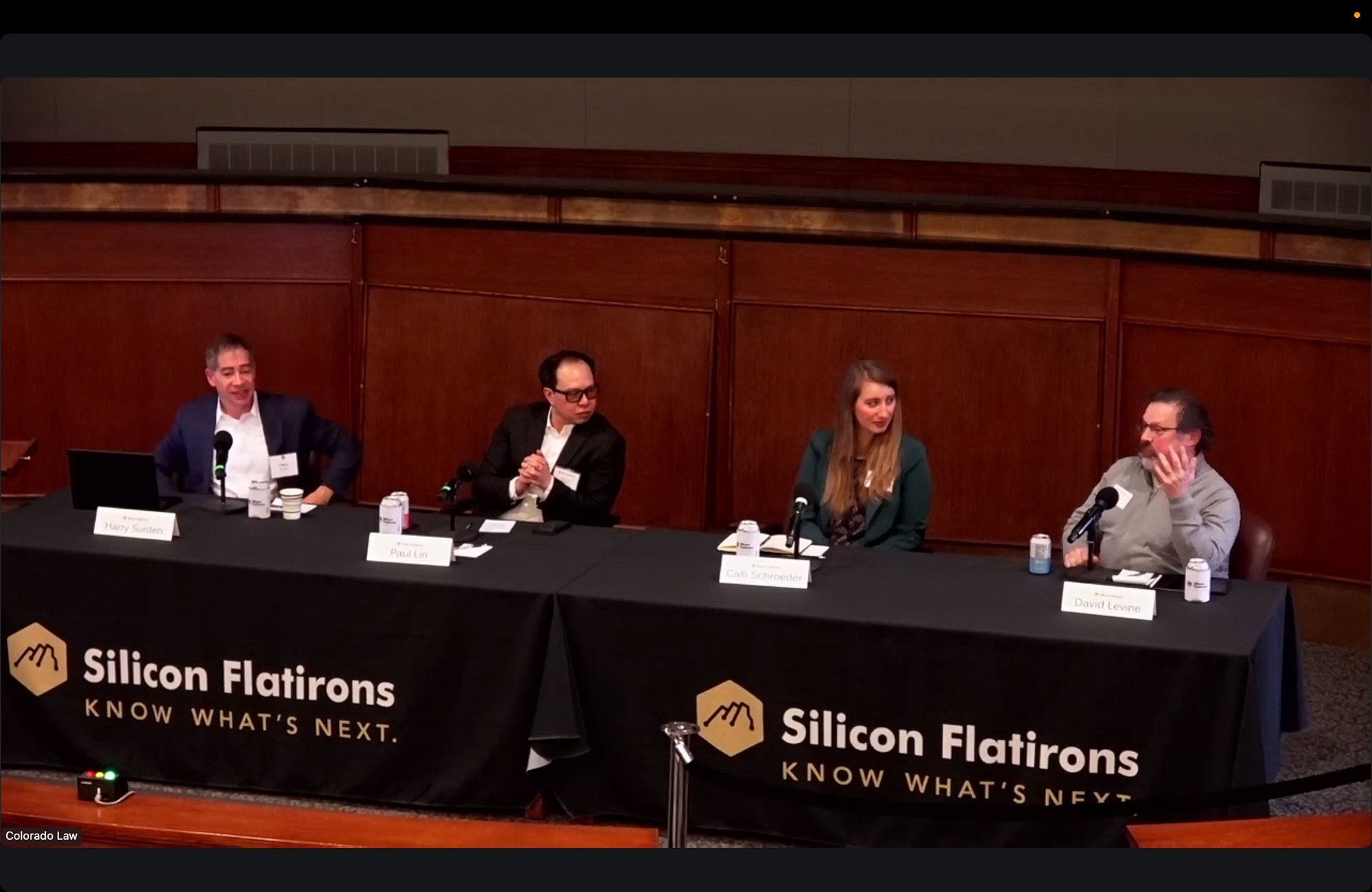
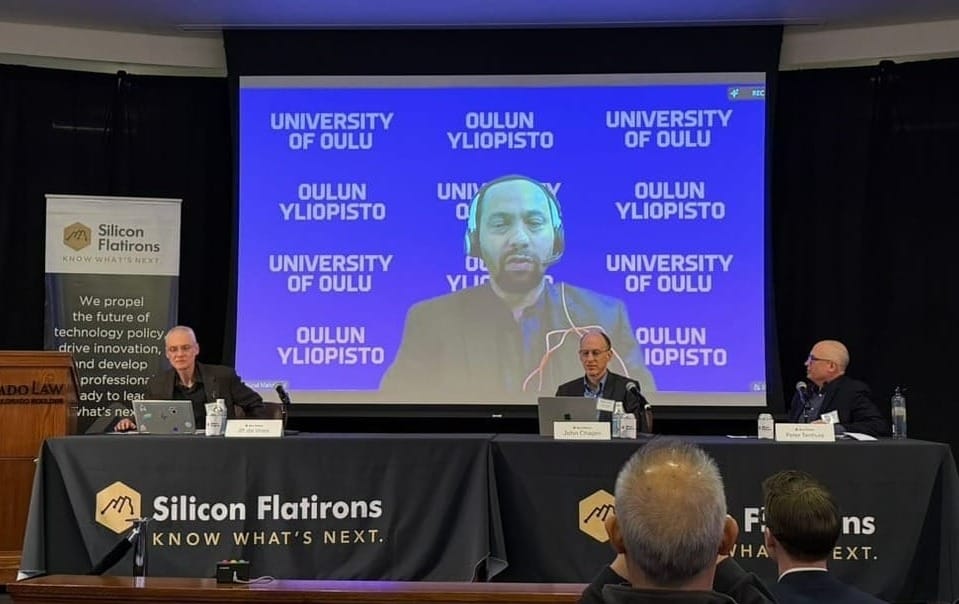
The rapid rise of AI agents has sparked urgent legal and policy debates distinct from broader AI regulation. At the latest Silicon Flatirons event at the University of Colorado Law School, the Artificial Intelligence, Autonomous Systems, and Law Conference on March 7, experts gathered to tackle issues related to one
The unfortunate reality is that many people cannot afford to hire a lawyer. Entrepreneurs, freelancers, and small business owners often find themselves navigating legal issues on a tight budget.
Yes, AI saves me time, but my main reason for using it is to be a better lawyer. AI helps me double-check my work. Not just grammar and spelling errors, but more serious concerns, such as dates that don’t align, contractual sections that contradict one another, or provisions that need refinement.
Newsom's veto of 'aggressive' approach to AI regulation sends CA legislators back to the drawing board.
Lawyer's misuse of AI leads to probationary status, but also to a new mission: using AI to be more efficient and help underserved clients.
In May of this year, Colorado become one of the first states in the nation to pass comprehensive legislation aimed at “high-risk artificial intelligence systems.” Since then, there has been a flurry of opinions on the law, which has a delayed effective date of February 1, 2026 to allow for
Artificial intelligence is poised to revolutionize the practice of law and the public's access to legal services, not just in Colorado but wherever internet access is available. Both the legal industry and the public must carefully consider the implications of this technological revolution, although it’s crucial to
Sign up today to get weekly email updates and to comment on selected articles.
Subscribe Now