Since late last year, I have been talking with people about establishing a Colorado film fund to incentivize more and bigger film production in the state. This journey through film-focused professionals and businesses led me to Truce Media, a Colorado film co-op led by Julie Jackson. With the organization now taking action to set up a centralized fund structure and commencing fundraising, I am talking with local communities about the merits of establishing local arts investment funds.
My conversations have increasingly led to a broader question: If Colorado wants a stronger creative economy, how should artists, funders, and communities think about AI – not only as a threat to creative work, but as a tool that could expand what gets made, who gets to make it, and how human originality is protected?
To take a step back, great leaps in art have always followed great leaps in tools – and this has been the case not just for generations, but for centuries.
The paintbrush expanded expression beyond fingers and charcoal. The camera changed painting forever. Film transformed storytelling. Digital technology opened entirely new dimensions in music, design, publishing, and visual effects. Each advancement sparked anxiety about what might be lost – but over time, the greater story was often what became possible.
Artificial intelligence now stands at a similar threshold.
The public conversation around AI and the arts often becomes trapped in a contest of replacement: Will AI diminish human creativity? Will artists lose ground? Will machines “win”?
These questions, while understandable, may be too narrow.
A more meaningful question is this: What new heights in creativity become possible when human imagination expands through AI?
Creativity has never been static
Art is not defined solely by the tools used to create it. Art is the manifestation of perspective, emotion, experimentation, and meaning. The tools matter—but they are not the source of vision.
AI introduces a profound shift not because it replaces creativity, but because it may dramatically expand access to creative capability:
- A songwriter can now experiment with orchestral compositions without needing a full symphony.
- A filmmaker can prototype visual worlds once reserved for major studios.
- A designer can iterate hundreds of concepts in hours instead of weeks.
- A writer can explore structures, tones, and perspectives faster than ever before.
This does not eliminate the artist. It actually may elevate the artist who learns to direct, shape, refine, and transcend the machine.
I cannot sing, play the piano or paint a picture. Something in my genetic makeup is missing. My parents tried everything when I was kid – taking me to lessons for one thing after another. Nothing. No talent – at least in that direction.
Until now. With AI, my creativity, mostly in structuring finance deals, now has new horizons.
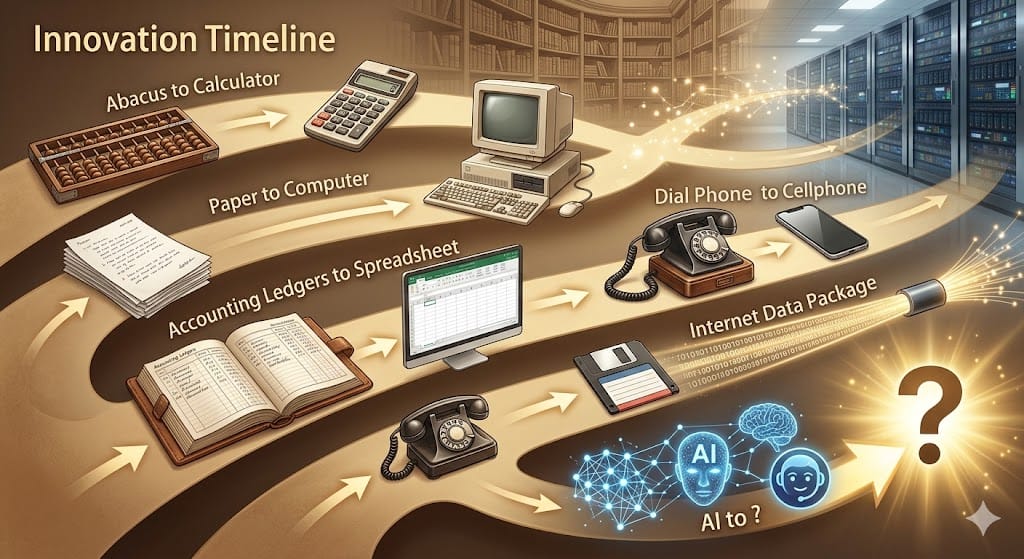
I felt the same way with my first calculator, computer, Excel spreadsheet, internet account, etc. Each one enabled me to do more. Each innovation’s gains also had its losses. I never use my abacus anymore, and I don't do any math longhand. Nor do I need to wait until I get back to my office to make a call. And I no longer place large files on a floppy disk in order to mail them.
To be clear, I do not intend to make a living as an artist with the use of AI. So, although I believe I have new – and as yet unmeasured talents – in artistic creation, I intend to stay in my lane of creative financial modeling. I will not be taking away a current job in the arts industry. However, my future engagement of artists on my projects will be biased toward those who are using AI.
The rise of creative multipliers
Historically, creative excellence often required years not only to master a craft, but also to overcome technical limitations. AI may increasingly function as a creative multiplier – reducing friction between imagination and execution.
This matters because many extraordinary ideas never reached the world simply because the creator lacked resources, training, or infrastructure.
Imagine the following:
- Independent creators producing immersive cinematic experiences
- Rural students composing sophisticated digital art
- Nonprofits telling emotionally compelling stories without million-dollar budgets
- Entrepreneurs blending business strategy with artistic communication at unprecedented levels
AI may democratize aspects of execution while simultaneously raising the premium on originality, insight, and human meaning. When more people can create, the frontier shifts from “Can this be made?” to “What is worth making?”
I am exploring how AI can translate (interpret an engineering drawing, patent claim or ‘geek speak’) what we already have. Tens of thousands of patents have been filed that have never been commercialized because no one sees their commercial value. The inability to perceive market benefits does not mean the potential benefits do not exist. An ‘innovation benefits analysis’ series of AI prompts may result in revealing a cure to cancer that was discovered decades ago (no, this is not the false story making the rounds about the CIA). Likewise, AI may help an artist hone their pitch of a new project.
New artistic frontiers
The future of art may not merely be better versions of what already exists. It may include entirely new categories. Here are just a few possibilities:
- Interactive narrative experiences that adapt emotionally to the audience
- Personalized music landscapes
- Living visual art systems
- AI-assisted architecture blending beauty, sustainability, and adaptive intelligence
- Educational storytelling that merges data, design, and emotional resonance
The arts may become less static and more dynamic – by which I mean less one-directional and more collaborative. In this world, creativity may increasingly resemble orchestration. The artist becomes composer, curator, visionary, and conductor.
The real world is complex, and we tend to simplify everything in order to bring it down to our level of understanding. Art has often served as a means to communicate things that words alone cannot convey. We have all heard the phrase, “A picture is worth a thousand words.” Video (its own innovation) takes this to a higher level. With AI, is it possible to communicate reality?
The human element becomes more valuable, not less
As AI expands production capability, human distinctiveness may become even more precious.
Why?
Because audiences do not seek only output. They seek connection. They respond to lived experience, emotional truth, moral courage, cultural context, and authentic perspective. AI can generate patterns. Humans generate meaning. The future may reward those who combine both.
Not by asking whether AI can create, but by asking who can use AI to reveal something deeply human, profoundly beautiful, or culturally transformative. I look forward to those artists who can use AI to attain new artistic heights (still using three dimensional metaphors since I have not yet figure out how to do it with more).
Beyond fear, and toward possibility
Every transformative technology disrupts familiar systems. That reality should be approached thoughtfully. But creativity has rarely flourished under fear. It flourishes under curiosity. Colorado’s growing AI ecosystem places us in a unique position – not simply to debate disruption, but to shape innovation that amplifies humanity’s highest capacities. The question before artists, educators, entrepreneurs, and communities is not merely how to protect yesterday’s forms. It is how to participate in creating tomorrow’s masterpieces.
A new Renaissance?
The Renaissance was not powered by one invention alone. It emerged from the convergence of tools, ideas, patronage, and bold thinkers willing to explore new ways of seeing. AI may represent a similar moment. Not because technology itself is art. But because technology, in the hands of visionaries, may unlock forms of expression previously unimaginable.
The winners-and-losers narrative may ultimately miss the larger point. If approached wisely, AI and creativity may not be a battle. They may be a launchpad. And the true opportunity may be this: To use artificial intelligence not merely to produce more, but to imagine more, express more, and perhaps manifest art never before seen, felt or experienced before.
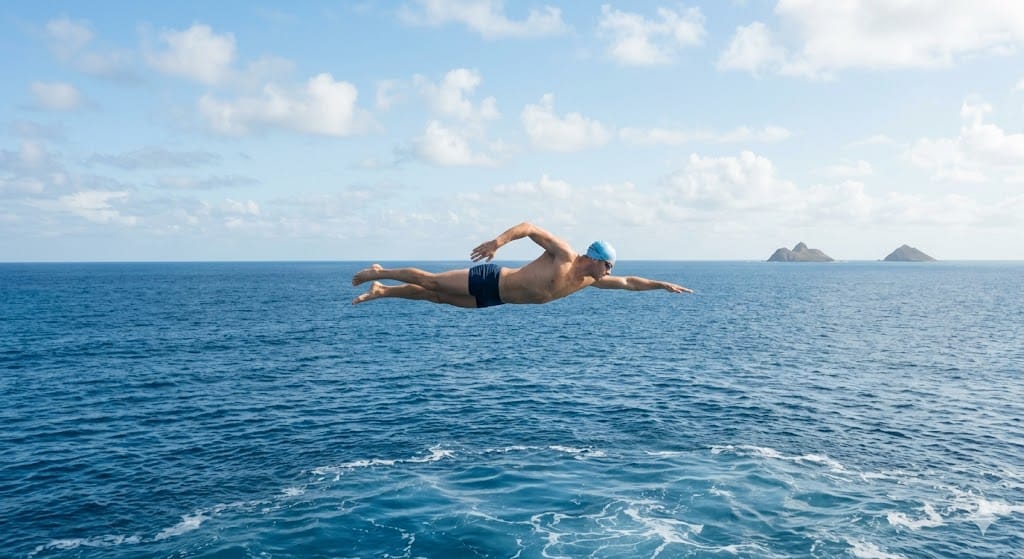
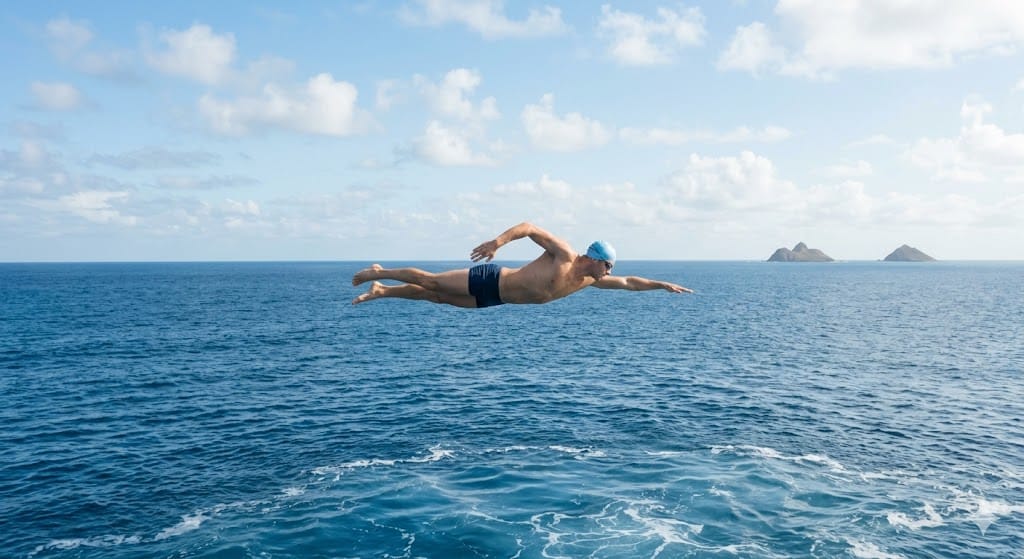
For example, I would like to enjoy a swim in the ocean without getting wet. AI may help me express that idea in a way words alone cannot.
That may sound whimsical, but it points to the larger promise of the moment: AI may help us express ideas we could previously only imagine. What would you like AI to help you achieve?