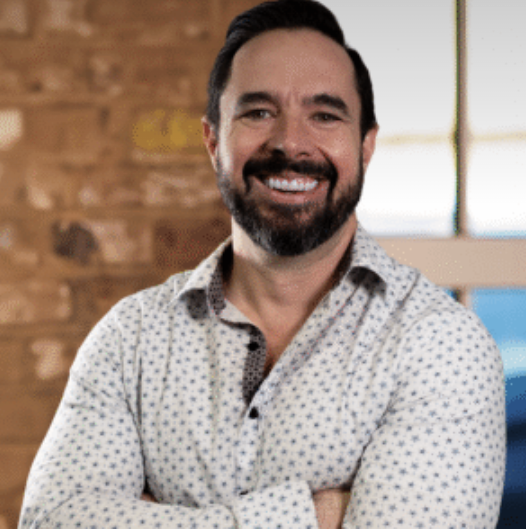
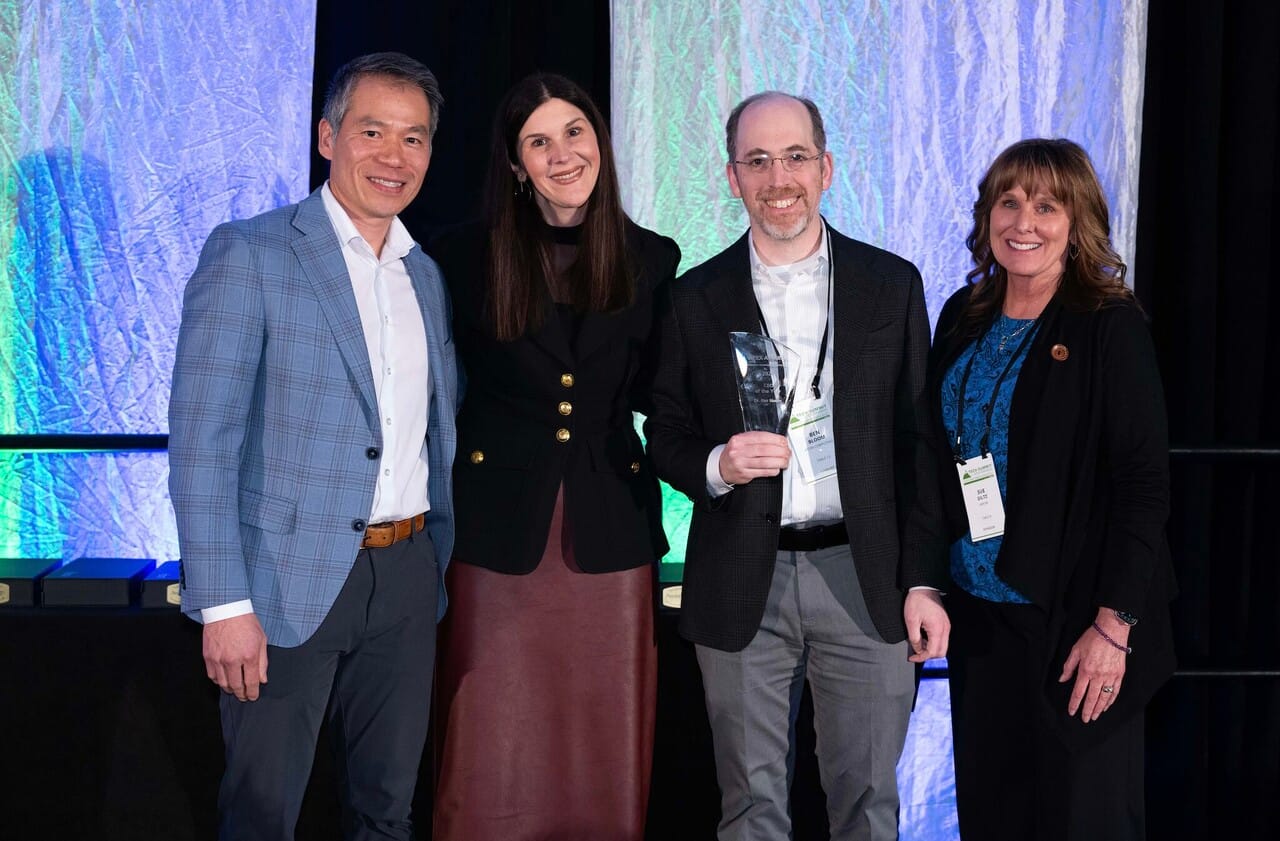
When Atom Computing’s Ben Bloom received the Colorado Technology Association’s CEO of the Year APEX Award a few weeks ago, it marked a striking milestone: This was the first time a leader of a quantum computing company had won the award.
For Colorado’s quantum community, that was a strong signal, and if the next few years unfold the way many expect, it likely will not be the last time a quantum company or CEO is in the spotlight.
For many outside of the quantum space, what Atom does is just as striking as Bloom's win: They build what are known as neutral-atom quantum computers, which offer massive scalability that's unprecedented even in quantum computing. And they are doing it now.
Scott Sternberg, executive director of the CUbit Quantum Initiative at the University of Colorado Boulder, likes to say, “The future of quantum computing is here.” In Colorado, that word carries a double meaning. It means now – and it means right here in the Centennial State.
That timing matters. When the United Nations General Assembly designated 2025 the International Year of Quantum Science and Technology, it was marking 100 years since Werner Heisenberg first articulated a mathematical framework for quantum mechanics.
The anniversary was backward-looking, but the mood around quantum today is not. Many in the field now describe the present moment as part of a “Second Quantum Revolution,” a period in which quantum is moving beyond theory and toward practical use. As Sternberg puts it, “Quantum is no longer confined to theory.” He says the goal now is to “democratize awareness and education around quantum science.”
Colorado’s quantum ecosystem has been shifting from research to application for some time. Longstanding work across universities, labs and industry is increasingly surfacing in places where advanced technology meets infrastructure: manufacturing, energy, cybersecurity and workforce development. “We have an economy in motion, and it’s accelerating every day,” Sternberg said.
Tanya Ramond, a strategic adviser for quantum and deep tech and the director of business development at the Colorado Quantum Incubator (COQI), is quick to echo that view. COQI, a 13,000-square-foot facility in Boulder, is designed to serve as a hub for quantum startups.
COQI also happens to be the Colorado home of Atom Computing, as the APEX Award-winning company is now leasing space there. Ramond notes that Colorado’s connection to quantum did not begin with the latest wave of hype.
As she observes, “Although quantum now is a hot topic, it’s nothing new to Colorado.” She points to more than 60 years of institutional groundwork, including NIST (the National Institute of Standards and Technology) in Boulder, JILA (the joint institute of NIST and CU Boulder) and the four Nobel Prizes in quantum physics awarded to members of CU Boulder's faculty over the last 25 years.
The AI-quantum infrastructure
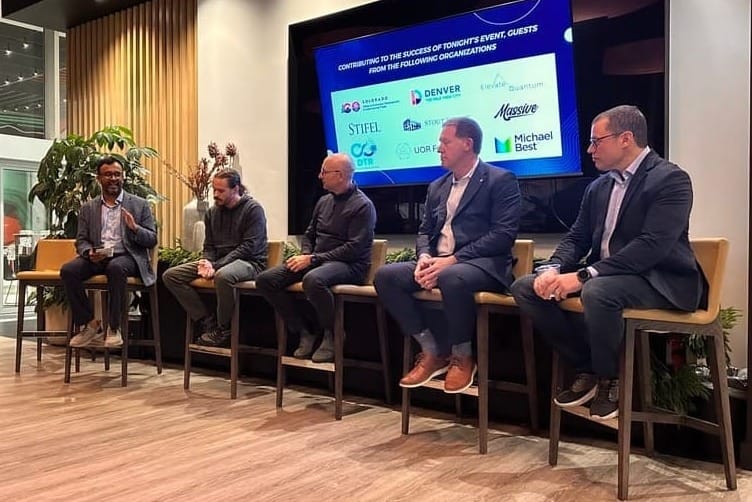
As 2025 was winding down, Henry L. Wright, a longtime Colorado tech leader and organizer, saw an opportunity to convene a conversation that many in the state had been circling for months. At a December event in Denver focused on quantum and AI, Wright described Colorado’s emerging “NextGen Quantum-AI Infrastructure” as a connective effort linking local momentum to wider national currents. His broader message was that Colorado has a chance to shape the field not only through invention, but through coordination.
“Quantum represents a new platform for computing,” Wright said. “We forget how long it took cloud platforms like AWS, Azure and Google to become reliable and ubiquitous. Quantum will also mature around real use cases, and Colorado’s opportunity is to focus the ecosystem on those applications where it can lead. It will take all of us – the community, systems, and networks – all working in unison.”
Speaking at that event, entrepreneur Adam de Delva, founder of Developer Technology Research, pushed the argument further. In his telling, Colorado is becoming a strategic hub for the next era of computing, one that blends AI, quantum, hardware, sovereign infrastructure and open source in ways other regions have not yet fully recognized. “Investment communities in major hubs like New York and Silicon Valley are not seeing what Colorado sees,” he said. “Their focus is still on traditional finance and incremental innovations.”
De Delva also argues that Colorado is hosting unusually candid conversations about quantum. He said that despite speaking at hundreds of events around the country, Colorado was the only place where he had publicly discussed quantum in such direct terms. “It’s simply not on the radar elsewhere.”
The entrepreneur's striking statement captures something real about Colorado’s present moment: People here are talking about quantum not as a remote research curiosity, but as part of the state’s economic future.
A runway already in use
As Ramond points out, Colorado’s role in quantum reflects decades of sustained institutional investment. At CU Boulder and JILA, quantum research has produced Nobel-winning science, startup founders, and senior policy advisers. Today, that work intersects more directly with the state’s economy.
Aerospace, space systems, defense, telecommunications and advanced manufacturing have long shaped Colorado’s industrial base. These sectors operate in environments defined by precision, regulation and long development cycles, conditions that also lend themselves to applied quantum work. As AI adoption has spread across those industries, the overlap has become more visible.
Eve Lieberman, executive director of the Colorado Office of Economic Development and International Trade (OEDIT), is emphatic about the state’s position. “The global quantum race is here, and Colorado is leading this generational shift in technology,” she said.
Lieberman contends that Colorado’s leadership rests on four pillars: ecosystem density, investment, quantum sensing, and workforce development. Her office points to more than 35 quantum companies in the state, major public investment through Elevate Quantum, growing commercial traction in sensing, and a multi-level effort to build a quantum-literate workforce.
That broader point also comes through in the view of Iris Bahar, chair of the computer science department at Colorado School of Mines in Golden. Bahar is not simply echoing local enthusiasm. After nearly three decades at Brown University and recently returning to Colorado in 2022, she brings both outside perspective and academic heft. From her vantage point, it's clear that Colorado is “getting known as being a quantum epicenter.”
What stands out to Bahar is not only the federal designation or the growing number of quantum companies, but the ecosystem taking shape underneath. At Mines, she said, the goal is to help build a “quantum-ready workforce.”
That means more than adding a few courses. Mines is hiring in the field across computer science, electrical engineering and physics, reflecting what Bahar described as the deeply interdisciplinary nature of the work. If Colorado wants its quantum momentum to last, she suggests, talent development will matter as much as technology development.
She also points to something less tangible, but potentially just as important: Colorado’s collaborative culture. Bahar said she has been struck by how open the state’s universities are to working together, including arrangements that let Mines students take classes at CU Boulder, along with broader seminar and teaching ties among Mines, CU and Colorado State. “You can’t take that for granted,” she said. In Colorado, she added, “there’s a lot of interest in working across universities.”
That spirit, in her telling, extends beyond academia. One of the biggest differences she noticed after returning from Providence was how accessible the broader quantum community felt here – not just at Mines, but across the state. After making the move to Colorado four years ago, she came away thinking, “There are so many people to talk to. It’s not just Mines, and it's not just CU: There’s a whole ecosystem that I now have access to.”
 jleonasmines.edu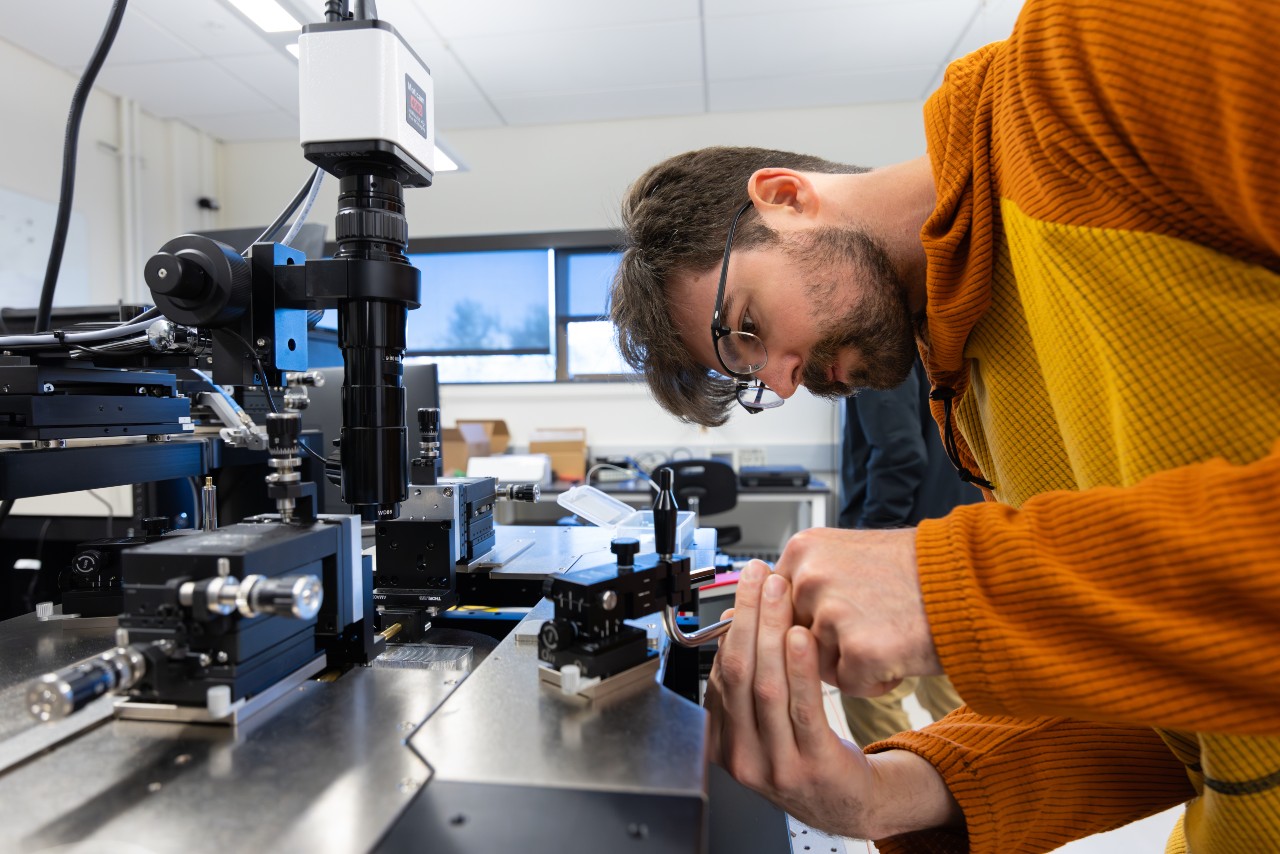
Colorado School of Mines is offering a first-in-the-nation degree program this fall: a bachelor's degree focused on quantum systems engineering.
From density to coordination
That concentration of capability is what Elevate Quantum is meant to organize. Wendy Lea, an Elevate Quantum board member and a longtime Colorado tech leader, contends that the state’s advantage runs deeper than the popular image of quantum as simply a computer.
Colorado, she emphasizes, already has unusual density in the hardware, research and commercialization layers that make a quantum ecosystem possible. “CU Boulder has the family jewels around quantum,” Lea said, pointing to the university’s longstanding ties to JILA and NIST.
Lea also highlights that Colorado’s strength is rooted in a broader hardware tradition. “We have a hardware background as a state,” pointing out that the state’s startup base grew not just from the dream of quantum computing, but from the surrounding technologies already being built here: atomic clocks, lasers, sensors, and the manufacturing capacity needed to turn research into products.
Elevate Quantum emerged from Colorado’s successful bid for federal Tech Hub funding under the CHIPS and Science Act, a $40.5 million award spanning Colorado, Wyoming and New Mexico. For Lea, though, the bigger story is what comes next. “When federal dollars show up, the focus shifts to execution,” she said. “Workforce, manufacturing capacity, partnerships – that’s where the work is.”
She frames quantum not as an abstract science project, but as foundational infrastructure that Colorado must build around now, before the technology fully matures. “You can’t have a quantum economy unless you have quantum employees,” she said, arguing that the sector will need not only PhDs, but also “tradespeople and welders and electricians.”
That same buildout, she suggests, could eventually matter far beyond quantum itself. As AI systems drive surging demand for compute, power and water, Lea sees quantum as a strong long-term complement. “It’s just a beautiful match,” she said, because when scalable quantum computing arrives, “we reduce power, reduce water, go faster,” and “AI will just be less expensive to build.”
Sternberg makes a similar point from another angle: The U.S. Economic Development Administration tends to invest where momentum already exists, using public dollars to accelerate work already underway. In that sense, Colorado’s recent wins say less about a sudden breakthrough than about a long buildup finally becoming legible to outsiders.
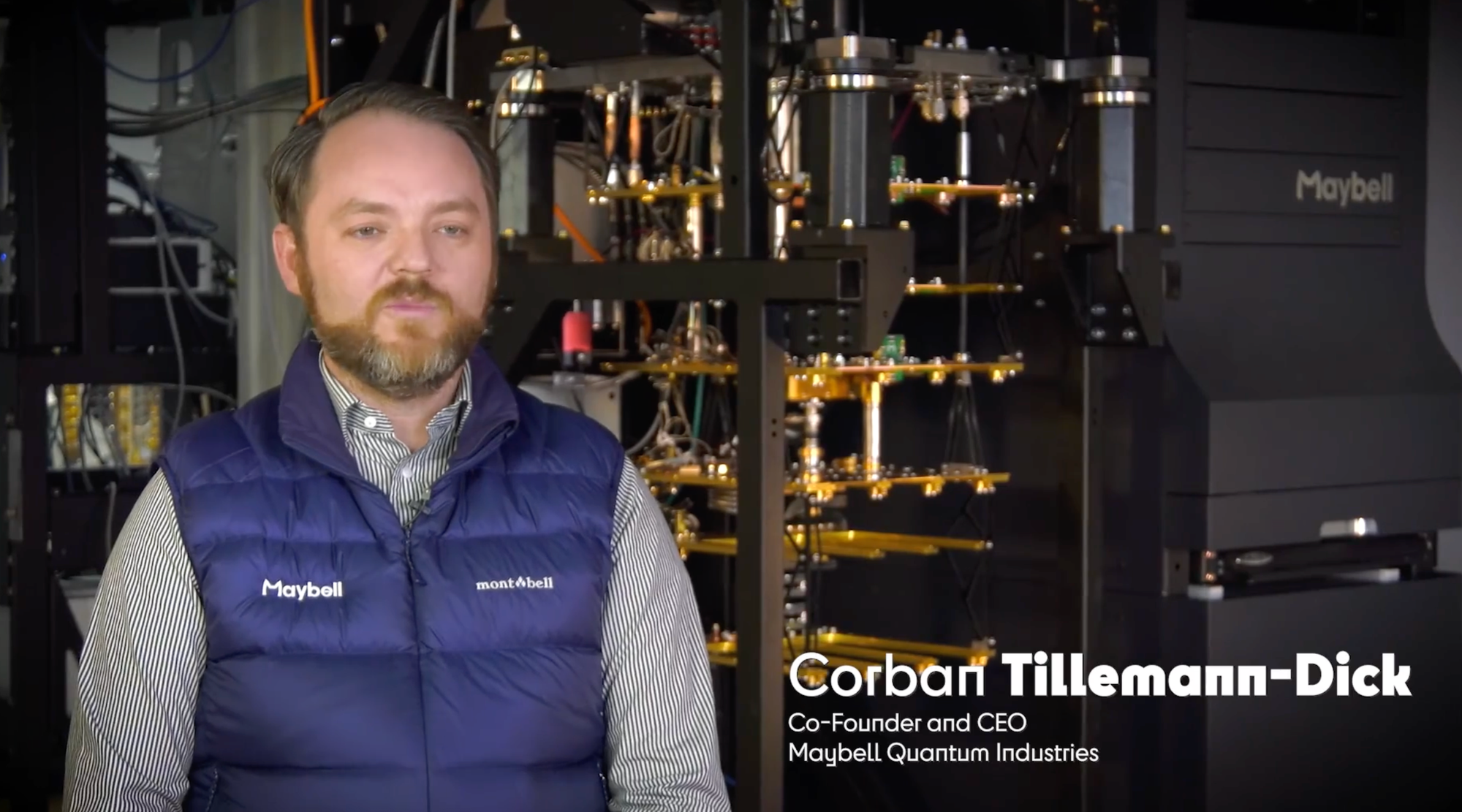
As Corban Tillemann-Dick, the co-founder and CEO of Denver-based Maybell Quantum Industries, declares in an interview with Elevate Quantum, "There are more organizations here in Colorado doing quantum work than anywhere else in the world. There are more quantum jobs here in Colorado than anywhere else in the world."
Patrick Brady, a corporate real estate adviser and managing director at Savills North America, sees evidence of that shift in the market for physical space. Brady, who co-hosted Wright’s December event, points out that quantum companies already represent a meaningful share of advanced-technology demand in Denver and Boulder.
“When you look at companies actively searching for space here in Denver and Boulder, 50 to 60 percent are in advanced technology – quantum, photonics, life sciences, aerospace,” he said. “And quantum makes up a meaningful share of that demand.” He adds that roughly 20% to 25% of the advanced-technology requirements his team is seeing now are quantum-related, a notable figure for such an early-stage market.
Sustainability as a design input
Sustainability has increasingly become part of how advanced technologies are designed and deployed. As AI infrastructure grows, so do concerns about energy use, cooling demands, water consumption and siting constraints. Those considerations now sit alongside performance and cost in discussions about what gets built, where and at what scale.
Wright frames that issue in physical terms. He talks about footprint – and footprints — comparing a deer footprint to a dinosaur footprint to illustrate questions of scale and impact. The objective, in his view, is to reduce physical impact while maintaining and even increasing capability.
That framing resonates in Colorado, where water, energy and land constraints already shape development decisions. In that context, some quantum advocates see promise in applications where greater precision, timing or efficiency could help reduce resource demands in specific workloads.
Investor Russ Fein makes that case directly. “AI training models can cost hundreds of millions of dollars and run for very long periods of time,” he said. “Anything that improves timing, latency, and efficiency can save enormous amounts of energy and cost.”
He also argues that “quantum computing takes less electricity than classical computing for certain workloads,” adding that “one of the biggest challenges in AI is power and sustainability — and quantum can be part of the solution, not just another problem.”
That does not mean quantum is a blanket answer to AI’s infrastructure demands, or that every quantum approach is inherently greener. But it does help explain why sustainability has entered the conversation alongside speed, security and commercialization.
In Colorado, where computing ambitions are colliding with real-world limits on power, cost and infrastructure, sustainability may become a bigger part of how the next chapter is written.
Security brings urgency
Security concerns were one of the earliest drivers of interest in quantum computing. As Fein explains, “Quantum computing originally got a lot of attention because of the realization that, with a sufficiently powerful quantum computer, you could break RSA encryption.”
At the same time, he cautions against alarmism. “Breaking 2048-bit RSA encryption is wildly difficult, and we’re nowhere near that capability,” he said. “The ability to break encryption is not the yardstick for when quantum starts adding value. Quantum is creating value long before it ever becomes a threat.”
In other words, while quantum is often discussed in terms of future capability, some of its implications are already shaping thinking in cybersecurity. Modern encryption systems are built on assumptions about computational limits, and quantum techniques are beginning to challenge those assumptions.
For security and defense leaders, the concern is not only what quantum might do someday, but what data collected today could become vulnerable tomorrow. Several interviewees noted that the same cryptographic vulnerabilities driving private-sector concern are also shaping conversations in national security and defense circles.
That is where the sharper warnings in this ecosystem begin to surface. “Quantum isn’t future – it’s now. Both virtual and physical quantum techniques can already break modern cryptography,” de Delva said.
Wright broadens the concern beyond code. “Quantum isn’t just software or hardware,” he said. “It’s manufacturing, supply chain, and security – all converging.” Whether one hears those remarks as cautionary or catalytic, they underscore the same point: Quantum is no longer a conversation confined to laboratories but is increasingly a conversation about systems.
Capital follows alignment
Investment patterns tend to reflect where attention and leverage already exist. In established venture centers such as Silicon Valley and New York, capital has become heavily concentrated around AI-first platforms and infrastructure.
That focus has consumed investor bandwidth, leaving less room for adjacent technologies that mature on longer timelines and require deeper coordination.
Quantum follows a different rhythm. It aligns more closely with infrastructure development, requiring facilities, supply chains, specialized labor and long-term coordination between research and deployment. That difference helps explain why quantum may be surfacing earlier in regions like Colorado, where many of those building blocks already sit close together.
Colorado offers many of those elements within a single geography. With CU Boulder, JILA, NIST, applied manufacturing and aerospace operations in proximity, the feedback loop between research and application can be shorter than in more fragmented regions. For patient capital, that kind of proximity reduces friction.
Fein has written that the convergence of quantum computing and AI presents both opportunities and uncertainties, especially because different technical approaches may create value on different timelines. His conclusion is not that one will replace the other, but that the most important advances may come from the interplay between them.
That is a useful frame for Colorado as well. The state’s advantage may lie less in betting on a single breakthrough than in creating an environment where multiple pieces of the stack – research, education, commercialization, infrastructure and industry demand – can evolve together.
What comes next
Quantum still has much to prove. Timelines remain uncertain, and commercial value will arrive unevenly. Some applications will stall, and others will take longer than their backers hope. But those caveats no longer seem enough to dismiss what is happening in Colorado.
Coloradans are not merely talking about quantum; they are building facilities, funding workforce efforts, linking universities, attracting companies, and beginning to translate decades of scientific strength into something closer to economic infrastructure.
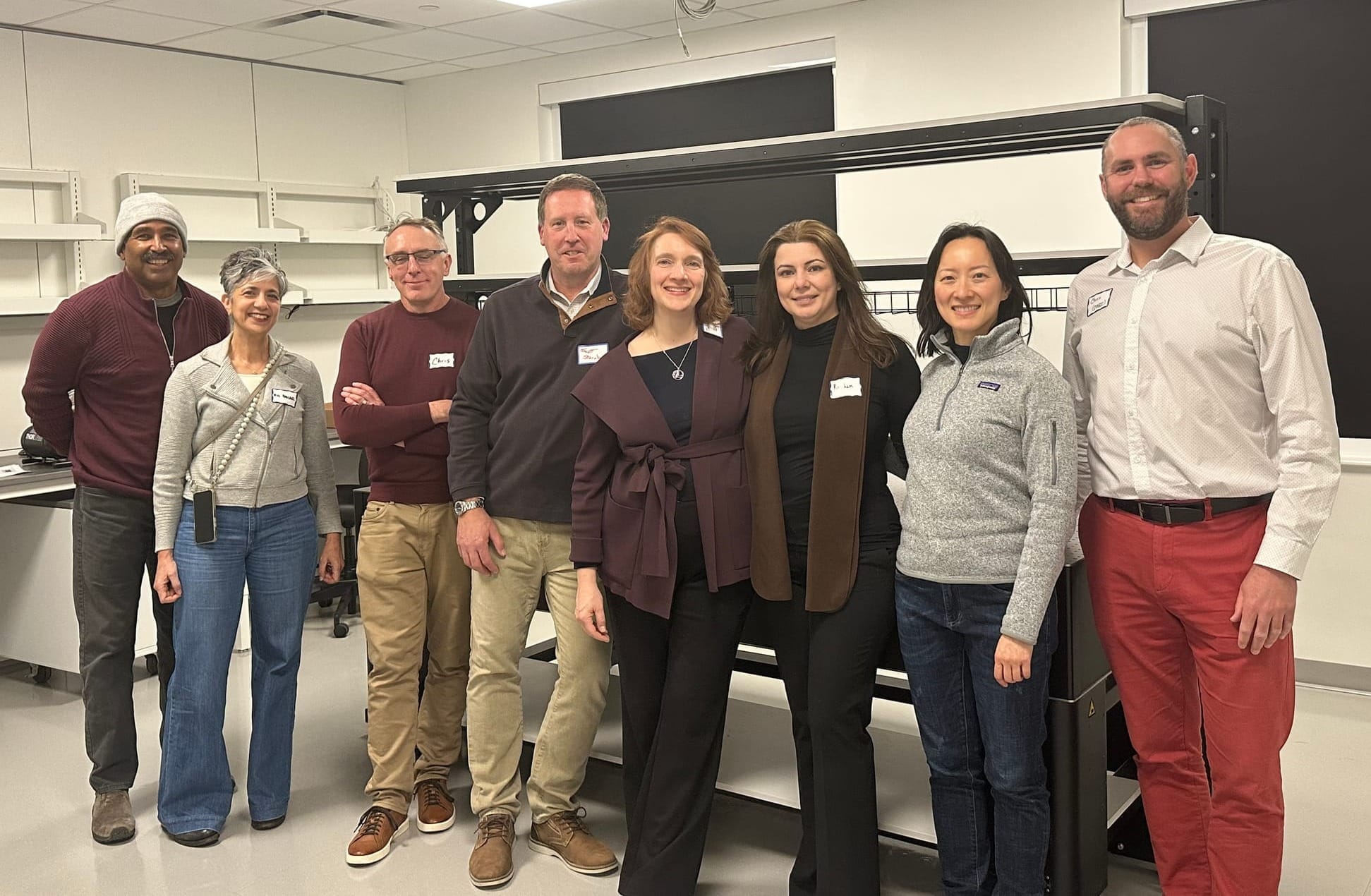
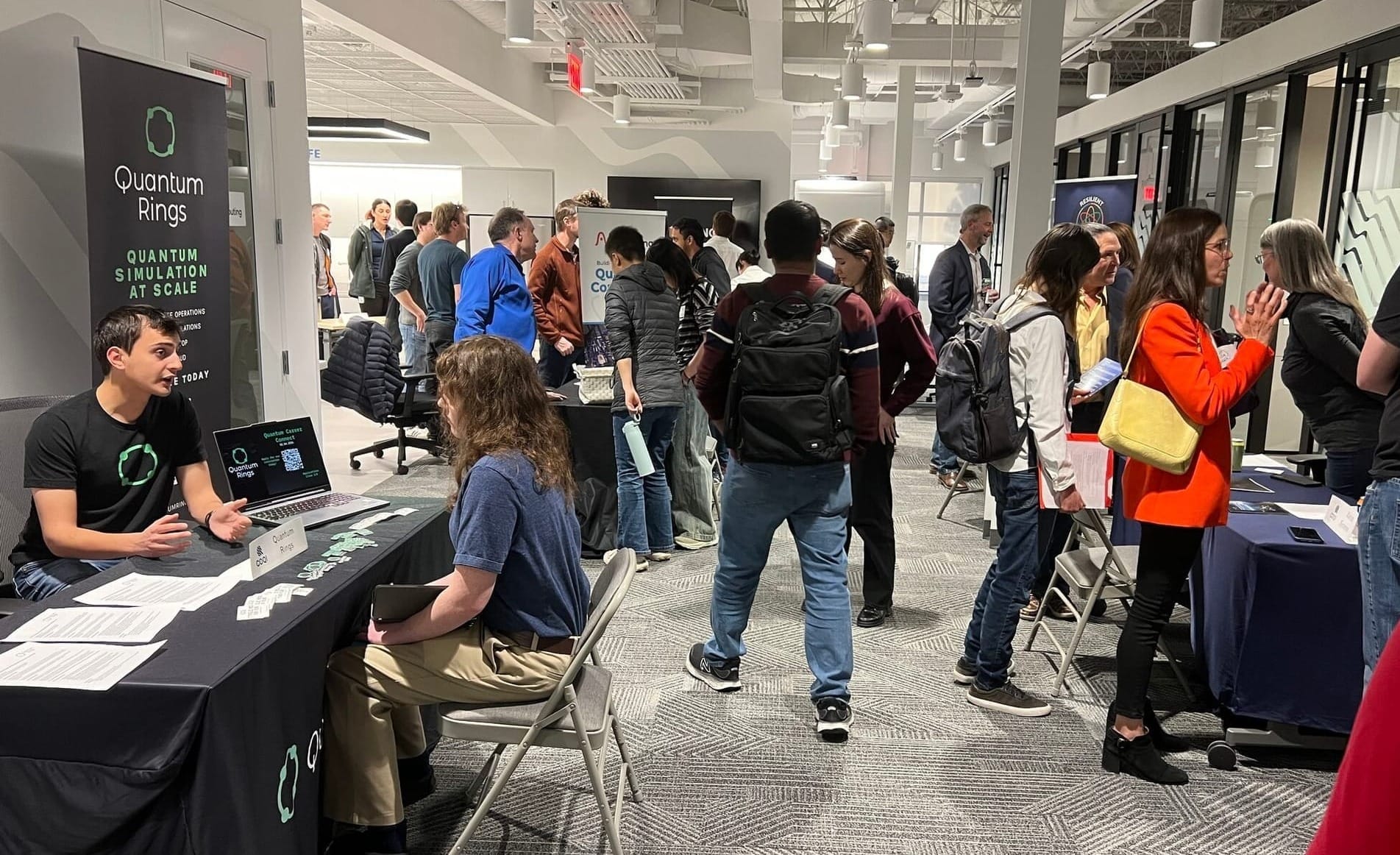
In fact, companies in Colorado are doing even more than all that: They are actively hiring, as evidenced by last week's "Quantum Career Connect" event, which took place at COQI. More than 120 job seekers and other interested parties attended, with nearly 20 Colorado companies conducting interviews.
Director of COQI Chris Muldrow highlights the new capabilities that the incubator is bringing to the quantum ecosystem, including “a physical space to bring the quantum community together, advanced lab platforms for research and development, and testbeds to advance quantum applications.” Muldrow affirms that the Career Connect event's success “shows us that quantum is here – meaning both in Colorado and today – and not years away."
Colorado’s entire quantum community continues to convene in what appears to be an accelerating manner, with events planned this spring and fall that bring researchers, manufacturers, investors, and policymakers together to align priorities.
Following up on December’s “NextGen Quantum-AI Infrastructure” event, Wright is finalizing plans for an upcoming quantum computing event that will focus on forming bridges among the various groups that are essential to Colorado’s continued success in the quantum space. “Next Level: The Intersection of Quantum, Capital, Supply Chains, and Open Source” is an in-person event planned for the afternoon of April 16 in the U.S. 36 Northwest corridor. More details from the organizers are promised soon.
Similarly, Ramond invites those interested in quantum-related events to follow the COQI LinkedIn page, remarking that the group features a consistent series of presentations and networking opportunities.
A century after quantum mechanics transformed physics, its next phase is taking shape where research, infrastructure and real-world constraints converge. In Colorado, and especially along the Front Range, that shift is moving out of the lab and into public view.