If you’re still using the free version of ChatGPT, it's time to get serious.
The good news is that “getting serious” doesn't cost more than $20 a month. The critical piece is that moving up to a paid tier – whether that’s ChatGPT, Claude, Gemini, or another leading model – often gives you access to something that feels like a whole different animal.
How different? Let me put it this way: Judging modern AI based only on the free tier is a bit like reviewing a Michelin-star restaurant after sampling only the bread basket. Yes, you get a taste of what the restaurant has to offer. (And yes, really good bread – with an amazing crust – is priceless!) But you still haven’t experienced the chef’s best work — the dishes that require nuance, precision, technique, and years of experience.
Similarly, the newest frontier models of AI — typically available in the paid tiers — tend to reason more reliably, follow complex instructions more consistently, handle long documents without losing the thread, write and debug code with far fewer mistakes, analyze images and data, and juggle multi-step tasks with greater stability.
For example, ask a free model to analyze a 60-page report, and it may struggle with context limits or lose key threads halfway through. Ask a frontier model, and it can often summarize, critique, extract structured insights, and suggest follow-up research – all in one pass.
Here's another way to think about it: Today’s frontier models can process the equivalent of entire books within a single session. That expanded “memory” alone changes what’s possible – from analyzing lengthy contracts to synthesizing multi-source research to building complex codebases, all without losing context.
In 2026, the divide between entry-level and frontier AI is built into the architecture itself. In other words, it's anything but superficial or cosmetic.
Free tiers are typically rate-limited, context-limited, and based on earlier-generation models. Sure, they can be impressive, especially to someone new to GenAI. They certainly can be useful. But they are not the flagship experience.
In addition to the context limits, here's something to keep in mind: The knowledge cutoff of GPT-5.2 (Instant), released in December 2025, was the previous August. So, in March of 2026, free users of ChatGPT are depending on a tool that's more than six months out of date. In some cases, that may not be important, but in others it can be deal-breaking, all by itself.
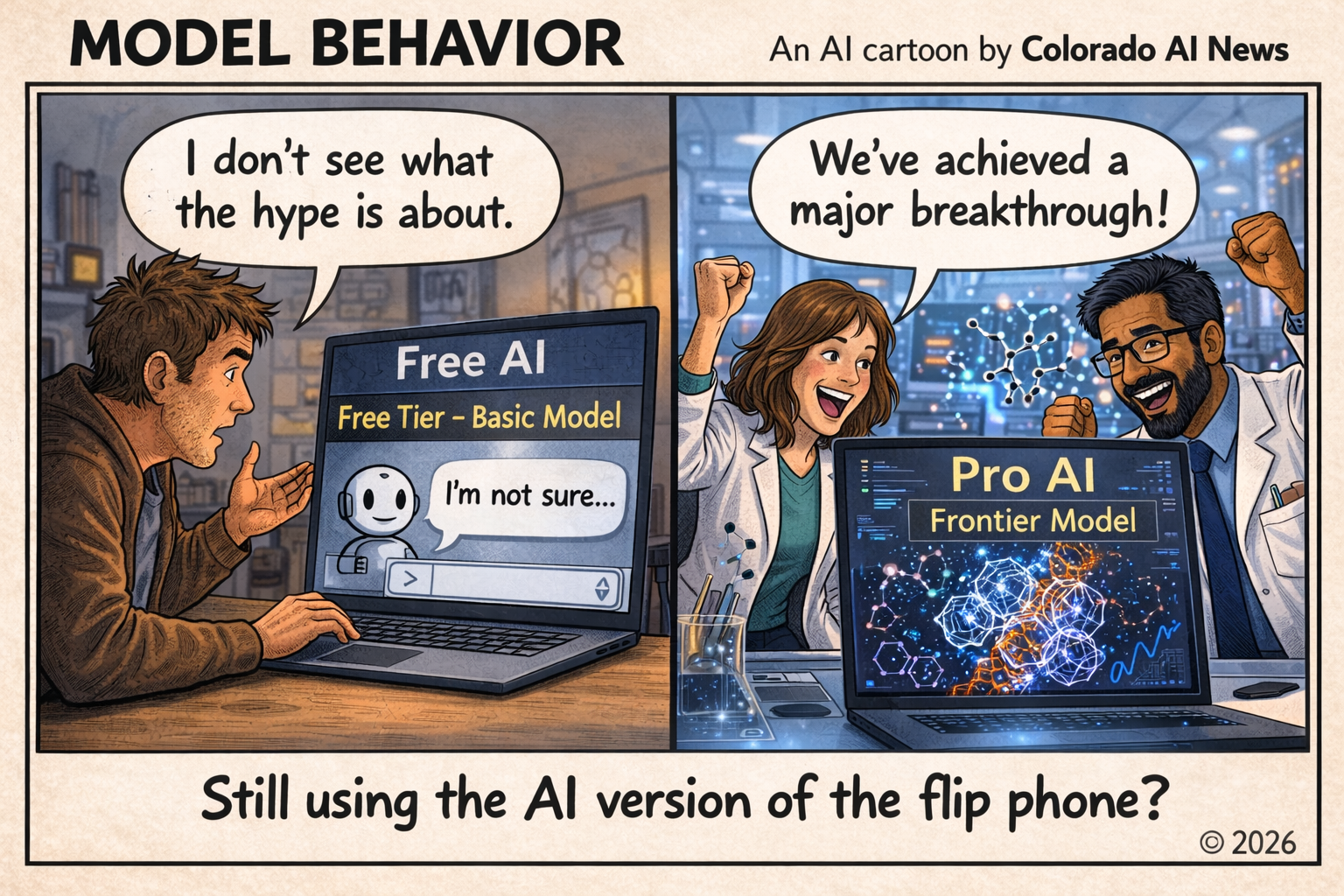
So, when someone says, “I tried AI and I don’t see what the hype is about,” one of my first questions is simple: Which version were you using?
Because if you’re going to judge the technology, you should judge it at its best – or at least, not at its worst. And it's progressing so quickly that you risk being left behind in your understanding of AI and what it's capable of.
In 2026, the difference between basic model and frontier model can meaningfully change outcomes – whether you’re writing, researching, coding, designing, analyzing data, or simply trying to think more clearly.
Ultimately, not all AI experiences are created equal – and more often than not, the version you’re using will shape the conclusions you draw about the utility of artificial intelligence.
The free tiers are pretty amazing compared to where they were even two years ago. But they should be thought of as the on-ramp and not the destination. If you want to understand where AI actually stands today – and if you want to get the most out of it – you really need to move beyond the bread basket.