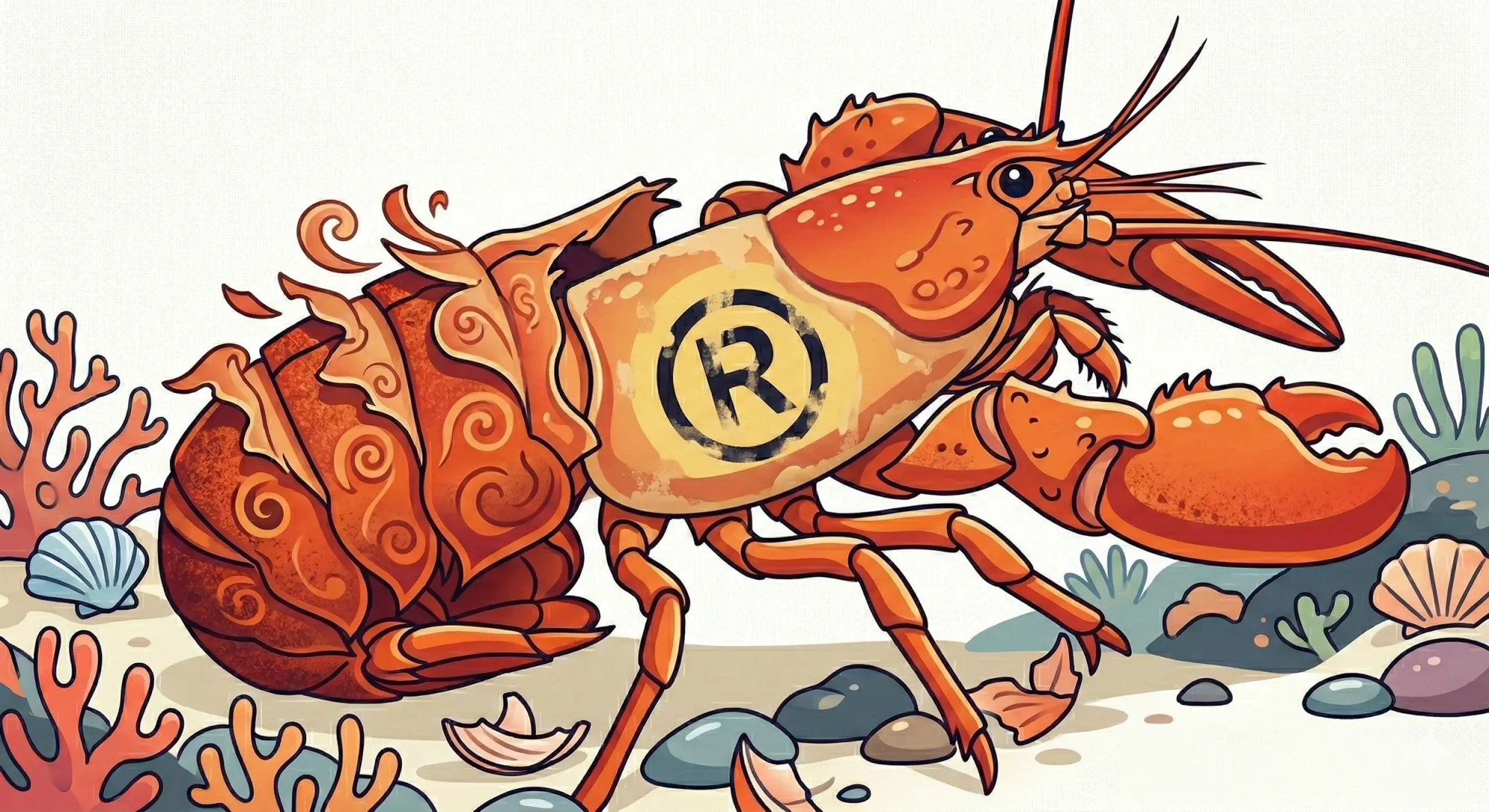
By the time most people heard of OpenClaw, it had already been through five names, a trademark demand from Anthropic, a crypto squatter attack that hijacked its GitHub account in under five seconds, and a founder who came close to deleting the whole thing. The project was almost boiled alive by a self-inflicted brand trauma.
That was in February. Since then, Steinberger joined OpenAI, Dave Morin, the founder of Path, became the first board member of the OpenClaw Foundation, and NVIDIA CEO Jensen Huang announced NemoClaw at GTC, comparing OpenClaw’s potential to the role Linux once played in enterprise computing. The lobster has, in fact, taken over the world.
Which makes this a good moment to examine what the naming saga actually teaches us. Not about OpenClaw, which survived mistakes that would kill any startup with more than one real competitor. But about the rest of us, who will not be so lucky.
Five Names in Three Months
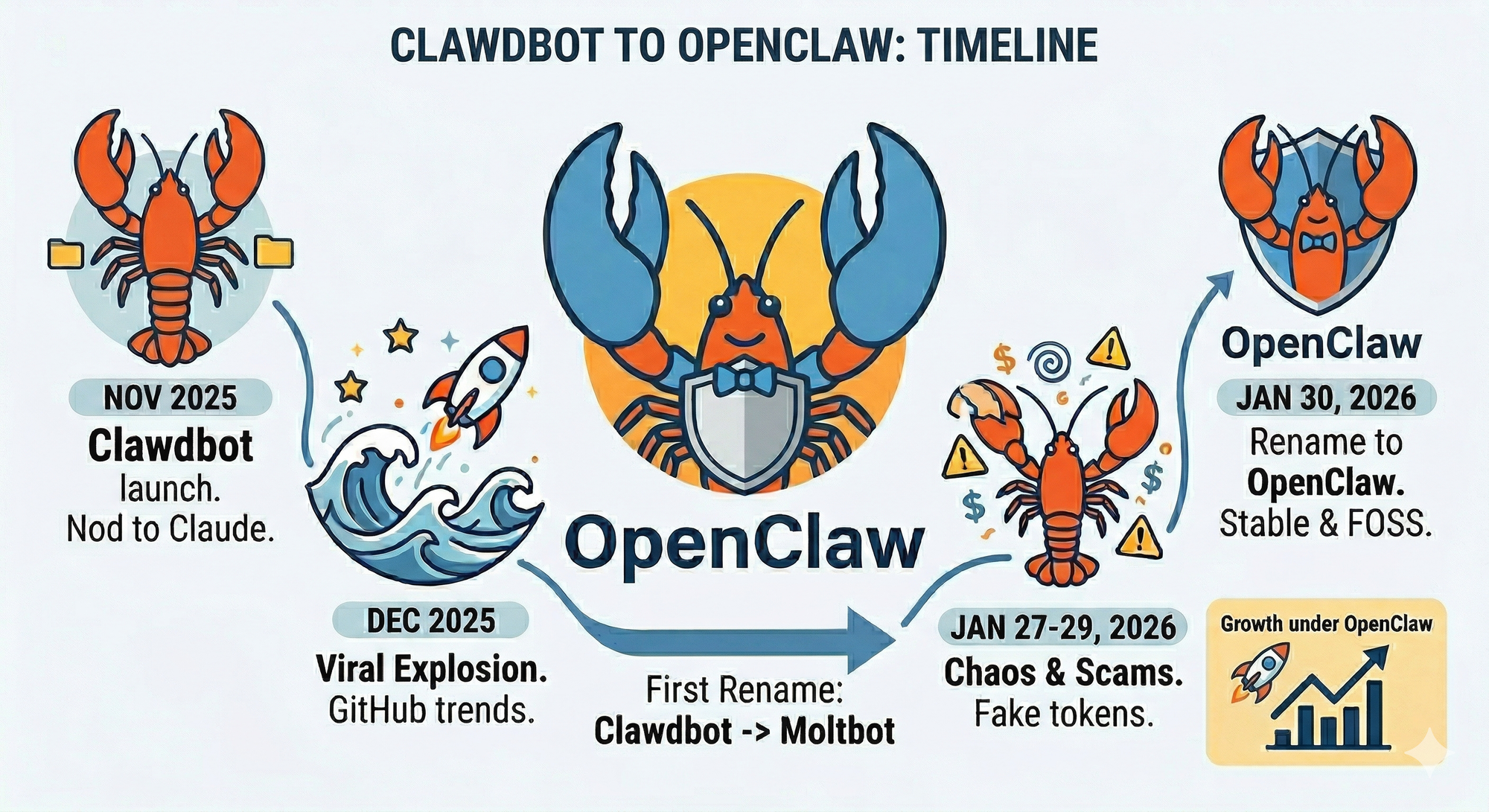
Here is the full naming timeline, which most coverage has gotten wrong.
WA Relay. Then Claude’s, a Doctor Who reference built around a lobster in a TARDIS, the project’s original mascot. Then Clawdbot, the name that went viral. Then Moltbot. Then OpenClaw. Five names in three months. The last one was chosen with trademark awareness. The knowledge came from trauma, not from planning.
Steinberger is a genuinely talented developer. He built PSPDFKit, software that runs on a billion devices. He even joked on the Lex Fridman podcast that he is “really bad at naming,” noting that “PS PDF doesn’t really roll off the tongue” either. This is not a criticism. It is a pattern worth examining.
When Clawdbot exploded in January 2026, reaching tens of thousands of GitHub stars in days, Anthropic sent Peter an email instead of a team of lawyers. As Steinberger described it: “They didn’t send their lawyers. They sent someone internally. Kudos, they were really nice.” But the email still said, in effect: You have to change this, and fast.
He asked for two days. What followed was, by his own account, a disaster.
Everything That Could Go Wrong
He had two browser windows open: one to rename the old account, one to claim the new handle. In the five seconds it took to drag his mouse between them and click rename, crypto squatters had already taken the handle. They used it to serve malware and promote fake tokens.
“Everything that could have gone wrong today went wrong,” Steinberger said. He came close to deleting the project entirely. He held on because of the contributors who had already put time into it.
The second rename, from Moltbot to OpenClaw, required what he described as a war room. He monitored Twitter in real time for any mention of the new name leaking, planted decoy names, and coordinated a simultaneous rename across GitHub, NPM, Docker, and every social handle. Codex alone took ten hours to rename the project internally. He paid $10,000 for the Twitter handle. Anthropic would not allow him to redirect traffic from the old domain, leaving old links pointing nowhere, or worse, to malware sites beyond his control.
None of this was necessary. A basic trademark clearance and phonetic similarity analysis would have surfaced the Claude conflict immediately. All of it was predictable.
Notably, for the final rename to OpenClaw, Steinberger did the right thing: he got trademark research help and asked OpenAI for permission before announcing. The lobster evolved, even if it took three attempts.
Before the Molt
Here is the thing about names that most founders get backwards.
A name is not a description. A name is a signal. It points to you and only you, and distinguishes you from everyone else. The moment a name starts doing the job of a description, it stops doing the job of a name.
Don Draper said it better than any trademark lawyer can: “Success comes from standing out, not fitting in.” Descriptive names blend in. That’s their job. And if it’s descriptive, it’s not a name.
Clawdbot was a deliberate pun on Claude. Steinberger knew it. He said on the Lex Fridman podcast that he loved the domain, thought it was catchy, and simply didn’t anticipate how big things would get. That is the exact moment when branding decisions become expensive: not when a company fails, but when it succeeds faster than its name can handle.
The suffix bot was useless from the start. Every AI tool, every automation product, every chatbot in existence has some variation of bot in its name or branding. You cannot own it. It differentiates nothing. Open is worse. Open source, open architecture, OpenAI: it is a modifier that developers recognize and everyone else ignores. After all the stripping away, the dominant element was always Claw, which sounds, said aloud, exactly like the name of one of the largest AI foundation models on the planet.
This is Not a Tech Problem
The same failure plays out at street level every day.
Drive through any mid-sized city in a state that permits private motor vehicle service operators. You will find five or six storefronts competing for the same registration renewal business. Every one of them is named some variation of Quick MVD, Fast DMV, Express MVD, EZ DMV. I have watched customers walk into the wrong one. I have watched people argue about which one they used last time. I have personally seen someone describe one of these businesses to its own owner using a competitor’s name. The owner didn’t even blink, because it happens constantly.
If your name is so similar to your competitors that customers can’t remember the difference, every dollar you spend on marketing goes into a shared pool, if you’re lucky. You’re not building your brand. You’re building awareness for the category, and everyone in the category gets to enjoy it.
In the Colorado AI and legal tech communities I work in, the same problem is everywhere. There are more than eighty AI platforms built specifically for lawyers vying for attention and wallet share from the same pool of overworked, skeptical attorneys. Founders want their names to signal what the product does, so they reach for the same vocabulary: legal, AI, agent, bot, counsel, judge. The result is a category that sounds like one company. Legalyze.ai is a real platform, useful, well-reviewed, growing. It is also a name that sounds like a dozen others. Every dollar they spend building awareness is partly spent building awareness for the category.
The One Thing They Got Right
The lobster.
Steinberger says it started as a Doctor Who joke, a lobster in a TARDIS, and grew from there. There was no grand plan. He just wanted it to be weird. It is 100 percent distinctive for a tech company. Nobody else is using it. Nobody is going to confuse it with a competitor. It is weird and memorable and it sticks.
Andrej Karpathy, Tesla’s former AI director, called the phenomenon “genuinely the most incredible sci-fi takeoff-adjacent thing I have seen recently.” Dave Morin, who became the first board member of the OpenClaw Foundation, said it was “the first time I have felt like I am living in the future since the launch of ChatGPT.” That reaction belongs at least partly to the mascot, a crustacean in a suit, which is exactly the kind of distinctive visual identity that trademark law rewards and marketing textbooks can’t teach.
Every other name choice in this story failed the basic test of distinction. The lobster passed it effortlessly.
What the Rest of Us Should Do
Steinberger survived his naming choices because he built something singular that captured virtually all the attention from a small but intensely relevant technical community, and moved fast enough that none of the branding problems caught up with him before he landed at OpenAI. If you are one of the very few who builds something so dominant, so fast, you have room to make a lot of branding mistakes.
That is a very specific set of circumstances.
Most of us are building companies that have to win in the market over years rather than weeks, against competitors who are well-funded and paying attention. Consider that OpenClaw’s branding chaos did not stop NVIDIA CEO Jensen Huang from comparing it to Linux at GTC in March, or stop it from becoming the foundation for NemoClaw, NVIDIA’s enterprise agent platform.
The lobster survived because the product was irreplaceable. That is the exception. For everyone else, the name is load-bearing. The good news is that this is a solvable problem, and it is almost always cheaper to solve it before launch than after. A basic trademark clearance search, a phonetic similarity analysis, a conversation with someone who has been through it: None of that is expensive relative to the cost of a forced rebrand, a crypto squatter attack, or a $10,000 Twitter handle.
Steinberger said on the Lex Fridman podcast that the name change felt like it should be simple, and it turned out to be one of the hardest things he dealt with. That will surprise no one who has been through something similar. The name you choose on day one is either an asset or a liability. There is no neutral.
Sources
- Lex Fridman Podcast #491: Peter Steinberger on the name-change drama
- Business Insider: Clawdbot creator says Anthropic was ‘really nice’ in renaming email
- TechCrunch: OpenClaw creator Peter Steinberger joins OpenAI
- TechCrunch: OpenClaw’s AI assistants are now building their own social network
- Peter Steinberger’s blog: OpenClaw, OpenAI, and the future
- This Week in Startups E2257: How the OpenClaw Foundation bullet-proofed its future (w/Dave Morin), Jason Calacanis interviews Dave Morin, first board member of the OpenClaw Foundation
- The Deep View: OpenAI bets big on personal AI agents with OpenClaw
- Wikipedia: OpenClaw
Editor's Note: An earlier version of this article was previously published on the Blackgarden Law blog.